
The right website development company doesn't just build you a pretty online brochure. They create a machine that works all day and night to find new customers and grow your business. For Kiwi service businesses, getting this right is the difference between blending in and standing out.
Getting Ready Before You Start Your Search
Jumping on Google and searching for a "website development company" without a clear plan can lead to problems. It's like asking a builder to build a house without giving them any plans. You'll get something, but it probably won't be what you wanted or needed.
A little bit of prep work now will save you a lot of trouble, time, and money later. When you're clear on what you need, finding the right people for the job becomes much easier.
Figure Out Your Website's Main Job
First things first: what is your website’s number one job? Think of it as your best employee. Is its only job to make the phone ring? Or is it to get people to fill out a form and book a quote?
For a painter or a landscaper, the main job might be to show a gallery of great past projects to build trust straight away. Each of these goals needs a completely different website layout, design, and feel.
Here are a few common jobs for a service business website in New Zealand:
- Get leads: The site's main goal is getting calls and emails from people in your local service areas, like Auckland or Christchurch.
- Book appointments: You want a system where clients can book a chat or service right on the site, filling up your diary automatically.
- Show your work: For tradies like builders and electricians, a collection of high-quality photos is a must. It proves you can do the work.
- Teach visitors: Your website could be a place for helpful articles and FAQs. This shows you are the local expert and builds trust before they even contact you.
Once you’ve decided on the main job, you can start thinking about the features it needs. This clarity is very important when you start talking to developers. They’ll understand what you want and give you a much more accurate quote.
Set a Real Budget
Let's talk money. It can feel awkward, but it’s a chat you need to have with yourself before you talk to anyone else. You must have a real budget in mind. Website costs in New Zealand can range from a few thousand dollars to tens of thousands, depending on how complex it is.
A simple, effective lead-getting site is very different from a complex one with a special booking system and a massive project gallery.
Think of it as an investment, not a cost. A well-built website should pay for itself many times over by bringing in good jobs. You can learn more by looking at our detailed guide on what goes into small business website design in NZ.
Having a clear budget range helps you filter out companies that are way too expensive or seem too cheap. It also gives your potential developer a guide to help you choose the "must-have" features over the "nice-to-haves" to keep the project on track with money.
Set Clear Goals You Can Measure
Knowing your website's main job is the big picture. Your goals are the specific, measurable results that tell you if it's working. This is how you'll judge if the project is a success later on.
Instead of a vague goal like "I want more customers," get specific. A much better goal is "I want to get 10 new, good enquiries through my website every month." See the difference?
Here are a few examples of good, measurable goals:
- Increase phone calls from the website by 20% within six months of launch.
- Rank on the first page of Google for "plumbers in East Tamaki."
- Get at least five online bookings for landscaping quotes per week.
Coming to a chat with a web developer with these clear targets makes their job easier. It also makes sure you're both aiming for the same thing. They’ll know exactly what success looks like for you and can design a website built to hit those numbers.
Finding and Checking Potential Web Partners
Alright, you’ve sorted out your goals and have a budget in mind. Now for the important bit: finding the right people to build your website.
It’s easy to just Google "website development company" and call the first one on the list, but hold on. The best partner for your business might not be the one with the biggest ad budget. A great website is the result of a great partnership, so it pays to be a bit picky here.
Doing your homework first means that when you do start talking to agencies, you’re having focused, useful chats about what you actually need. No time-wasting, just getting straight to the point.
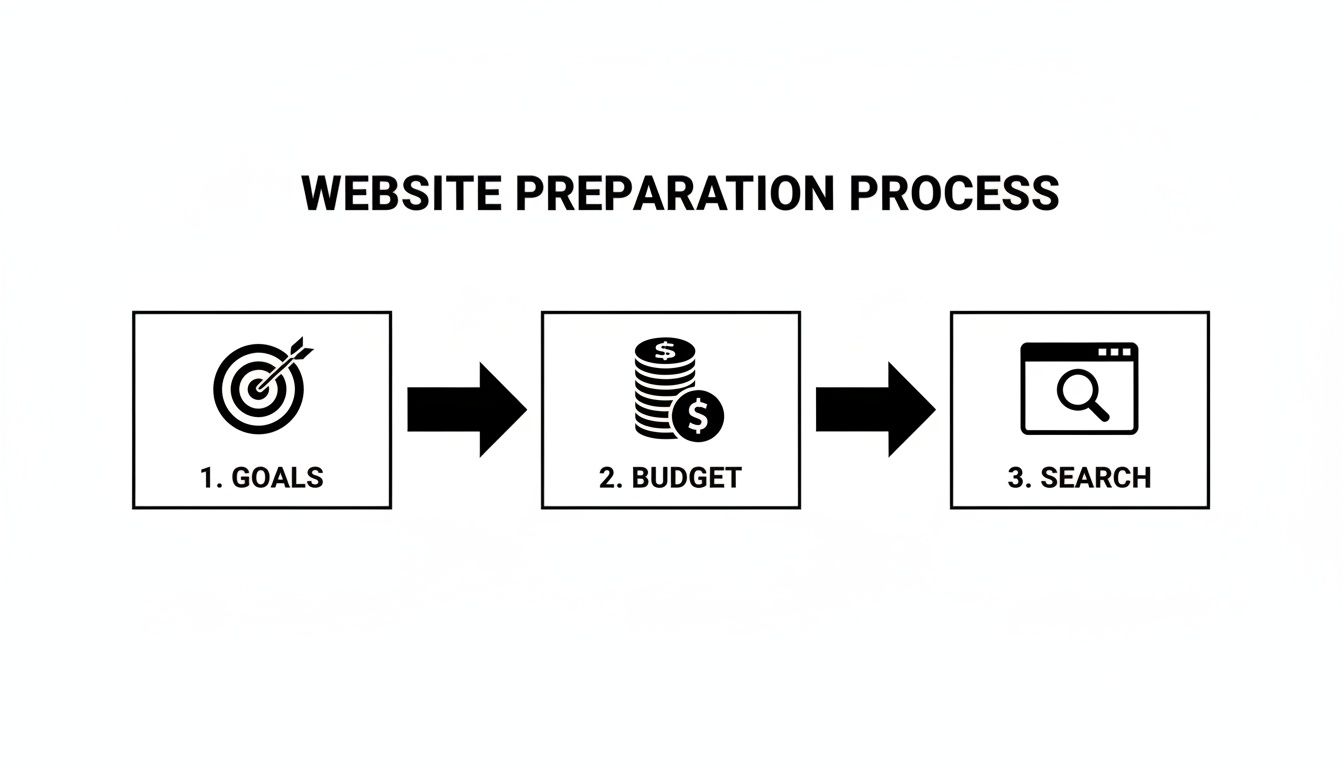
This simple flow shows how getting your goals and budget sorted before you start your search sets you up for success.
Where to Look for a Great Web Partner
A quick Google search is a good start, but don't let it be your only move. In New Zealand, many of the best web developers get most of their work through word-of-mouth. Why? Because their clients are so happy with the results, they can’t help but tell others.
Here are a few proven ways to find a solid partner:
- Ask Your Network: Chat with other local business owners you know and trust. Find out who built their site and, more importantly, whether they'd recommend them. A real referral is very valuable.
- Local Business Groups: If you're part of the local Chamber of Commerce or a BNI chapter, ask around. These groups are full of people who have already done this and can give you an honest opinion.
- Industry Associations: Are you a member of Master Builders, Master Electricians, or a similar trade body? These groups often have a list of recommended suppliers who know your industry very well.
- Google Reviews and Testimonials: When you are looking online, read the reviews. Don't just look at the star ratings. Look for detailed, recent feedback that talks about the results the website delivered, not just that it looks pretty.
Your goal here is to create a shortlist of three to five companies. Any more than that, and you'll get confused. This gives you enough choice to compare properly without making the decision a headache.
How to Check Their Past Work (Like a Pro)
Got your shortlist? Great. Now it’s time to be a detective. An agency’s past work is their CV, and it shows everything about their style and what they can do. Don’t just scroll through the pretty pictures – look deeper.
Actually visit the websites they’ve built. Click around. See how they feel. A portfolio should prove they can build sites that get business, not just win design awards.
When looking at their work, ask yourself one simple question for each site: "Does this website make me want to call this business?" If the answer is a clear 'yes', you're on to a good thing.
Here’s what to look for:
- Do they work with businesses like yours? An agency that has built sites for other Kiwi tradies or local service businesses will already know what your customers are looking for.
- Are the websites dead simple to use? Can you find the phone number in under three seconds? Is it clear what services they offer? If you get lost or confused, so will your future customers.
- How do the sites work on your phone? Grab your mobile and test them out. With over 50% of website traffic coming from smartphones, a clumsy mobile site is a massive red flag.
- Are there clear calls-to-action? A good website doesn't leave visitors guessing. It should have obvious buttons like "Get a Free Quote" or "Call Us Now" guiding them to the next step.
Key Questions to Ask Before You Hire Anyone
After you’ve checked their work, the last step is to talk to them. This is your chance to see if you get on well. Remember, you’re not just buying a product; you're starting a business relationship.
To help you check and compare different web development agencies, use this checklist of key questions during your first calls. Having the same questions for each makes it much easier to compare them fairly.
| Question Area | Specific Question to Ask | What a Good Answer Looks Like |
|---|---|---|
| Project Management | "Who will be my main point of contact, and how will we talk during the project?" | A single person who manages the project. They should mention regular check-ins (e.g., weekly emails, planned calls) and a clear way for you to give feedback. |
| Process & Timeline | "Can you tell me your usual process from start to finish? What's a real timeline?" | A clear, step-by-step process (e.g., discovery, design, development, launch). The timeline should be real, not just what you want to hear. Vague answers are a warning sign. |
| Expertise & Strategy | "How will you make sure the new website helps us get found on Google and gets leads?" | They should talk about SEO basics, being mobile-friendly, site speed, and a design that gets results. If they only talk about looks, they might not understand business goals. |
| Costs & Inclusions | "What, exactly, is included in your proposal? Are things like hosting, maintenance, or future updates extra?" | A clear list of all costs. They should be honest about what's not included to avoid surprise bills later. |
| Handover & Training | "What happens after the website goes live? Do you give training on how to update it myself?" | A good partner will offer training (e.g., a video, a live session) and explain their options for ongoing support or maintenance plans. You shouldn't be left in the dark. |
Their answers should be simple and give you confidence. If they hide behind technical words or give vague answers, they probably aren't the right fit for your business. The best website development company for you will be the one that talks clearly, understands your goals, and makes you feel like you're in safe hands.
Getting Real About Costs, Timelines, and Contracts
Let's talk about the serious stuff: money, deadlines, and paperwork. It's the part nobody loves, but getting these three things crystal clear from the start is the difference between a great investment and a total headache. Nailing this down protects you and makes sure there are no nasty surprises later on.
Think of it this way: a clear budget stops you from overpaying or, worse, falling for a cheap quote that gives you a bad website. Understanding timelines lets you plan your launch, and a solid contract makes sure everyone knows exactly what's expected.
What Should a Small Business Website Cost in NZ?
Website pricing in New Zealand can feel all over the place. You'll see quotes from a couple of thousand dollars to tens of thousands. So, what's a real number? For a professional, well-built website that actually gets leads for a small service business, you should expect to invest somewhere between $5,000 and $15,000.
What makes that price go up or down? It usually comes down to a few key things:
- Number of Pages: A simple five-page site (Home, About, Services, Projects, Contact) is going to be cheaper than a 20-page site with separate pages for every service you offer.
- Custom Features: Need a clever booking system, a nice photo gallery, or the ability to take online payments? These extras take more time to build and will add to the cost.
- Design Complexity: A completely unique, custom-designed website will cost more than one built from a ready-made template. A custom design is often worth the investment because it’s built just for your business goals, not just to look pretty.
Be very careful of quotes that seem too good to be true. A very low price often means they're cutting corners on things you can't see, like how it works on a mobile, security, or the SEO basics that get you found on Google. You can get a more detailed breakdown by checking out our complete website design pricing guide.
How Long Does It Take to Build a Website?
Good things take time. While it’s tempting to want your new site live yesterday, a proper, professional process can’t be rushed. Cutting corners here leads to mistakes and a website that doesn't actually do its job.
For a standard small business website, a real timeframe is usually between four to eight weeks from start to launch day. This gives the agency enough time to do the job properly—planning, designing, building, and testing everything without cutting corners.
A typical project has several stages:
- Discovery & Planning (1 week): This is where they get to know your business, your customers, and what you want the website to do.
- Design & Feedback (1-2 weeks): They’ll create the look and feel of the site. You get to review it and give feedback before any coding starts.
- Development & Content (2-4 weeks): The main part. This is where the approved design is turned into a real, working website.
- Testing & Launch (1 week): The team runs final checks on everything, fixes any bugs, and gets the site ready to go live.
Making Sense of the Contract
The contract isn't just legal words; it's the rulebook for the whole project. Reading it properly is a must.
Your contract should explain everything in plain English. If there’s a single sentence you don't understand, ask them to explain it before you even think about signing.
A good contract protects both of you. It says exactly what you’re paying for, who’s responsible for what, and the plan if things go wrong.
Here are the absolute must-haves to look for:
- Ownership: The contract must state clearly that you own 100% of the website files and your domain name once the final bill is paid. This is very important. Some companies try to lock you in by holding your website hostage.
- Scope of Work: It needs to list every single thing they will deliver. How many pages? What specific features are included? This stops any "that wasn't part of the deal" arguments later on.
- Hosting and Maintenance: Where will the website live (be hosted)? Is ongoing maintenance included, or is that an extra cost? As New Zealand's Web Hosting market is set to hit US$189.68 million by 2025, it's vital your partner understands the local scene.
- Payment Schedule: The cost should be broken down into clear stages. Usually, you’ll see a deposit to start, another payment after the design is approved, and the final payment right before launch.
Working Together for the Best Results
You’ve checked the agencies, signed the contract, and you're ready to start. So, what actually happens now? A great website isn't just handed over; it's a team effort. To get the result you’re paying for, you and your new web partner need to be on the same page from day one.
This is where the real work begins, moving from plans and promises to real progress. A bit of teamwork here goes a long way in keeping your project running smoothly, on time, and on budget.
Getting the Project Started Right
The first few days of any web project set the feeling for the whole build. A good company will have a solid starting process. This usually kicks off with a meeting to go through the project goals one last time and make sure everyone is clear on what's being built.
From there, the agency will need some key things from you to get started. Honestly, delays in getting this basic info are the number one reason we see projects fall behind schedule. To keep things moving, have these things ready to send over as soon as you can.
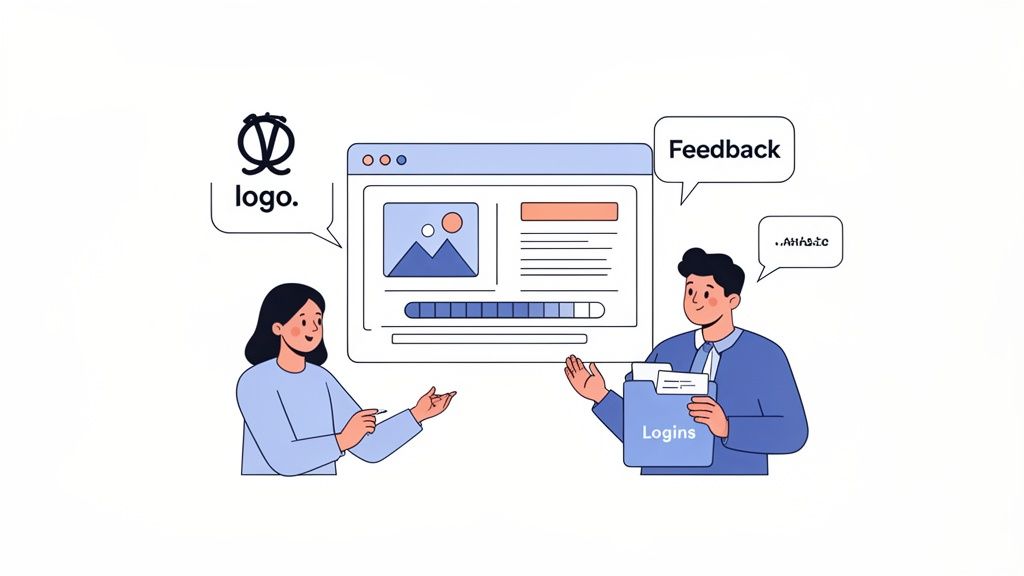
- Your Logo: Find the best quality, highest-resolution version of your logo you can find. We’re talking about files that end in .eps, .ai, or .svg.
- Photos and Videos: Put together any photos of your team, your completed work, or your office. Good, high-quality images make a world of difference to the final look.
- Business Details: Triple-check that they have your correct business name, phone number, physical address, and email. These are a must for your contact page and very important for local SEO.
- Written Content: Even if your web company offers writing services, they'll need the basic information from you—the main info about what you do, who you are, and the services you provide.
Having this stuff ready means your web developer can get started right away instead of chasing you for the basics.
Giving Feedback That Actually Helps
At some point, you’ll get that exciting email: the first draft of your new website is ready for review. This is your chance to shape the final result, but vague feedback like "I just don't like it" can kill a project. It's confusing for the designer and stops progress.
Instead, your feedback needs to be specific and linked back to the goals you set at the start. Does the design push visitors to call you or fill out your form? Can people find your phone number in two seconds flat? That's the kind of feedback that helps a designer understand exactly what needs to be changed.
Here's a pro tip: when you’re reviewing the design, stop thinking like the business owner and start thinking like your customer. Does the layout make sense to them? Can they easily find what they're looking for? That view is much more valuable than just your personal taste.
Here’s how to give feedback that avoids endless email chains:
- Be Specific: Instead of "Can you make the logo bigger?", try "Could we increase the logo size by about 20%? I feel like it's getting a bit lost at the top."
- Explain the 'Why': Don’t just say "Change that blue colour." Explain the reason. "That shade of blue doesn't quite match our brand. Can we use the exact colour code from our logo instead?"
- Group Your Comments: It’s much more efficient to send all your feedback in one go. Collect your thoughts, put them in a single email or document, and send it over. This lets the developer tackle all the changes at once.
Clear, helpful communication like this prevents annoying back-and-forth and keeps your project on track.
The Final Handover and Going Live
Once all the changes are done and the site is fully built, it's time for the big launch. Before going live, your website development company should give you a final look. This is your last chance to click through every page and test every button to make sure it all works as it should.
After the site goes live, a proper handover is very important. You should never be left in the dark wondering what to do next. Any professional agency will finish up with a handover package with all the key information you need.
At the very least, this handover should include:
- Full login details for your website’s admin area.
- Clear ownership details for your domain name and hosting account—make sure they're in your name.
- Basic training on how to handle simple updates yourself, like changing text or adding a new photo to a gallery. This is often done with a quick video or a short training call.
A smooth handover means you walk away feeling confident and in complete control of your new asset. It marks the end of the project, but it's really the beginning of your website working hard to bring you more business.
Making Sure Your New Website Actually Helps Your Business Grow
Let's be honest, a new website is a serious investment. It's much more than an online business card; it’s meant to be your hardest-working employee, bringing in new jobs while you sleep. After spending your hard-earned money, you need it to do one thing above all else: make the phone ring.
This means building it from day one to attract local customers and convince them you're the right choice. A top website development company doesn't just hand over a pretty design. They build a machine that’s made to perform in Google searches and turn clicks into paying customers.
Let's break down what that actually looks like.
Getting Found by Local Customers
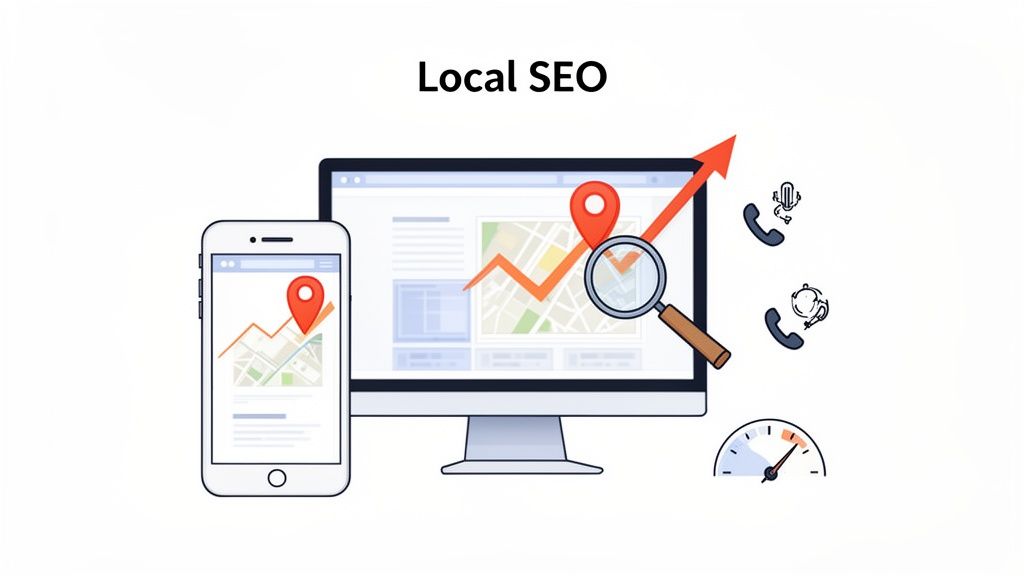
For any service business in New Zealand, being found by people in your area is the whole game. This is what Local Search Engine Optimisation (SEO) is all about—making your website pop up when someone searches "plumber in Howick" or "builder in West Auckland."
A website built with Local SEO from the start has a massive head start. Your web developer needs to build a technical base that Google can easily understand and trust.
This isn't just talk; it involves real actions like:
- Location-Specific Pages: Creating separate pages for the key suburbs you serve is a must. This helps you rank when someone is searching for your trade in that specific spot.
- Correct Business Information: Your business name, address, and phone number (NAP) must be the same on every single page and match your Google Business Profile perfectly. Any difference confuses Google.
- Schema Markup: Think of this as a secret language for search engines. It’s code that tells Google you’re a local business, what you do, and the exact areas you serve.
A website optimised for local search works 24/7 as your best salesperson. It’s not about cheating the system; it’s about making it crystal clear to Google who you are, what you do, and where you do it so they can show you to the right people.
The Need for Speed and Being Mobile-Friendly
Patience is not common online. If your website takes more than a couple of seconds to load, especially on a phone, potential customers are gone. They'll just hit the back button and click on your competitor. In fact, more than half of mobile users will leave a site that takes longer than three seconds to load.
Because of this, Google is very strict about site speed and how it works on mobile. A fast, mobile-friendly website isn't a bonus feature; it's a basic need for ranking well in search results today.
You need to have this chat with your developer. They should be focused on:
- Responsive Design: Your site has to look fantastic and be very simple to use on any device, from a big computer screen down to the smallest smartphone.
- Optimised Images: Huge image files are the number one cause of slow websites. Your developer must make every image smaller without making them look bad.
- Clean Code: A well-built site has simple, efficient code. Messy code is like trying to run a race with a parachute on your back—it just slows everything down. Our entire approach to service website design is built around these key performance ideas.
Making Your Paid Ads Work Harder
Planning to run Google Ads? The quality of your website directly affects how much you pay for every single click. Google gives a "Quality Score" to your ads, and a huge part of that score comes from the "landing page experience"—which is just the page on your site a person sees after clicking your ad.
A fast-loading, relevant, and easy-to-use landing page earns you a higher Quality Score. And this is where the magic happens: Google rewards high scores with lower costs per click.
That’s right—a better website can literally lower your advertising costs while getting you the exact same results. This all ties back to having a solid foundation. Great content creation for websites makes sure the page matches the ad, and a great build makes sure it performs well. When you partner with a good web development company, they make sure your site is built to get results, making every dollar you spend on marketing work as hard as possible.
Frequently Asked Questions
Choosing the right web partner is a big move. To make it easier, here are some straight-up answers to the questions we hear most from Kiwi business owners.
How Much Does a Small Business Website Cost in NZ?
For a professional website that actually gets leads, you should expect to invest between $5,000 and $15,000 here in New Zealand. That range gets you a properly built site focused on getting your phone to ring.
The final price really comes down to a few things:
- The number of pages: A sharp five-page site is obviously going to cost less than one with twenty pages for different services and suburbs.
- Custom features: Need an online booking system that connects with your diary, or a detailed gallery to show off your projects? Those things take more time and will add to the cost.
- Design complexity: A completely custom, one-of-a-kind design is a bigger investment than a site built on a proven, high-converting template.
Be careful of quotes that sound too good to be true. A very low price usually means they're cutting corners on the stuff that really matters, like how fast your site loads, how it looks on a phone, or the basic SEO needed to even show up on Google.
What Is the Difference Between a Web Designer and a Web Developer?
It’s a great question, and honestly, the lines can get a bit blurry. Think of it this way: a web designer is the architect. They focus on how the website looks, feels, and guides a visitor towards making contact. They plan the layout, choose the colours, and make sure it’s very easy for a customer to use.
The web developer is the builder. They take the architect's plans and write all the code to turn that idea into a functional, working website. For most small businesses, you’ll want to find an agency or person who does both. It just makes the whole process smoother and makes sure the final site works as good as it looks.
What Ongoing Costs Can I Expect After My Site Is Built?
Getting the website built is the main investment, but like anything valuable, there are a few small running costs to keep it working well.
Think of it like owning a work vehicle. You’ve got the upfront cost to buy it, but you still need to pay for petrol, insurance, and regular servicing to keep it on the road making you money. Your website is the exact same.
Here’s what you can expect:
- Domain Name: This is your website address (like yourbusiness.co.nz). It’s a small annual fee, usually around $30-$50 per year.
- Website Hosting: This is the 'rent' you pay for your website's spot on the internet. Hosting is what keeps your site live and available 24/7. Costs vary but it's typically a monthly or yearly fee.
- Maintenance (Optional but highly recommended): Many companies offer a monthly care plan. This covers things like software updates, security scans, and regular backups. It’s a smart way to protect your investment and make sure nothing breaks or gets hacked.
Will I Own My Website When It Is Finished?
Yes. One hundred percent. This is a must and one of the most important questions you can ask any potential web company.
Once you’ve made your final payment, any good agency will hand over 100% ownership of your website files and your domain name. Get this in writing in your contract. This is key because it means you're never locked in. If you ever want to move to a different host or work with someone else, you have the freedom to take your property and go. You paid for it—you own it. Simple as that.
Ready to build a website that turns clicks into calls? Four Stripes creates lead-generating websites for Kiwi service businesses. Find out how we can get your phone ringing.