
Whenever someone asks about website design prices, they're hoping for a simple number. But the honest, no-fluff answer is always, 'it depends'. For a small Kiwi business just starting out, a basic website typically lands somewhere between $2,000 and $5,000. If you're more established and need something that works harder for you, a professional site can range from $5,000 to $15,000, and sometimes more.
How Much Does a Website Really Cost in NZ?
Think of it like buying a car. You could get a reliable little runabout that gets you from A to B, a versatile family SUV with all the modern comforts, or a high-performance, custom-built machine. Each one serves a different purpose and, of course, comes with a different price tag.
This guide will break down what goes into those costs, so you can see exactly where your money goes. We'll start with a quick overview of the price bands you're likely to see. This will help you get a feel for where your business might fit and what you should expect for your investment.
NZ Website Design Prices at a Glance
To give you a quick snapshot, here’s a breakdown of the typical website pricing tiers you'll find in New Zealand. This table should help you quickly identify which category your business falls into.
| Website Type | Typical Price Range (NZD) | Best Suited For |
|---|---|---|
| Basic Brochure Site | $2,000 – $5,000 | Startups, sole traders, or businesses needing a simple, professional online presence. |
| Professional Business Site | $5,000 – $15,000 | Established small-to-medium businesses focused on generating leads and driving growth. |
| Custom & E-commerce Site | $15,000+ | Businesses with specific needs like online stores, custom functionality, or complex integrations. |
As you can see, the investment scales with your business goals. Let's dig into what each of those tiers really means.
What You Get at Each Price Point
Most website projects in New Zealand fall into one of three buckets. The real difference between them isn't just the price—it's the level of customisation, the depth of strategy behind the build, and the features included to actually help you grow.
- Basic Brochure Websites: Think of this as your digital business card. It’s perfect for new businesses or tradies who just need a clean, professional online presence to build trust and show people they’re legitimate.
- Professional Business Websites: This is for established businesses ready to get serious about lead generation. These sites are built from the ground up to attract the right customers and turn visitors into enquiries, thanks to better design, user experience, and a solid SEO foundation.
- Custom & E-commerce Websites: These are the bespoke solutions for businesses with very specific needs. We’re talking online stores with hundreds of products, sites with complex booking systems, or unique functionality that you can't get out of a template.
This chart gives you a simple visual of how the tiers stack up.
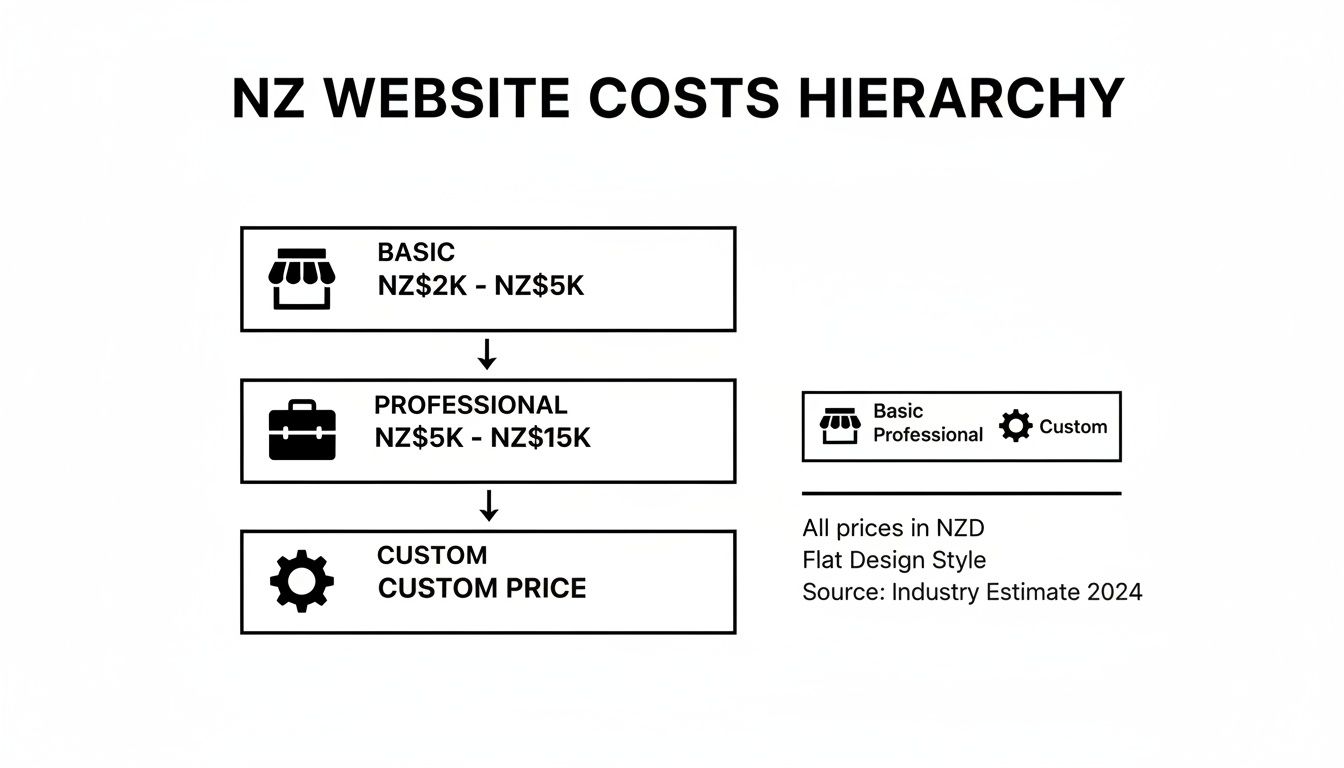
The takeaway is simple: as your business needs get more sophisticated, the investment in your website naturally increases to match.
For most local Kiwi businesses, a solid professional site is the sweet spot. It provides the foundation you need to be found online and convert visitors into customers.
Ultimately, choosing the right tier comes down to your goals. If you're just starting out, a focused, professional site is often the smartest move. You can learn more about getting started with our guide on small business website design in NZ.
Decoding the Key Factors Driving Your Final Cost
Ever wondered why one website quote lands at $3,000 while another for a seemingly similar business climbs past $10,000? That final figure isn’t just plucked from thin air. It’s a carefully calculated sum based on specific ingredients that demand different amounts of time, skill, and resources.
Getting your head around these components is the key to having smarter conversations with web designers and keeping your budget in check.
Think of it like building a house. A standard floor plan is pretty straightforward. But start adding an extra bedroom, a custom-designed kitchen, or fancy wiring, and the scope and cost will naturally go up. Your website is no different. The final price is a direct reflection of its size, complexity, and how much custom work is needed to hit your business goals.
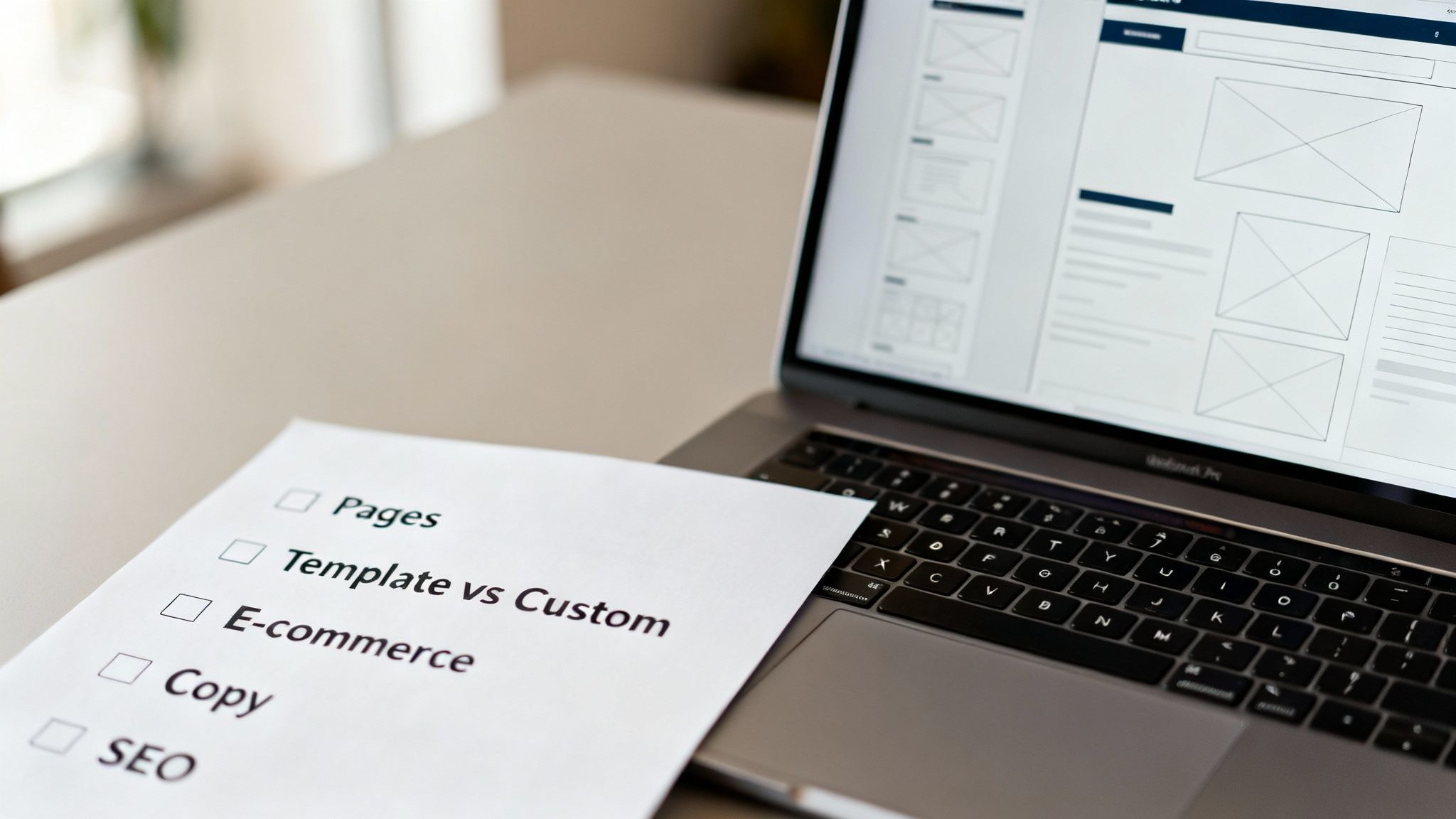
Let's pull back the curtain on the main factors that really influence your website design prices.
The Scale of Your Website
The most straightforward cost driver is simply the number of unique pages your site needs. A simple five-page brochure site (think Home, About, Services, Blog, Contact) takes a lot less design and development time than a 30-page site with individual service pages, case studies, and team profiles.
Every unique page layout needs to be designed, built, and filled with content. More pages simply means more hours on the clock for the project.
Template vs Custom Design
This is one of the biggest forks in the road for your budget. A designer can build your site using one of two approaches, and they have a massive impact on the final price tag.
- Template-Based Design: This is where we start with a pre-built, premium theme. The designer then customises the colours, fonts, and images to match your brand. It’s a faster and more affordable route, perfect for businesses with standard needs and a more modest budget.
- Custom Design: This is the bespoke, from-scratch process. A designer creates your website's entire look and feel from a blank canvas, crafting it specifically for your brand and goals. It involves wireframing, mock-ups, and custom coding to build a truly unique user experience. Naturally, this approach takes more skill and time, making it a larger investment.
A custom design is like getting a suit tailored just for you. A template is like buying a quality suit off the rack and having it altered. Both can look fantastic, but one is crafted from the ground up to fit you perfectly.
Complexity of Features and Functionality
The features you want on your site play a huge role in the final cost. Adding functionality is like adding optional extras to a car. The base model gets you from A to B, but adding GPS, a premium sound system, or parking sensors will bump up the price.
Here’s how different features affect your quote:
- Simple Features: Things like a standard contact form, an image gallery, or a blog are fairly simple to implement and are usually included in basic packages.
- Advanced Features: Need an online booking system, a members-only area, or integration with other software (like your CRM)? These require specialised plugins or even custom development, adding complexity and hours to the job.
- E-commerce Functionality: If you plan on selling products online, you'll need an e-commerce setup. Building out product pages, a shopping cart, secure payment gateways, and shipping rules is a complex job that significantly increases the scope and cost of the build. We cover this in more detail in our complete overview of NZ web design fees.
Content Creation and SEO Foundation
Finally, what actually goes on the pages is just as important as the pages themselves. Many quotes assume you’ll be providing all the text and images, but investing in professional content can pay for itself many times over.
- Copywriting: Professionally written text that’s optimised for search engines makes a massive difference in how many customers find you online and how well your site turns those visitors into actual leads.
- Photography and Imagery: High-quality, professional photos of your team, your work, and your premises build trust far more effectively than generic stock images ever could.
- Search Engine Optimisation (SEO): A solid SEO foundation ensures your site is built to be visible on Google right from launch day. This involves keyword research, on-page optimisation, and the right technical setup. While a full-blown SEO campaign is a separate service, any good web designer will build your site with SEO best practices baked in from the start.
Investing in a Professional Business Website
For most established Kiwi businesses, that first simple website eventually runs out of steam. As you grow, you need more than just a digital brochure; you need a tool that actively goes out and finds you new customers. This is where a professional business website comes into play.
We're not talking about flashy bells and whistles here. This is a strategic investment in a serious business asset. Think of it like swapping the zippy hatchback for the reliable family SUV we mentioned earlier. It’s got the right features, it’s built for performance, and it’s designed to help you hit your goals—whether that’s getting more quote requests, booking more jobs, or simply looking like the go-to expert in your field.

At its heart, a professional website is a lead-generation machine. It’s built from the ground up to attract your ideal customers on search engines and then make it incredibly easy for them to take the next step, whether that's filling out a form or picking up the phone.
What to Expect for Your Investment
When you level up to a professional site, you're paying for strategy and performance, not just a pretty design. The whole conversation shifts from "how it looks" to "what it does." This is where you see a genuine return on investment because every decision is made with business growth in mind.
You'll see this reflected in the typical website design prices for this category. In New Zealand, a proper professional website will generally fall between $5,000 and $15,000 in 2025. This bracket is really aimed at established SMEs who need to generate leads and build a stronger brand. For more insights on this pricing tier, check out Builtflat's ultimate guide to website costs.
A professional build is a much more thorough process. You can expect:
- Real SEO Integration: This is more than just plugging in a yoast plugin. It means doing the keyword research to figure out exactly what your customers are typing into Google and then building the site structure around those phrases.
- Content Strategy Guidance: A good agency won't just ask you for content. They'll help you map out what pages you need to answer customer questions, build trust, and drive enquiries.
- A Focus on User Experience (UX): The entire design is mapped to your customer's journey. The goal is to make it dead simple for visitors to find what they need and get in touch, with no frustrating dead ends.
- The Right Functionality: This might mean adding an integrated booking system, building out detailed service pages, or creating case study sections to show off your best work.
Moving Beyond a Digital Brochure
Look, a basic website tells people who you are. A professional website shows them why they should choose you over your competitors and makes it a no-brainer for them to do it. It’s a tool that actively contributes to your bottom line.
A professional website isn’t an expense; it’s an employee. It works 24/7 to attract prospects, answer their questions, and turn them into qualified leads for your sales team.
For example, a plumbing company in Auckland might invest in a site with separate, optimised pages for "hot water cylinder repair in Howick" or "blocked drain clearing in Manukau." This strategy pulls in highly motivated customers searching for specific solutions, leading to far better leads than a generic "Services" page ever could.
Likewise, a law firm's professional site might include a blog with in-depth articles that establish their expertise and a secure client portal for sharing documents. Features like these don't just win new business; they improve the service for existing clients, boosting the firm's reputation and making the investment well worth it.
Balancing Upfront Investment with Ongoing Expenses
Getting your new website live is a massive milestone, but it's the starting line, not the finish. Smart business owners know a website isn't a "set and forget" asset; it's a living part of your business that needs ongoing care to keep performing. The initial design fee is just one piece of the puzzle—budgeting for the full lifecycle is the only way to avoid nasty surprises down the track.
Thinking about website costs without factoring in the recurring fees is like buying a car and forgetting about petrol, insurance, and the WOF. The big upfront payment gets you the keys, but the ongoing expenses are what keep it safely on the road. Your website works the exact same way.
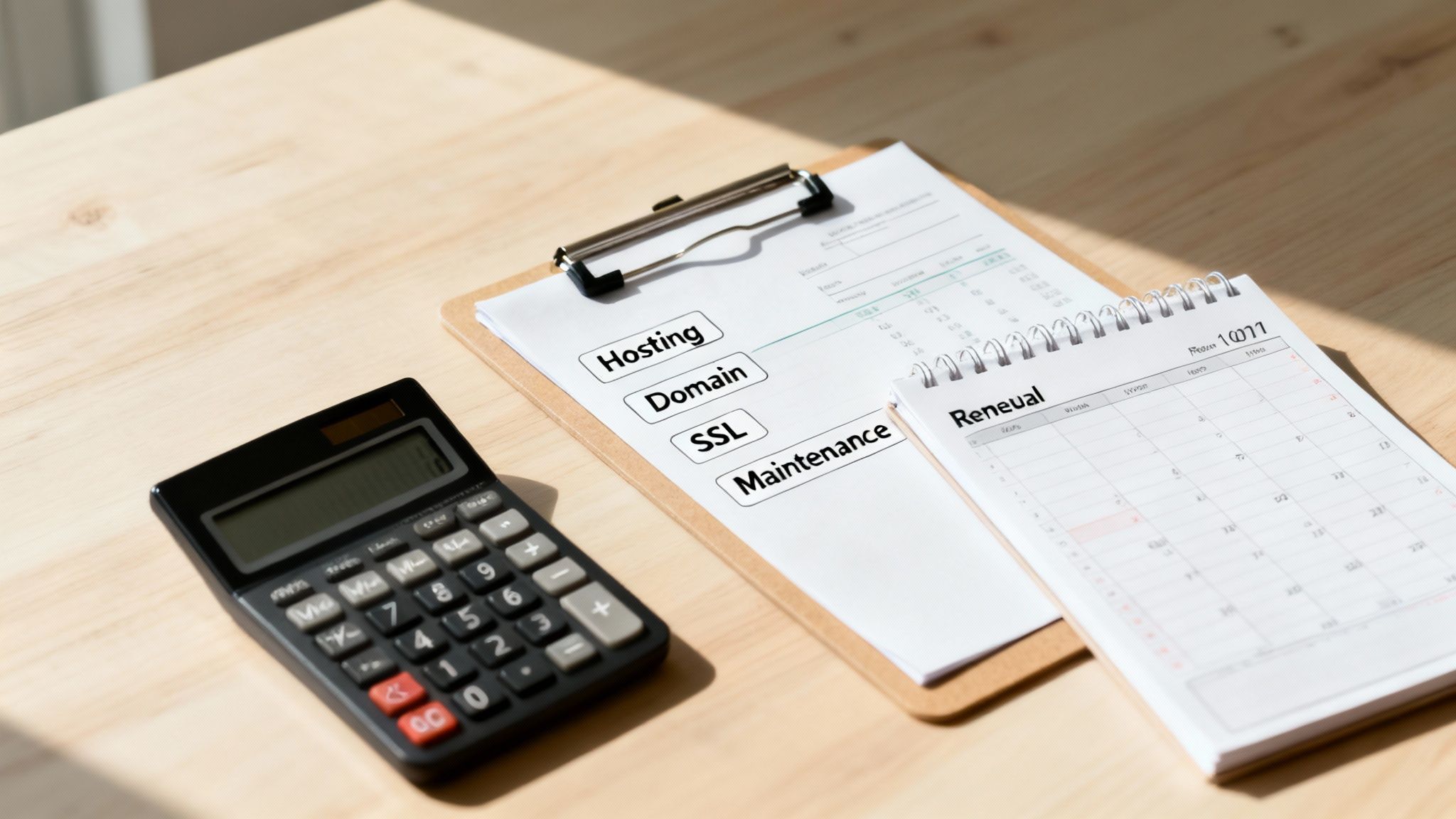
To understand the true cost of owning a professional website, you need to look at both the one-off build and the recurring costs that keep it running.
To make this clearer, let's compare the upfront investment against the ongoing expenses you'll need to budget for.
One-Off Investment vs Ongoing Website Expenses
| Cost Type | What It Covers | Typical Frequency |
|---|---|---|
| Upfront Design & Build | Strategy, design, development, content loading, testing, and launch of the new website. | One-Time (per major redesign) |
| Domain Name Renewal | The annual fee to keep your unique website address (yourbusiness.co.nz). | Annually |
| Web Hosting | "Renting" space on a server to keep your website's files live and accessible on the internet. | Monthly or Annually |
| Software Licences | Renewal fees for any premium plugins or themes used for specific features (e.g., e-commerce). | Annually |
| Maintenance Plan | Proactive security, software updates, backups, and performance monitoring. | Monthly or Annually |
This table shows that while the initial build is the largest single cost, the ongoing fees are essential for protecting that investment and ensuring your site remains a valuable asset for years to come.
Essential Recurring Website Costs
These are the non-negotiable fees that keep your website online, secure, and available for customers. They’re just as critical as the money you spend building it in the first place.
-
Domain Name Renewal: This is the yearly fee you pay to keep your website address (like yourbusiness.co.nz). It’s usually a small cost, around $20 – $50 per year, but if you let it expire, you could lose your address for good.
-
Web Hosting: Think of this as the rent for your website's spot on the internet. Good hosting makes your site fast, reliable, and secure. Most Kiwi businesses should expect to pay between $30 – $100 per month for a decent plan. You can dive deeper into the different options in our guide to web hosting in NZ.
-
SSL Certificate: This is what puts the little padlock in the browser bar, encrypting data between your site and your visitors. Most hosts include a basic SSL for free these days, but specialised or high-security certificates can come with an annual fee.
-
Premium Software Licences: If your site uses paid plugins for special features, like an advanced booking system or e-commerce tools, they often need a yearly renewal to get critical security updates and support.
It's also worth remembering other upfront costs that contribute to a great website. For example, great photography can make or break a design. Understanding the costs of professional photoshoots and their AI alternatives helps you budget for the visual assets that will make your site look truly professional.
The Importance of Website Maintenance
Beyond the technical basics, proactive maintenance is the single best thing you can do to protect your investment. A website maintenance plan is like getting your car serviced; it catches the small stuff before it turns into a massive, expensive problem.
A maintenance plan isn't an optional extra; it's insurance for your most important marketing asset. It protects against security threats, ensures peak performance, and gives you peace of mind.
A good maintenance plan always covers these four bases:
- Regular Backups: Creating secure, off-site copies of your entire website. If the worst happens, you can restore it in minutes, not days.
- Software Updates: Constantly updating your website’s core system (like WordPress), theme, and plugins to patch security holes and keep everything playing nicely together.
- Security Monitoring: Actively scanning for malware, brute-force attacks, and other dodgy activity to keep your site and customer data safe.
- Performance Checks: Making sure your site stays zippy and works perfectly on all devices, because a slow site is a dead site.
Skipping maintenance is a classic false economy. A hacked or broken website can cost thousands to repair, not to mention the damage it does to your reputation. Budgeting for a monthly plan (typically $100 – $300+ per month) is a smart, preventative move that keeps your digital shopfront secure and running smoothly.
How to Maximise the Return on Your Website Investment
It’s easy to see a new website as just another bill to pay. But the smartest Kiwi businesses don't see it as a cost at all. They see it as their hardest-working employee—an asset built to grow the company 24/7.
The secret is shifting your thinking from "how much does this cost?" to "what value will this create?" Getting a killer return on your investment starts way before any designer touches a keyboard. It starts with figuring out what winning actually looks like for you.
Define Your Website's Core Purpose
Every single decision in the design process, from the homepage layout to the colour of the buttons, should circle back to one primary goal. Without that, you’ll get a site that might look pretty but does absolutely nothing for your bottom line.
Before you even think about getting quotes, you need to nail down its number one job. Is it to:
- Get qualified sales leads? If so, the entire site needs to be geared towards capturing visitor details with clear contact forms, impossible-to-miss calls-to-action, and content that builds instant trust.
- Sell products online? Here, the whole focus is on a dead-simple e-commerce experience. From finding the right product to a checkout process so smooth you barely notice it.
- Establish you as the industry go-to? This means the site would be built around a powerful blog, a library of resources, and detailed case studies that scream "we know our stuff".
Once you have that main goal, you can put some real numbers on it. Think "increase online quote requests by 20%" or "get 100 new email sign-ups a month." Now you have something to measure.
Prepare for Your Project to Save Time and Money
Want an easy way to keep your website design prices from spiralling? Be prepared. Nothing blows out a timeline and a budget faster than a designer having to chase you for content, logos, or photos. Showing up to that first meeting with your ducks in a row makes the whole process smoother and cheaper.
Think of it like building a house. You wouldn't ask the builder to go out and choose your couches and curtains. Having your materials ready means they can just get on with the job—it's faster, costs less, and you get exactly what you wanted.
Before the project kicks off, pull together these essentials:
- Your brand assets: Get your logo in every format imaginable (especially high-resolution ones), along with your brand colour codes and any specific fonts.
- High-quality photos: Ditch the cheesy stock photos. Real pictures of your team, your workshop, or your finished work build way more trust.
- Your written content: Even a rough draft of the text for your main pages (Home, About, Services) gives the designer a massive head start.
Build for the Future, Not Just for Today
It’s tempting to shave a few dollars off the initial build, but honestly, it’s a false economy. A cheap website built on a rigid, clunky platform might patch a hole for now, but it will quickly become a roadblock when you want to grow.
Choose a solid, scalable platform like WordPress from the get-go. This means that when you decide to add an online store, a booking system, or a members-only section down the track, you actually can. A website built to scale grows with you, not against you.
More importantly, search engine optimisation (SEO) isn’t something you bolt on later—it needs to be baked in from day one. A website built with SEO fundamentals is structured to pull in a steady stream of high-quality traffic from Google, creating a pipeline of leads that doesn’t rely on you constantly pumping money into ads. To really squeeze every drop of value out of your new site, look into advanced techniques like AI SEO strategies. This upfront focus on visibility ensures your new asset starts paying for itself from the moment it goes live.
Your Top Questions About Web Design Prices, Answered
Trying to make sense of website design pricing can feel like you're navigating a minefield. You're hit with confusing jargon and quotes that are all over the place. To cut through the noise, we’re tackling the most common questions we hear from Kiwi business owners looking to build a new website. Our goal is to give you straight-up, practical answers so you can make your next move with confidence.
Why Are Web Design Quotes So Different?
This is easily one of the most confusing parts of the whole process. You ask for three quotes and get back prices like $2,500, $8,000, and $15,000. Why the massive gap? It almost always boils down to three things: scope, process, and experience.
A freelancer using a ready-made template has low overheads and can work fast, which means a lower price tag. That’s often a perfect fit if you just need a simple online brochure. On the other hand, an agency building a fully custom website has a much more involved process, including strategy workshops, wireframing, unique design mock-ups, and custom coding.
A higher price usually means you're getting a more comprehensive service. You aren't just paying for the final website; you're investing in project management, copywriting support, a solid SEO foundation, and strategic thinking that turns a website into a lead-generating machine.
In short, you're comparing a simple product to a full-service solution. The cheaper quote gets you a website online. The more expensive one aims to build a core business asset designed to actually grow your business.
Can I Get a Decent Website for Under $2,000?
You can definitely find someone to build you a website at this price, but it’s really important to know what you’re getting for your money. A website under $2,000 will almost always come with some serious compromises.
These budget options rely on basic, off-the-shelf templates with next to no room for customisation, making it tough for your brand to look unique. More importantly, crucial elements like search engine optimisation (SEO), mobile-friendliness, and a clear content plan are often barely touched or completely ignored.
For a brand-new business or a sole trader on a shoestring budget who just needs an online presence fast, it can be a starting point. But it's not a platform that will grow with you. You'll almost certainly need to reinvest in a proper website sooner rather than later as your business expands.
What Should I Budget for Annual Website Maintenance?
This is the question everyone forgets to ask in the excitement of launching a new site. A good rule of thumb is to budget between 10% and 20% of the initial build cost for maintenance each year.
So, for a professional website that cost you $7,500, you should set aside around $750 to $1,500 per year. This isn't just an optional extra; it’s essential for protecting your investment.
What does that money actually cover?
- Secure Web Hosting: The basic cost to keep your site live and available online.
- Software and Security Updates: Regularly updating your website’s platform (like WordPress) and plugins to fix security vulnerabilities.
- Regular Backups: Making sure you have recent copies of your site stored securely in case something goes badly wrong.
- Security Monitoring: Actively scanning for malware and hacking attempts to keep your website and customer data safe.
Think of it like the Warrant of Fitness and insurance for your work vehicle. It's the ongoing care that keeps your most valuable marketing tool secure, healthy, and working perfectly for your customers.
Is It Worth Paying for Professional Copywriting and Photography?
One hundred per cent, yes. It's always tempting to cut costs by writing the text yourself or taking photos on your phone, but paying for professional content almost always delivers a much better return. At the end of the day, it's the words and images on your website that do the actual selling.
Sharp, professional photos build trust in a split second and make your business look credible and serious. In the same way, a professional copywriter doesn't just list what you do—they speak directly to your ideal customer's problems and convince them that you are the best solution. Great copy is also vital for SEO, helping you show up higher in Google searches.
Your website is only as strong as its weakest part. A stunning design can be completely undermined by amateur photos or weak, unconvincing text. Investing in pro content makes sure every part of your site is pulling its weight to turn visitors into paying customers.
Ready to get a website that doesn't just look good, but actively grows your business? At Four Stripes, we build conversion-focused websites for Kiwi service businesses that are designed to get the phone ringing. Let's talk about building an online presence that delivers real results. https://fourstripes.co.nz