
Effective web design for a small business is much more than a digital brochure. Think of it as your hardest-working employee—a top salesperson, receptionist, and marketing manager all rolled into one. A great website works for you 24/7, pulling in customers and generating leads long after you’ve clocked off for the day.
Why Your Website Is Your Most Valuable Employee
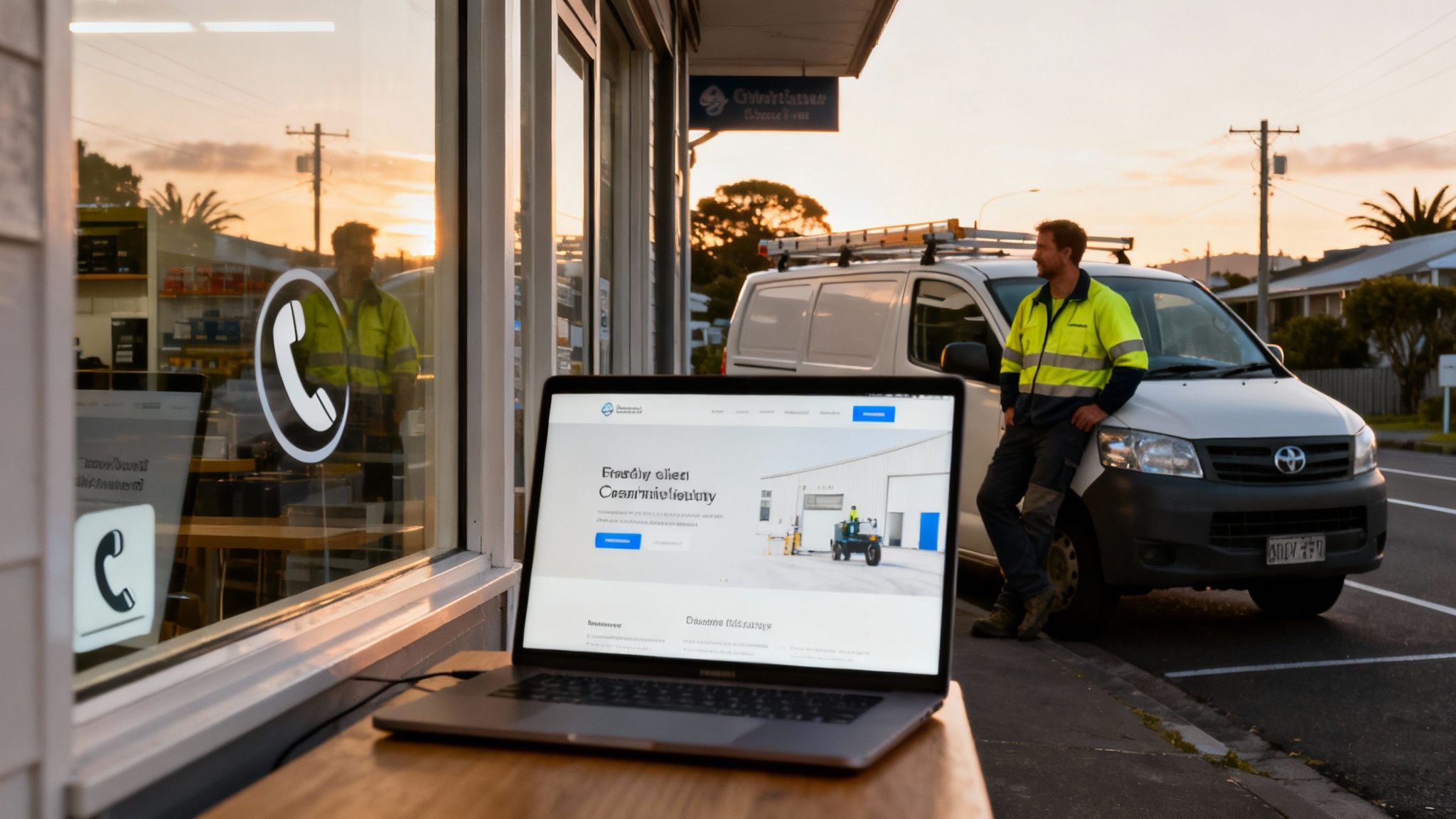
Let's be real, just having a website isn't enough to cut it for a Kiwi small business anymore. An old, clunky site is like having a shop with the doors locked. Sure, it exists, but it’s not bringing anyone inside. It needs to be an active, lead-generating machine that works tirelessly for your business.
For so many service-based businesses in New Zealand—from tradies to local professionals—the missed opportunity here is massive. A website that isn't actively bringing in calls or quote requests is leaving money on the table. Every single day. The goal is simple: turn your passive online signpost into an active tool that actually grows your bottom line.
The Cost of Being Invisible Online
These days, customers turn to Google first for everything. Being offline is a huge handicap. Imagine you’re a plumber in Auckland, and you suddenly realise nearly half of your potential customers are scrolling right past you because your online presence doesn't look professional.
That reality isn't far off. Fresh data shows that only 53% of New Zealand businesses have a website, a number that has barely budged in years. This gap hits small, service-based outfits the hardest. Think of all the Kiwi builders, sparkies, and home service pros who depend on local leads but are stuck with just a Facebook page or word-of-mouth. With over 90% of NZ consumers researching online before they buy, being invisible online means you’re invisible to most of your market. You can discover more insights about the state of NZ small business websites and see why this matters.
Your website is your digital handshake. It’s often the very first impression a potential customer has of your business. A professional, easy-to-use site builds instant trust and credibility, telling visitors you’re a serious and reliable operator.
From Passive Brochure to Active Salesperson
A passive website is little more than a list of services and a phone number. An active, high-performing website, on the other hand, is built with one goal in mind: turning visitors into customers. It does this by taking on a few key jobs.
- It Answers Questions Instantly: Your site should act as your receptionist, giving people immediate answers about what you do, where you work, and when you're available.
- It Builds Trust Around the Clock: Through customer reviews, photos of your work, and a clean design, it builds your reputation even while you’re out on a job.
- It Captures Leads Automatically: With clear "Call Now" buttons and simple quote forms, it makes getting in touch with you dead simple for potential customers.
This guide will give you a practical, no-fluff roadmap for building a website that doesn’t just look good, but actively grows your business in the competitive New Zealand market.
The Non-Negotiables: What Every Customer-Winning Website Needs
Building a website that actually gets you jobs is a lot like building a house. You don't pick out the curtains before you've laid the foundation and put the walls up, right? The same goes for web design for a small business. You have to nail the fundamentals before you even think about fancy bells and whistles.
These core ingredients are what separate a glorified online brochure from a genuine, lead-generating asset. They work together to create a smooth, trustworthy experience for your visitors, making it dead simple for them to go from a curious clicker to a paying customer.
Let's break down the absolute must-haves.
Speed Is Your First Impression
Online, your website's loading speed is its handshake. A slow, clunky site is like offering a limp, sweaty hand—it makes a terrible first impression. The data doesn't lie: even a one-second delay can send your conversion rates plummeting.
Potential customers are busy. They won't wait around for a sluggish site to load, especially if they're on their phone looking for a service right now. A fast-loading site shows you respect their time and signals that you're a professional outfit. Think of it this way: a slow website is like a shop with a sticky front door. Most people will just give up and go next door.
A Flawless Mobile Experience Is No Longer Optional
Well over half of all web traffic now comes from mobile phones. For local tradies and service businesses, that number is often much, much higher. If a potential customer finds you on Google and has to pinch and zoom just to read your phone number, they're gone. A mobile-responsive design isn't a "nice-to-have" anymore; it's the price of entry.
This simply means your website must automatically look great and work perfectly on any screen, from a big desktop monitor down to a small smartphone.
- Readable Text: Fonts need to be big and clear without any squinting or zooming.
- Easy Navigation: Menus should be simple to tap, and buttons need to be big enough for a thumb.
- Click-to-Call Buttons: Your phone number absolutely must be a tappable link. Make it effortless for them to call you.
A seamless mobile experience means you're meeting customers where they are and removing any friction that might stop them from getting in touch.
Guiding Visitors with Crystal-Clear Calls-to-Action
Imagine walking into a hardware store with no signs, no staff, and no checkout counter. You'd get confused and leave. Your website is no different. A Call-to-Action (CTA) is just a clear signpost telling your visitor what to do next.
Without obvious CTAs, visitors are left to wander aimlessly and will eventually click away. Good CTAs grab them by the hand and guide them toward the one thing you want them to do: contact you.
A great website doesn't just present information; it prompts action. Every single page should have a clear goal, supported by an unmissable call-to-action that moves the visitor one step closer to becoming a customer.
Your CTAs should be impossible to miss. We’re talking big, bold buttons in a contrasting colour with action-focused text like:
- "Get a Free Quote"
- "Call Us Now"
- "Book a Consultation"
Place these prompts everywhere it makes sense—right at the top of the page, after you describe a service, and in your contact section. This simple element is often the difference between someone who just browses and someone who becomes your next job.
Nailing these fundamentals—speed, mobile experience, and clear direction—is how you build a website that doesn't just look professional, but actually works hard for your business 24/7.
To put it all together, here’s a quick rundown of the most important features and the real-world impact they have on your bottom line.
Essential Website Features and Their Business Impact
| Feature | Why It Matters for Your Customers | Direct Impact on Your Business |
|---|---|---|
| Lightning-Fast Speed | They get information instantly without frustration, showing you value their time. | Fewer visitors leave (lower bounce rate), better Google rankings, and more enquiries. |
| Mobile-First Design | It's easy to read and navigate on their phone, wherever they are. | Captures the 50%+ of users on mobile, making it simple for them to call you on the spot. |
| Clear Calls-to-Action (CTAs) | They know exactly what to do next, removing confusion. | Turns passive website visitors into active leads by prompting them to call or fill out a form. |
| Click-to-Call Phone Number | They can contact you with a single tap—no fumbling to copy and paste numbers. | Drastically increases the number of phone calls, especially from mobile searchers. |
| Simple Navigation | They can find the service they need in a couple of clicks without getting lost. | A better user experience keeps people on your site longer and guides them to your contact page. |
| Visible Contact Info | Your phone number and email are easy to find on every page. | Builds trust and ensures potential customers can always reach you, no matter where they land on your site. |
Getting these elements right is the foundation of a website that doesn't just sit there looking pretty—it actively brings in business and helps you grow.
Winning Local Customers on Google and Maps
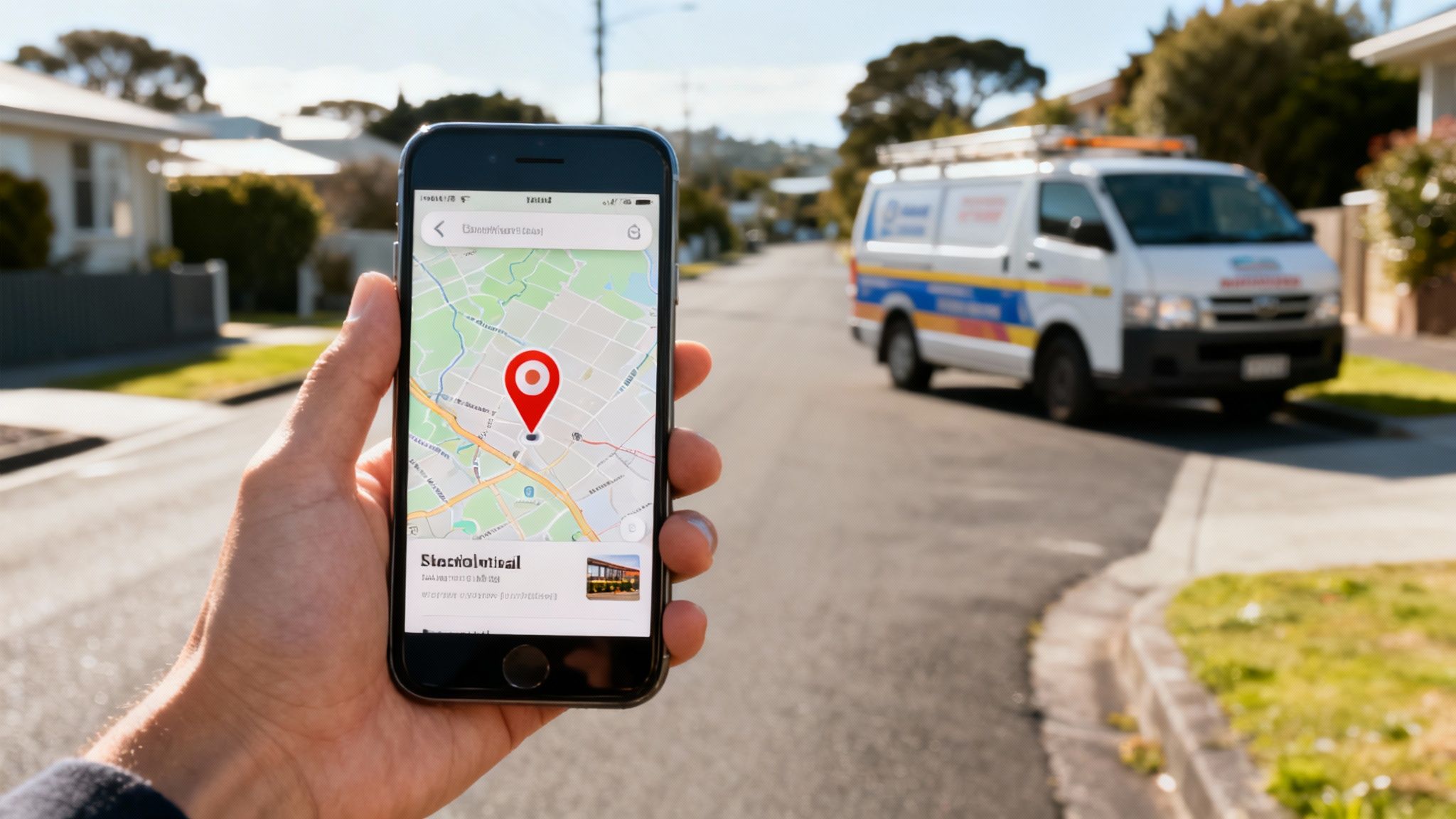
For any local service business—from a plumber in East Tamaki to a builder in Christchurch—just having a website isn't enough to get the phone ringing. Your customers are on their phones, searching Google for "electrician near me" or "emergency plumber Auckland." The real magic happens when your business pops up at the very top of those results, especially in that all-important map section.
This is the power of Local Search Engine Optimisation (SEO). It’s not some dark art or technical trickery. It's simply the process of making it dead easy for Google to understand who you are, what you do, and where you do it. When you nail this, Google confidently puts your business in front of nearby customers who are ready to hire someone right now.
Your Free Digital Billboard on Google
The single most powerful tool for winning local customers is your Google Business Profile (GBP). It's that free listing that shows up on Google Maps and in the local search results. Think of it as your digital shopfront, catching all the digital foot traffic from people actively looking for the exact services you offer in your area.
Getting this profile set up and properly optimised is one of the highest-impact things you can do for your business, period. It lets customers see your phone number, read your reviews, and get directions without even having to click through to your website. It’s a non-negotiable part of any smart web design for small business strategy.
Your Google Business Profile is your business's official introduction to Google. A complete, active, and well-reviewed profile signals to Google that you are a legitimate, trusted local operator, making you a top candidate for the coveted "Map Pack" results.
A well-oiled profile isn't just a listing; it's a lead-generation machine that turns searches into phone calls and paying jobs.
The Core Components of a Winning Profile
Just setting up your profile is step one. To truly own the local search results, you need to treat it like a living, breathing part of your business. That means keeping it active, accurate, and packed with the trust signals that both customers and Google love to see.
Here’s what you absolutely must get right:
- Complete and Accurate Information: Make sure every single field is filled out correctly. We’re talking your exact business name, address (if you have one customers can visit), phone number, and hours. Consistency here is key.
- Targeted Service Categories: Be specific. Choose "Plumber" as your primary category, not something vague like "Home Services." Then, add every other service you offer as secondary categories.
- High-Quality Photos: Don't be shy. Regularly upload clear photos of your team on the job, your branded van, and your finished work. It proves you’re a real, active business and builds instant credibility.
- A Steady Stream of Positive Reviews: Make it a habit to ask every happy customer for a review. Positive reviews are one of the biggest ranking factors for local search and a massive trust signal for new clients.
To guarantee your website is a customer-winning machine, it's crucial to integrate effective digital marketing strategies, as they work hand-in-hand with your local SEO efforts.
Why Digital Investment Pays Dividends
Across New Zealand, small businesses are finally seeing massive returns from investing in a proper website and a strong online presence. A Xero report found that Kiwi SMEs investing in digital upgrades are reaping between $2.40 to $3.10 in productivity gains for every dollar spent. This is especially true for service-based businesses where slow digitalisation has been holding back growth.
That investment is directly linked to how visible you are on Google. A professional website connected to a powerful Google Business Profile creates a feedback loop of trust and authority, sending more qualified leads your way. For a deeper dive into making your profile work harder for you, check out our guide on how Google Business Profile optimisation can generate local leads.
How to Structure Your Site to Turn Clicks into Calls
A great website doesn't just look pretty; it works as your best salesperson, guiding every visitor from their first click to the first phone call. If the layout is confusing, people get lost and leave. Good web design for a small business is all about removing that confusion and making it dead simple for them to get in touch.
Think of your homepage like your shopfront. You need a big, clear sign out front (your headline), an obvious path to the counter (your layout), and a clear way to get served (your calls-to-action). Let's map out the proven blueprint for structuring a site that actually brings in jobs.
The Anatomy of a High-Converting Homepage
The second someone lands on your site, the clock is ticking. You have just a few seconds to prove they’re in the right place. This first impression happens "above the fold"—the bit they see without having to scroll. This is your most valuable digital real estate.
To make it count, this top section absolutely must have three things:
- A Powerful Headline: This isn't the time for a clever tagline. Your headline needs to state exactly what you do and where you do it. Simple. Direct.
- A Clear Sub-headline: Back up the headline with a key benefit. Think "fast, reliable service" or "guaranteed workmanship."
- An Unmissable Call-to-Action (CTA): A big, bright button like "Get a Free Quote" or "Call Us Now" needs to be impossible to ignore.
Get this combo right, and visitors immediately know they’ve found the right person for the job and see exactly how to take the next step.
Building Trust as They Scroll
Once you've grabbed their attention, the rest of the page is about building their confidence in you. As they scroll down, your website should be systematically answering their questions and knocking down any reasons they might have for hesitating.
A logical flow builds trust with every section. For example, if you're a builder in Auckland, your homepage needs to walk a potential client through a journey of reassurance.
The perfect website structure anticipates a customer's questions and answers them in order. It starts with "What do you do?" then moves to "Can I trust you?" and finishes with "How do I contact you?"
You build this journey with a few key sections, laid out in this order:
- Social Proof (Testimonials and Reviews): Straight after your intro, show them what other happy customers are saying. Plastering genuine, glowing reviews on your site is one of the fastest ways to build credibility.
- Clear Service Descriptions: Briefly outline your main services. Don't use jargon. Use icons or small images to make this section scannable and easy on the eye.
- Why Choose You Section: Here's where you stand out from the competition. Are you licensed and insured? Do you offer a workmanship guarantee? List a few key points that make you the obvious choice.
- Showcase Your Work (Gallery): For any tradie, photos are everything. A simple gallery of finished jobs shows potential customers the quality you deliver and helps them picture what you can do for them.
- A Simple, No-Fuss Contact Form: Finish the page with one last, strong call-to-action and a contact form that's incredibly easy to fill out. Only ask for the basics: name, phone, email, and a quick message. A long, complicated form is a guaranteed way to lose a lead.
This structure isn't rocket science, but it works. It takes a visitor from being mildly interested to feeling confident you're the right person for the job, making that final step of getting in touch feel completely natural.
Decoding Web Design Costs and Timelines in New Zealand
Alright, let's get straight to the two questions every business owner asks: "How much is this going to cost?" and "How long will it take?" The world of web design for small business can feel a bit murky, so it's critical to understand what you're actually paying for.
A cheap, template-based website is not the same as a custom-built, lead-generation machine. One is basically a digital flyer that just sits there; the other is a powerful tool designed to actually make your phone ring. When you invest in a professional build, you’re investing in a genuine business asset that works for you.
A good website follows a simple, proven path to turn visitors into paying customers. It gets the click, builds trust fast, and makes it dead simple for them to call you.
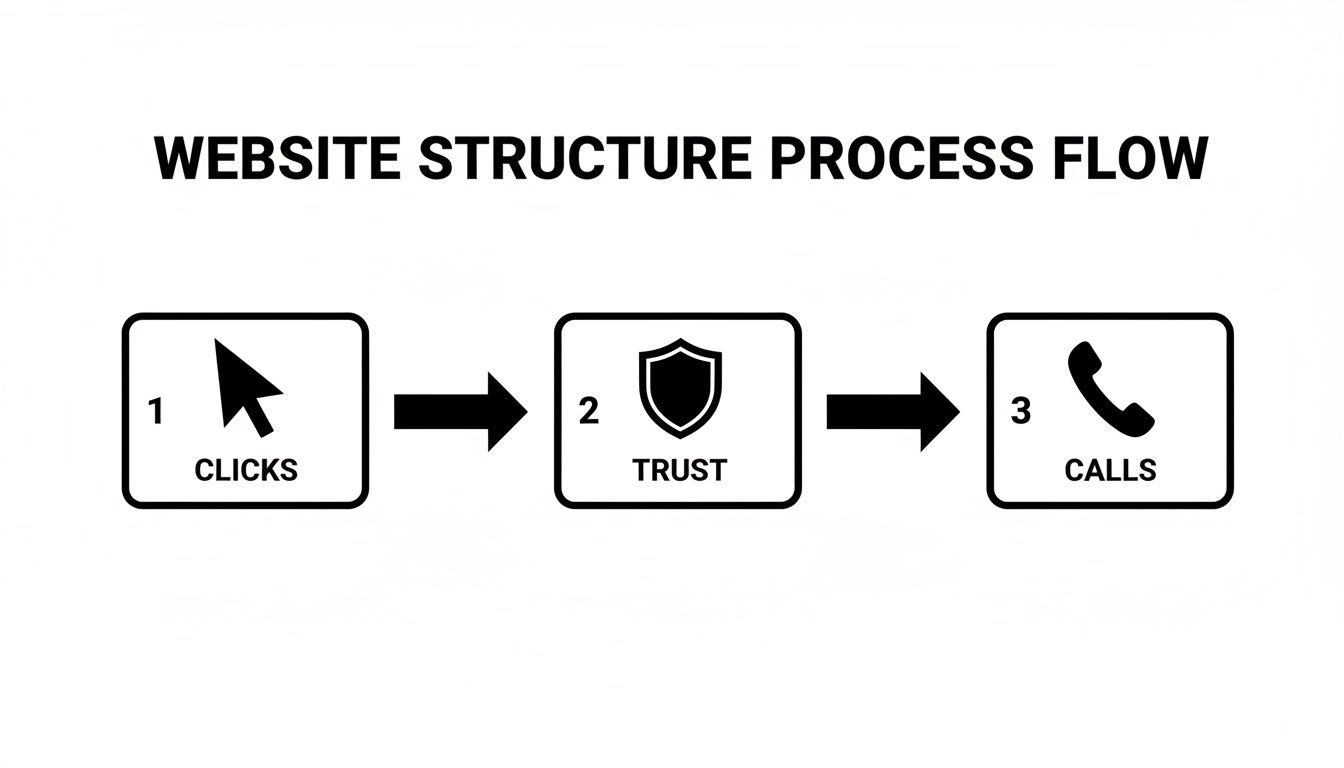
This process is about more than just looking good. It’s a strategic journey that first gets visitors to your site, then quickly convinces them you’re the right choice, and finally, guides them to take action.
What Factors Shape the Price
The cost of a website isn't just a number pulled out of thin air. It’s directly tied to the time, complexity, and expertise needed to build a site that delivers real results. The final price tag is mostly shaped by the number of pages, any custom features you need, and the level of strategy involved.
Here’s what really determines the cost:
- Number of Pages: A simple five-page site (Home, About, Services, Gallery, Contact) is going to cost less than a twenty-page site with a dedicated page for every single service you offer.
- Custom Design vs Template: A template is a pre-made layout. It's quick, but it's also generic and won't be tailored to your customers. A custom design is built from the ground up around your specific business goals, your brand, and how your customers think, which leads to a far better experience and more enquiries.
- Special Features: Need an online booking system, a clever quote calculator, or an e-commerce shop? These custom functions require serious development time and will increase the investment.
Think of it like building a house. A standard three-bedroom plan is pretty straightforward. But if you want a custom architectural design with a home cinema and a swimming pool, the timeline and budget will naturally grow to match that complexity.
It's also smart to see how this investment fits into your wider financial plan. Getting insights on building a comprehensive marketing budget can really help guide your decisions. For a transparent breakdown of what goes into a project, you can see our pricing here: https://fourstripes.co.nz/website-design-pricing/
Setting Realistic Timelines
A professionally built website that actually converts leads doesn't happen overnight. A typical timeline for a small business website, from our first chat to launch day, is usually around 3 to 6 weeks. This gives us enough time for proper strategy, design, development, getting your content in, and thorough testing.
Be wary of anyone promising a high-quality, custom-built site in just a few days. It's just not realistic.
Ongoing Costs: Website Hosting and Maintenance
Your website costs don't stop the day it goes live. Just like a physical shop needs power and security, your digital storefront has ongoing running costs to keep it secure, fast, and open for business 24/7. These are usually bundled into a monthly or annual care plan.
- Hosting: This is the 'rent' you pay for your website's spot on the internet.
- Maintenance: This is the 'utilities and security'—it covers software updates, security scans, and performance checks to keep everything humming along smoothly and safely.
Here in New Zealand, the local hosting industry is booming, which is great news for SMEs. Tradies and professionals in places like Auckland need fast, reliable sites to compete, and having access to affordable, Kiwi-hosted solutions with real, local support makes a huge difference.
Choosing the Right Web Design Partner for Your Business
Picking a web design agency is a massive decision for any small business owner. You’re not just buying a one-off product; you’re choosing a partner to build your single most important marketing tool. The goal is to find someone who’s in it for the long haul—a true growth partner, not just a contractor who builds a site and vanishes.
That means you need to look way beyond a flashy portfolio. A pretty website is completely useless if it doesn't actually bring in any work. You need an agency that gets it—that understands the only real measure of success for a web design small business project is how many times the phone rings and how many quote requests land in your inbox.
Questions to Ask Before You Hire Anyone
To find the right fit, you have to ask the right questions. This is how you sort the talkers from the doers—the ones who are genuinely invested in seeing your business succeed. Think of it like an interview for your most important new hire.
Kick things off with these critical questions:
- Do you have experience with businesses like mine? An agency that’s worked with other tradies or local service businesses already knows your customers and what gets them to pick up the phone.
- Can you show me some real results? Ask for case studies. Better yet, ask for examples of businesses like yours they’ve helped. You want to see tangible outcomes, like a measurable increase in leads or better rankings in local search results.
- What’s your process? Any professional worth their salt will have a clear, step-by-step process they can walk you through, from the first chat right through to launch day.
- Do you specialise in local SEO? For any Kiwi service business, this is non-negotiable. A stunning website is pointless if local customers can't find it on Google. Get a feel for what a top SEO company in New Zealand should be doing for you.
A great web design partner doesn't just talk about fonts and colours; they talk about your business goals. Their main focus should be on how your new website is going to get you more customers and grow your bottom line.
Red Flags to Watch Out For
Just as crucial as knowing what to look for is knowing what to run from. There are a few tell-tale signs that an agency might be more trouble than they’re worth. Keep your eyes peeled for these warning signs.
Here are a few common red flags:
- Vague Reporting and Zero Transparency: If they can’t clearly explain how they measure success or what their reporting looks like, run a mile.
- Restrictive, Long-Term Contracts: A good agency is confident they can deliver results. They don't need to lock you into an iron-clad contract you can't escape.
- One-Size-Fits-All Packages: Your business is unique, and your website strategy should be too. Avoid anyone pushing a generic package without first taking the time to understand what you actually need.
Choosing the right partner comes down to finding a team that’s on the same page as you and has a proven track record of helping businesses like yours win. Take your time, do your homework, and you’ll find an agency that becomes a genuine asset for your growth.
Your Top Questions Answered
Even with a solid plan, you're bound to have a few questions rattling around. That’s completely normal. When you're investing in something as important as your company's website, you need straight answers. Here are the most common questions we get from Kiwi business owners, answered with no fluff.
These are the real-world concerns that come up when you’re figuring out the right move for your business online.
Can I Just Use a Cheap Website Builder?
Look, we get the appeal. DIY website builders seem like a bargain at first glance, but they often cause more headaches than they solve. The real problem is they're just not built for generating local leads. They miss the boat on the local SEO foundations and conversion-focused design needed to actually make the phone ring.
You can easily spend weeks tinkering away only to end up with an online brochure that looks okay but does nothing for your bottom line. An agency, on the other hand, builds you a high-performance asset designed from day one to attract local customers and turn them into paying jobs. That strategic approach delivers a far better return than a cheap template ever could.
How Long Until I See Results?
That all comes down to the strategy you choose. A brand new, professionally built site can start pulling in leads almost straight away if you pair it with a targeted Google Ads campaign. Think of it as paying to jump the queue while your long-term organic presence builds momentum in the background.
For organic traffic from Local SEO, you’re playing a longer game. It typically takes three to six months of consistent work to build enough trust with Google to start ranking on the first page for those valuable local searches. It's all about building momentum that lasts.
Think of it like this: paid ads are the sprint, getting you immediate leads. SEO is the marathon, building a sustainable foundation that brings in free leads for years to come. You need both to win.
Is Ongoing Website Maintenance Really Necessary?
One hundred per cent, yes. You wouldn't skip servicing your work ute and expect it to run reliably, would you? Your website is no different. Regular maintenance keeps your site secure from hackers, loading fast for customers, and working properly on every device.
Letting it slide is asking for trouble. You risk slowdowns, security breaches, or the site breaking down completely. Any one of those issues means lost jobs and a serious dent in your professional reputation.
Should I Focus on a Good-Looking Site or One That Ranks on Google?
This is a false choice—you absolutely need both. They're two sides of the same coin. A professional, modern design builds instant trust and convinces a visitor you’re the real deal. But that beautiful design is useless if no one can find it, which is where strong SEO comes in.
A great web partner doesn't make you choose. They build a site that’s both visually impressive and technically optimised to convert the traffic your SEO strategy delivers. Anything less is just an incomplete job.
Ready to build a website that does more than just sit there looking pretty? The team at Four Stripes specialises in creating high-performance websites for Kiwi service businesses that are designed to make your phone ring. Get in touch today for a no-obligation chat about growing your business.