

Key Takeaways
| Point | Details |
|---|---|
| Cost-Effective Advertising | PPC allows businesses to pay only for actual clicks, making it a financially savvy choice for lead generation. |
| Strategic Keyword Targeting | Successful PPC campaigns rely on precise keyword selection that aligns with customer intent and needs. |
| Holistic Lead Generation | Combining PPC with optimised landing pages and retargeting strategies enhances lead conversion rates. |
| Diversified Marketing Approach | Integrating PPC with other marketing strategies like local SEO and content marketing creates a resilient lead generation system. |
Understanding PPC and Lead Generation Basics
Pay-per-click (PPC) advertising is a powerful digital marketing strategy that enables businesses to generate qualified leads by strategically placing targeted ads across online platforms. Unlike traditional advertising models, PPC allows companies to pay only when potential customers actually click on their advertisements, making it a cost-effective method for attracting new business opportunities.
At its core, PPC advertising works by bidding on specific keywords relevant to your target audience’s search queries. When someone searches for terms related to your business, your ad appears in prominent positions on search engine results pages or partner websites. These carefully crafted advertisements are designed to attract potential leads by addressing their specific needs, pain points, or interests, creating an immediate connection between your service and their requirements.
The lead generation process through PPC involves several critical components that work together seamlessly:
- Keyword Selection: Identifying precise search terms that your potential customers use
- Ad Copy Development: Creating compelling messages that resonate with your target audience
- Landing Page Optimisation: Designing conversion-focused web pages that capture visitor information
- Conversion Tracking: Monitoring and analysing which ads and keywords generate the most valuable leads
Successful PPC campaigns require a strategic approach that goes beyond simple keyword targeting. Businesses must understand their ideal customer profile, craft messaging that speaks directly to their audience’s needs, and continuously refine their targeting and ad strategies. By treating PPC as a dynamic, data-driven process, service-based businesses can transform digital advertising from an expense into a predictable lead generation machine.
Types of PPC Campaigns for Service Businesses
Service businesses have multiple PPC campaign strategies available to target potential clients effectively, each designed to address specific marketing objectives and reach different stages of the customer journey. Understanding these campaign types allows businesses to create a comprehensive digital marketing approach that maximises lead generation and conversion potential.
Search Network Campaigns
Search network campaigns represent the most direct form of PPC advertising for service businesses. These ads appear directly in search engine results when potential customers actively seek services matching your offerings. By targeting specific keywords related to your business, such as “plumbing repair” or “business coaching services”, you can connect with prospects at the precise moment they’re looking for solutions.
Remarketing Campaigns
Remarketing campaigns provide a strategic opportunity to re-engage potential clients who have previously interacted with your website but did not convert. These targeted advertisements track website visitors and display your ads across various online platforms, keeping your services top of mind and encouraging potential leads to return and complete their inquiry or booking.
Key PPC campaign types for service businesses include:
Here’s a summary of the main PPC campaign types for service businesses:
| PPC Campaign Type | Primary Objective | Key Benefit |
|---|---|---|
| Search Network Campaigns | Capture direct demand | Reach high-intent searchers |
| Remarketing Campaigns | Re-engage past visitors | Nurture and convert warm leads |
| Display Network Campaigns | Build brand awareness | Broad exposure across websites |
| Local Service Ads | Target local customers | Focus on specific geographic areas |
| Video Advertising | Tell brand stories | Engage audiences with rich media |
- Search Network Campaigns
- Remarketing Campaigns
- Display Network Campaigns
- Local Service Ads
- Video Advertising Campaigns
Each campaign type offers unique advantages for service-based businesses.
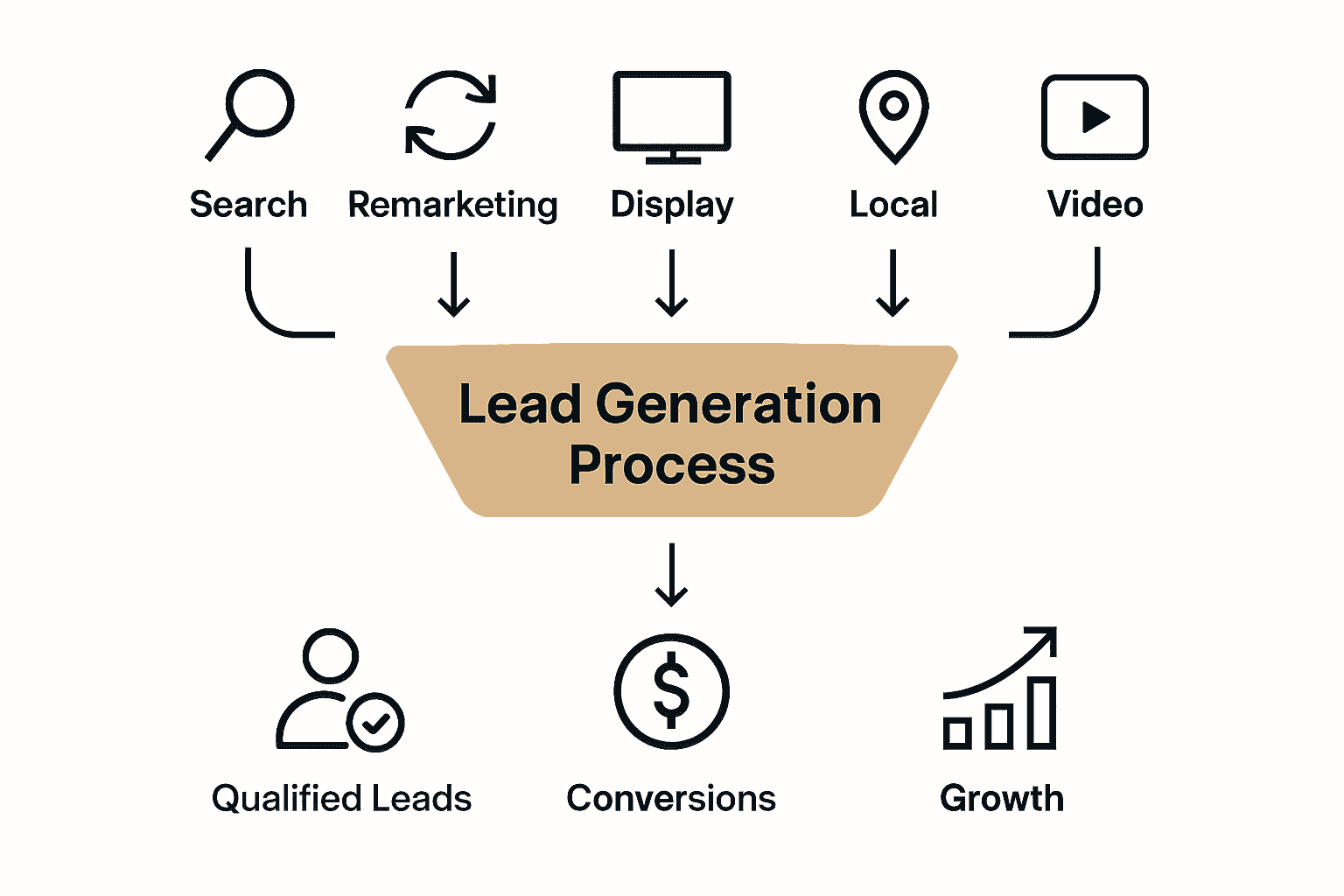 Search network campaigns capture immediate demand, remarketing nurtures warm leads, display networks build brand awareness, local service ads target geographical markets, and video campaigns create engaging storytelling opportunities. By understanding and strategically implementing these different PPC approaches, businesses can create a multi-layered lead generation system that addresses various customer touchpoints and preferences.

How PPC Drives Quality Leads in New Zealand
In the competitive New Zealand service business landscape, Pay-Per-Click (PPC) advertising has emerged as a powerful mechanism for generating high-quality leads that convert efficiently. Unlike traditional marketing approaches, PPC enables local businesses to precisely target potential clients by leveraging sophisticated digital advertising strategies that connect directly with individuals actively seeking specific services.
Targeted Geographic Precision
New Zealand’s unique market dynamics demand hyper-local advertising approaches. PPC campaigns allow service businesses to narrow their targeting to specific regions, cities, and even neighbourhoods, ensuring marketing budgets are spent reaching the most relevant potential customers. For service providers in Auckland, Wellington, or smaller regional centers, this means connecting with prospects who are not just interested, but geographically positioned to engage with your business.
Immediate Conversion Potential
The real power of PPC for New Zealand service businesses lies in its ability to capture high-intent customer moments. When potential clients search for immediate solutions like “emergency plumber in Auckland” or “business coaching in Wellington”, strategically crafted PPC ads can appear instantly, providing a direct pathway from search query to service inquiry.
Key advantages of PPC for New Zealand service businesses include:
- Precise audience targeting
- Real-time performance tracking
- Flexible budget management
- Immediate visibility in search results
- Measurable return on investment
Successful PPC campaigns in the New Zealand market require a nuanced understanding of local consumer behaviors, search patterns, and regional business ecosystems. By developing targeted ads that speak directly to local needs, service businesses can transform digital advertising from a cost center into a predictable lead generation engine that delivers measurable growth and tangible business outcomes.
Key Strategies for Effective Lead Generation
Lead generation through PPC campaigns requires a strategic, multifaceted approach that goes beyond simple keyword targeting. Successful businesses understand that effective lead generation is about creating a comprehensive system that attracts, engages, and converts potential customers through carefully crafted digital marketing techniques.
Keyword Research and Targeting
The foundation of any successful PPC lead generation strategy begins with precise keyword research. This involves identifying not just high-volume search terms, but understanding the specific intent behind potential customers’ searches. Service businesses must dig deep into long-tail keywords that reveal true customer needs, focusing on phrases that indicate high purchase intent rather than broad, generic search terms.
Conversion-Optimised Landing Pages
PPC campaigns are only as effective as the landing pages they direct potential leads to. A high-converting landing page is a critical component of successful lead generation, requiring a laser-focused approach that eliminates distractions and provides a clear, compelling path to action. This means creating pages that speak directly to the visitor’s specific needs, with:- Clear, benefit-driven headlines
- Concise and persuasive copywriting
- Prominent and simple contact forms
- Social proof elements like testimonials
- Compelling call-to-action buttons
The most effective lead generation strategies leverage a holistic approach that combines multiple touchpoints. This includes:
- Sophisticated audience targeting
- Compelling ad copy that addresses specific pain points
- Retargeting campaigns to re-engage potential leads
- Continuous performance tracking and optimisation
- Multi-channel approach integrating PPC with other marketing efforts
Ultimately, successful lead generation through PPC is an ongoing process of refinement and adaptation. Service businesses must commit to continuous learning, regularly analysing campaign performance, testing new approaches, and staying agile in response to changing market dynamics and customer behaviours.
Common Pitfalls and Alternatives to PPC
Pay-per-click (PPC) advertising presents both powerful opportunities and significant challenges for service businesses. While an effective digital marketing strategy, PPC is not a universal solution, and understanding its limitations is crucial for developing a comprehensive marketing approach that maximises lead generation potential.
Budget Drain and Cost Inefficiencies
One of the most significant pitfalls in PPC campaigns is uncontrolled spending. Inexperienced marketers often burn through budgets without generating quality leads, falling into common traps like targeting overly broad keywords, neglecting negative keyword strategies, or failing to optimise ad relevance. These mistakes can quickly transform PPC from a strategic investment into a financial drain, with businesses spending substantial amounts for minimal return.
Alternative Lead Generation Strategies
For businesses seeking diverse marketing approaches, several alternatives can complement or replace traditional PPC advertising:
- Local SEO: Optimise website and online presence to rank organically in local search results
- Content Marketing: Develop valuable, informative content that attracts potential clients
- Networking and Referral Programs: Leverage existing professional relationships
- Social Media Marketing: Build brand awareness and engage potential clients
- Email Marketing: Nurture leads through targeted, value-driven communication
Successful marketing strategies rarely rely on a single channel. Smart service businesses develop a multi-channel approach that combines PPC with other lead generation techniques. This diversified strategy helps mitigate risks associated with platform changes, algorithm updates, and market fluctuations. By spreading marketing efforts across multiple channels, businesses can create a more resilient and consistent lead generation ecosystem that adapts to changing market dynamics and customer preferences.
Unlock the Full Potential of PPC for Lead Generation in Your Service Business
If you are struggling with turning your PPC campaigns into reliable lead generators or worried about wasted ad spend due to unfocused targeting and poor conversion rates, you are not alone. Many service businesses face these exact challenges — from mastering keyword research to crafting landing pages that truly convert and even managing remarketing efforts that nurture warm leads. Understanding PPC concepts like search network campaigns and hyper-local targeting is one thing, but applying them effectively to drive consistent leads requires expert insight.
Ready to overcome costly pitfalls and build a sustainable lead generation engine tailored to New Zealand markets? Explore how Four Stripes combines precise Google Ads management, local SEO, and WordPress website design into a winning formula for service businesses. Visit our Uncategorized | Website Design & Google Ads That Generate Leads category to see proven strategies we use every day for clients exceeding $300 000 in annual revenue. Don’t let your PPC investment drain your budget without results. Act now and partner with experts who truly understand turning clicks into clients at Four Stripes.
Frequently Asked Questions
What is PPC advertising, and how does it work for lead generation?
PPC advertising, or pay-per-click advertising, is a digital marketing strategy where businesses pay each time a user clicks on their ad. It involves bidding on specific keywords relevant to potential customers’ searches, allowing ads to display prominently in search engine results and other online platforms to generate qualified leads.
What are the key components of a successful PPC lead generation campaign?
Successful PPC lead generation campaigns include strategic keyword selection, compelling ad copy development, optimised landing pages designed for conversions, and comprehensive conversion tracking to analyse which ads generate the most valuable leads.
How can businesses optimise their landing pages for better PPC lead generation?
To optimise landing pages for PPC lead generation, businesses should focus on creating clear, benefit-driven headlines, concise, persuasive copy, easy-to-use contact forms, social proof elements like testimonials, and strong call-to-action buttons that guide visitors towards taking the desired action.
What are some common mistakes to avoid in PPC advertising?
Common mistakes in PPC advertising include targeting overly broad keywords, neglecting negative keyword strategies, failing to optimise ad relevance, and uncontrolled spending without tracking performance. These pitfalls can result in wasted budgets and ineffective campaigns.
Recommended
- Website Design & Google Ads That Generate Leads | Four Stripes
- Local SEO | Website Design & Google Ads That Generate Leads
- Website Development | Website Design & Google Ads That Generate Leads
- Blog | Website Design & Google Ads That Generate Leads