Forget the business talk for a minute. An EDM is just a professional email you send to a list of your customers or people who might become customers. Think of it as a smart, digital version of a leaflet drop.
But instead of ending up in random letterboxes and getting thrown in the recycling, it lands right in the inbox of people who actually want to hear from you.
What Are EDMs and Why Should Your Trade Business Care?
If you're a plumber, builder, electrician, or run any service business in the UK, you probably think email marketing is for big companies, not you. Let's make it simple. An EDM, which stands for Electronic Direct Mail, is one of the easiest and strongest tools you can have.
Imagine being a postman who only delivers letters that people are happy to get. No junk mail, just good stuff. That’s what an EDM does. It's your direct way to send helpful tips, special offers, or company news to people who have already shown they are interested in your services.
This direct line to your customers is a huge benefit that most of your rivals are ignoring. It’s a bit shocking, but while 96% of businesses have a website, a government report on NZ's digital capability found that only 24% use digital marketing tools to tell people about themselves. This is a big gap you can take advantage of.
Your Secret Tool for Winning Locally
For a British tradesperson, using EDMs is not about sending spam. It’s about building relationships and making sure people remember you. It's that simple. When a past customer's boiler finally breaks down, you want your name to be the first one they think of. A helpful, simple email every month or two makes that happen.
Think of it this way: Your customer list is your most important business asset. An EDM is the tool that lets you talk to that asset, remind them you do great work, and get them to call you again or tell a friend about you.
It’s your secret tool for a few key reasons:
- It builds trust. Sending a quick tip, like how to get a boiler ready for winter, shows you’re a professional who knows your stuff and really wants to help.
- It brings in repeat business. A simple reminder about an annual gutter clean or a roof check can turn a one-off job into a regular, reliable customer.
- It helps turn quotes into jobs. You can send a friendly follow-up email to people you've quoted for, giving them a gentle nudge and reminding them you’re ready when they are.
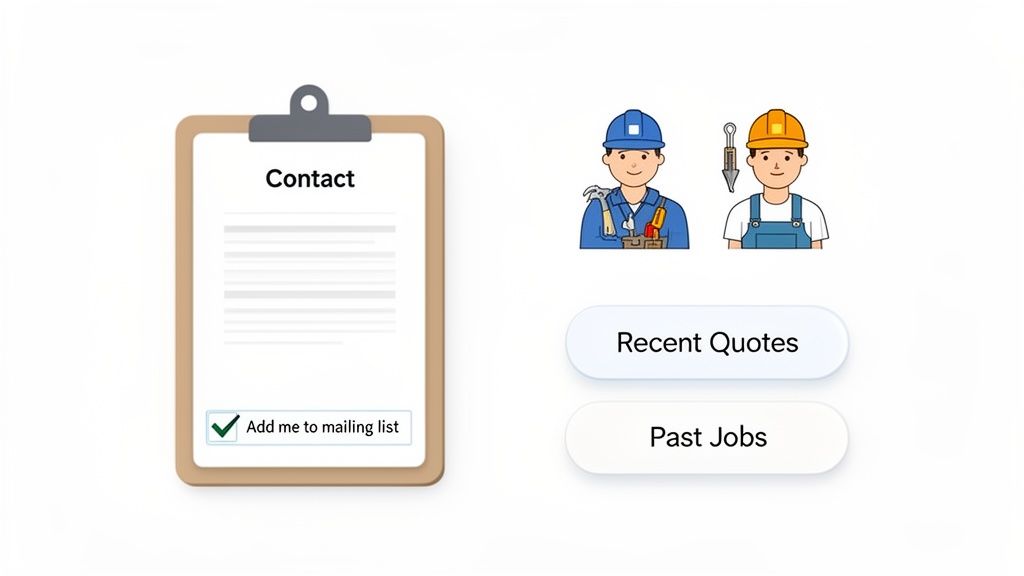
This picture explains the whole idea perfectly.
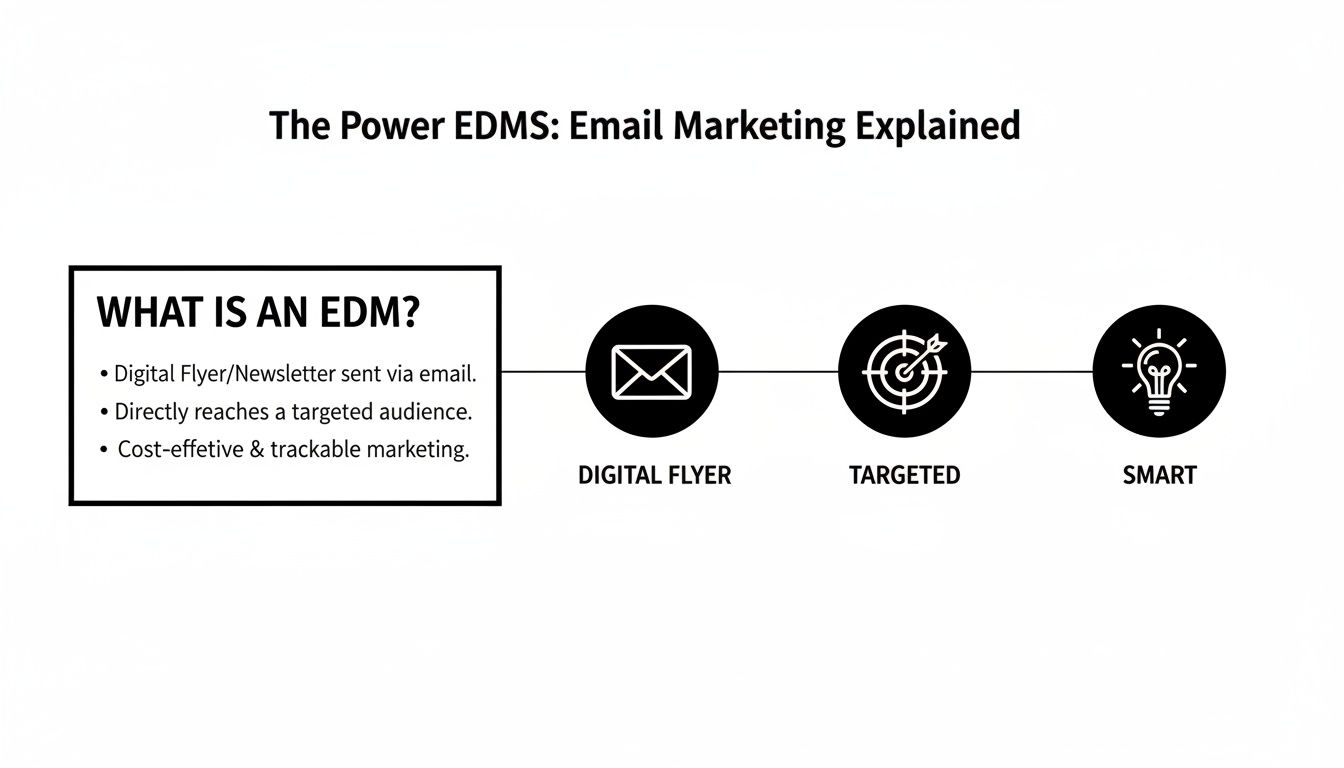
It’s the directness of a leaflet mixed with the smarts of digital marketing—getting the right message to the right people.
Get a Head Start on Your Rivals
Here’s the best part: most of your local rivals probably aren't doing this. They might have a Facebook page they post on now and then, but very few are properly building an email list and talking directly to their customers.
By starting now, you get a massive advantage in your service area.
You don't need a huge marketing budget or difficult software. All you need is a list of your past and potential customers and a simple plan to send them something genuinely useful. This is how you build a stronger, more reliable business—one that doesn't just rely on chasing new leads but grows on the loyalty of happy clients.
How to Build Your Customer List the Right Way
Your customer list is your most important business asset. Really. Think of it as a digital black book filled with people who already know your work and trust you to do a good job. Building this list is the key to good EDM marketing, and luckily, it’s much easier than you might think.
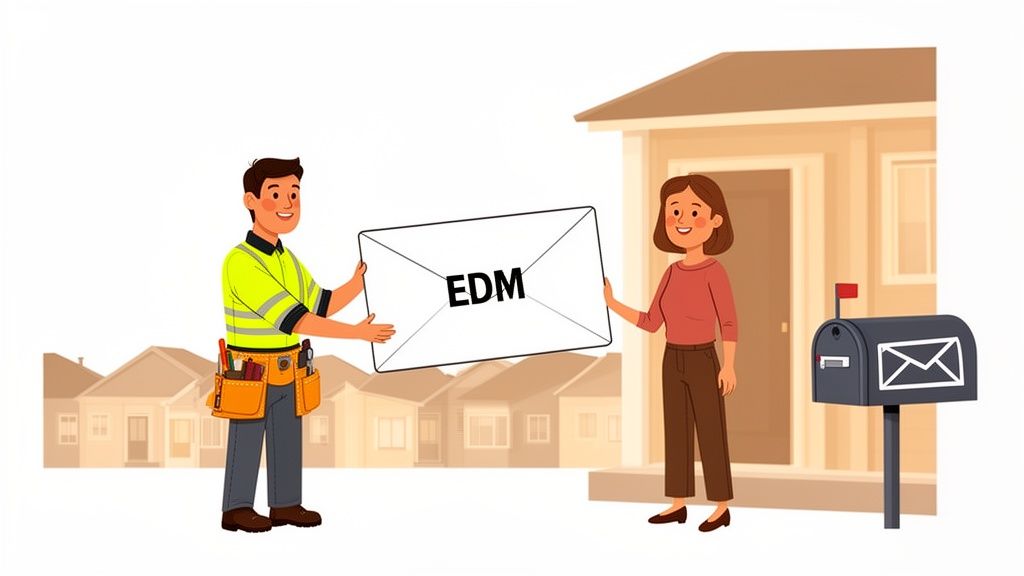
The number one rule here is to always get permission first. You can't just take every email from old invoices and send them emails. Asking first keeps you on the right side of the law and, more importantly, makes sure you’re only talking to people who want to hear from you. Happy subscribers mean better results. It's that simple.
Simple Ways to Collect Customer Details
You don’t need any clever tricks or expensive software to grow your list. The best ways are simple, honest, and fit into your day-to-day work. The key is just making it very easy for people to say "yes".
Here are a few easy ways to start collecting contacts:
- On your quote forms: Add a simple tick-box that says something like, 'Yes, add me to your mailing list for seasonal tips and special offers'. It's a perfect, no-pressure way to ask.
- On your website: Put a clear sign-up form on your contact page or at the bottom of the page. Keep it basic – just ask for a name and an email address. Done.
- After a job is done: When you send the final invoice, you could add a friendly P.S. that says, "Would you like to join our list for yearly maintenance reminders?".
The goal is to offer something useful in return for their email address. People are much more likely to sign up if they know they'll get helpful info, not just lots of sales emails. If you need a few more ideas, our guide on how to generate local leads for NZ service businesses offers some great starting points.
Organise Your List for Better Results
Once people start signing up, you don't just have a list of names; you have a powerful tool. And that tool gets even better when you keep it organised. The official term is segmentation, but don't let the fancy word put you off. It just means sorting your contacts into simple, sensible groups.
Sending the same message to everyone is like using a sledgehammer to hang a picture frame. By sorting your list into smaller, more specific groups, you can send the right message to the right person every time. This simple step can really increase how many people open and act on your emails.
This doesn't need to be difficult at all. As a service business, you can start with a few basic groups that will make a huge difference right away.
Starting Groups for Your Customer List
Think about the different types of customers you work with. A person you just sent a quote to needs a very different message than a loyal client you worked for last year.
Here are three simple groups to get you started:
- Recent Quotes: This group is everyone who has received a quote but hasn't said yes yet. You can send them a friendly follow-up, or maybe a story of a similar job you did well, to help them decide.
- Past Jobs (Last 12 Months): These are your recent, happy customers. They’re the perfect people to email about new services, maintenance reminders, or a polite request for a Google review.
- Older Customers (1+ Year Ago): These clients haven't heard from you in a while. A "we miss you" offer or a seasonal safety checklist is a great way to get in touch again and bring them back for more work.
By starting with these simple groups, you are already far ahead of most of your rivals. You’re not just sending emails; you're building relationships and creating more chances for your business to grow.
Creating Emails That People Actually Open and Read
Getting someone to open your email in a busy inbox is half the job done. The good news? You don’t need any fancy marketing tricks to do it. You just need to be clear, helpful, and sound like a real person.
At the end of the day, only two things really matter: the subject line and the first few sentences they read.
Forget the business talk and slick sales pitches. The goal is to create emails that people are happy to see. Let's look at how to write simple, good emails that build trust and get you more work.
Writing Subject Lines That Work
Think of your subject line as your digital handshake. It’s the first thing people see, and it decides if your email gets opened or sent to the bin. For a service business, a good subject line is specific, local, and useful.
Here are a few simple ideas you can use:
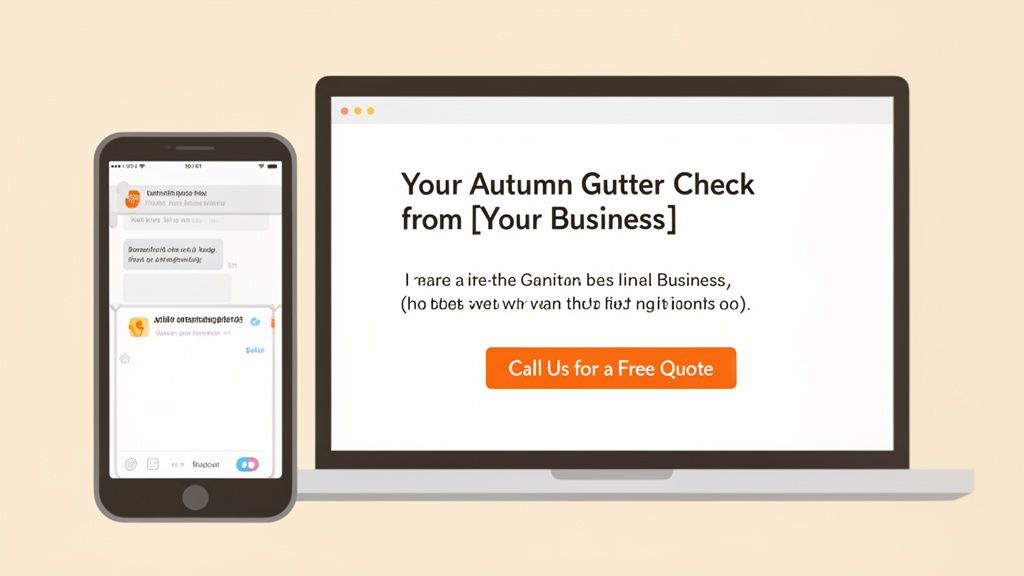
- Seasonal Reminder: 'Is Your Boiler Ready for Winter?' or 'Your Autumn Gutter Check from [Your Business Name]'
- Local Tip: 'A Quick Tip for Manchester Homeowners' or 'Keeping Your Deck Tidy in Brighton'
- Follow-Up: 'Following up on your quote from [Your Business Name]'
The best subject lines feel personal and promise real value. They make it clear the email is from a local business they know, and that there's something useful inside—not just another sales pitch. Getting this small detail right can make all the difference.
Notice how those examples mention a season, a specific job, or a local area? That tells the reader right away this email is for them. It feels less like spam and more like a helpful message from a local expert they can trust.
Keeping Your Email Simple and Helpful
Once they’ve opened your email, your next job is to give them what you promised in the subject line—and fast. People are busy, so get straight to the point. The aim is to be helpful, not pushy.
Write like you talk. Imagine you’re having a quick chat with a customer on-site. Use simple language, get rid of big blocks of text, and keep your paragraphs short. One or two sentences is perfect.
Here’s a simple plan that works every time:
- A Clear Headline: Make it big, bold, and to the point. It should match your subject line, like "Get Your Gutters Ready for Autumn".
- A Short, Friendly Message: A couple of sentences explaining why you’re getting in touch. For example, "Hi [Customer Name], with winter on its way, now's the perfect time to clear out your gutters to prevent leaks and water damage."
- One Clear Action: Tell them exactly what you want them to do next. Don't give them five different options. Just one clear, simple "call to action," like "Call Us for a Free Quote" or "Book Your Gutter Clean Today".
The move to digital communication is growing. The global market for Electronic Document Management Systems is set to grow from US$6.37 billion in 2024 to US$7.28 billion in 2025, as more businesses see the benefits of going paperless. You can read the full research about this market's rapid expansion.
By keeping your message simple and focused, you make it very easy for customers to see what you're offering and how to take the next step. If you're looking for more ideas, these lead nurturing email templates are a great place to start.
Simple Campaign Ideas For UK Service Businesses
Knowing you should be sending emails is easy. Figuring out what to say? That’s often the part that stops people. The good news is, you don’t need to be a marketing expert to create great EDMs in marketing. The best emails are the ones that are helpful and useful for your customers.
Stuck for ideas? Here are some real-world examples you can use straight away. Each one is designed to be quick to write, build trust, and keep your business in mind for when the next job comes up.
Monthly Project Showcase For Builders
If you’re a builder, you create great results that people need to see. A simple monthly email is the perfect way to show off your hard work and remind past clients what you can do. Think of it as a small portfolio sent directly to their inbox.
This email doesn't need to be long. Just pick one recently finished project and tell a quick story about it.
Here’s a simple template:
- Subject Line: A Recent Kitchen Reno in Islington
- Headline: Check Out This Makeover!
- Body: Put in two or three great photos (before and after shots are perfect). Write a couple of sentences like, "We just finished this kitchen renovation for the Smith family over in Islington. They wanted a more open, modern space, and we're thrilled with how it turned out."
- Call to Action: End with something simple, like, "Planning a project of your own? Give us a call for a free chat."
This way does two things at once. It shows solid proof of your great work and it gently reminds people in that area that you're the local expert.
Quarterly Tax Updates For Accountants
For professional services like accounting, your best marketing tool is just being helpful. Your clients are busy running their businesses; they rely on you to keep them right with important dates and rules. A simple quarterly update is a great way to provide real value.
An email that saves a client from a late penalty is much more powerful than any sales pitch. It shows you as a helpful partner in their success, not just a service they use once a year. This builds amazing loyalty.
Your quarterly EDM can be a simple checklist or a summary of key dates.
- Subject Line: Key Tax Dates for the Next Quarter
- Body: Use a bulleted list to outline important deadlines like provisional tax payments or VAT returns. You could even add a short tip, like "Remember to claim all your vehicle expenses – it really adds up!"
- Call to Action: Finish with, "If you have any questions or need help getting organised, just reply to this email."
This kind of useful, simple content is exactly what makes EDMs in marketing so good. If you're looking for more ways to connect with your local community, you might find some good ideas in these local marketing ideas for service businesses.
Ready-to-Go Email Templates
Sometimes, you just need an idea you can copy and send in five minutes. These simple campaigns are perfect for keeping in touch without using up your valuable time.
1. The Seasonal Maintenance Reminder
This is a classic for any tradesperson. It’s timely, helpful, and often leads directly to new jobs.
- Subject: Is Your Boiler Ready for Winter?
- Body: "Hi [Name], The cold mornings are just around the corner! A quick service on your boiler now will make sure it runs well all winter, saving you money and hassle. We can give it a full clean and check for just £[Price]."
- Call to Action: "Book Your Service Today"
2. The New Team Member Introduction
This email is great for showing your business is growing and adds a genuine, personal touch.
- Subject: A New Face at [Your Business Name]
- Body: "We're excited to welcome our new apprentice, Sam, to the team! He's a fast learner and is looking forward to helping us out on our next jobs. Say hello if you see him around!"
- Call to Action: "Meet the Rest of Our Team" (Link to your website's 'About Us' page)
3. The Simple Follow-Up Thank You
Sent a week after a job is completed, this email builds goodwill and is a great, low-pressure way to ask for a review.
- Subject: Just Checking In – [Your Business Name]
- Body: "Hi [Name], Hope you're happy with the work we did at your place last week. It was a pleasure working with you. If you have a spare moment, we'd really appreciate a quick review on Google."
- Call to Action: "Leave a Review Here" (Link to your Google Business Profile)
Understanding the UK's Email Marketing Rules
The legal side of EDMs in marketing might sound a bit scary, but it’s actually quite simple. In the UK, the main law you need to know about is the GDPR (General Data Protection Regulation) and the Privacy and Electronic Communications Regulations (PECR).
Think of it as a set of simple rules for being a polite guest in someone’s inbox.
It all comes down to respect, which is just good business anyway. Getting this right builds trust and makes sure potential customers are happy to hear from you, rather than hitting the spam button. Let’s break it down into three simple, common-sense rules.
Rule 1: Get Permission First
This is the big one. You need permission before you send a marketing email to someone. This is known as consent. You can't just collect every email address you've ever seen, put them in a list, and start sending out offers.
Luckily, getting permission is easy. People can give you their consent in a couple of common ways:
- Directly: They might tick a box on your quote form that says, "Yes, send me helpful tips and offers." Or they could fill out a sign-up form on your website to get your newsletter.
- Implied: If you have an existing business relationship with someone, like a past customer, it's generally understood they're okay with you getting in touch about similar services. Just make sure the email is relevant to them.
The golden rule here is to always be very clear about what people are signing up for. Being honest from the start is the best way to build a good email list filled with people who want what you're sending.
Rule 2: Say Who You Are
Every single marketing email you send must clearly say who it’s from. Think of it like introducing yourself when you walk into someone’s home—your customers need to know right away that the email is from your business.
This means you must include correct information about your business in every email, which is usually done in the footer.
Make sure you always include:
- Your business name.
- A valid physical address or P.O. Box.
- Your contact details, like a phone number or a link to your website.
This isn’t just a legal rule to follow; it’s a massive trust signal. It shows you’re a real, legitimate UK business that is proud of its work.
Rule 3: Provide an Easy Way Out
Just as you need permission to enter someone’s inbox, you must also give them an easy way to leave. Every marketing email you send must have a clear and simple way for people to unsubscribe.
This is usually a link at the very bottom of your email that says "Unsubscribe" or "Manage your email preferences." This link has to work, and it can't be hidden. When someone clicks it, you need to remove them from your list quickly.
Don’t be afraid of unsubscribes! It just means that person wasn't the right fit for your offer at that time. It's actually a good thing—it helps keep your list clean and full of people who are interested in your services.
Choosing the Right Tools Without Breaking the Bank
You don't need to pay for fancy, expensive software to get started with EDMs in marketing. In fact, a lot of the best tools out there are either free or very cheap, making them a perfect fit for a small UK service business watching every pound.
Let's be honest, getting set up is often the biggest problem. The good news is these tools are built for business owners, not tech experts. They come with simple drag-and-drop builders that let you put together a professional-looking email in minutes.
Finding the Right Fit for Your Business
There are lots of great options, and many have free plans that are more than enough to get you started. When you're figuring out your budget, having a look at the best email marketing software options can help you find a tool that does the job without the high price tag.
Here are a couple of popular choices that work really well for tradespeople and professional services:
- Mailchimp: This one's a household name for a reason. Its free plan is very generous, giving you up to 500 contacts and 1,000 email sends a month. That's a great starting point for any business.
- Campaign Monitor: Another great option, known for its beautiful templates and a really simple editor. It has different price plans, so you can start small and grow as your customer list gets bigger.
Most of these tools will also connect to your website. This means you can put a sign-up form on your contact page, and any new names are automatically added to your email list. Setting this up once saves you a huge amount of manual work later on. You can get the full story on how this all works in our guide to what marketing automation is.
Understanding Your Results The Easy Way
Once you've sent your first email, the software will give you a report full of numbers. It can look a bit scary at first, but you really only need to watch three simple numbers to see if your email worked.
Don't get lost in data. Tracking just three key numbers—Open Rate, Click Rate, and Unsubscribes—will tell you everything you need to know about what's working and what isn't. This simple focus makes improving your next email much easier.
Let's look at what these three numbers actually mean in plain English.
The Three Key Numbers to Watch
Understanding these numbers is the secret to getting better results with every EDM you send.
- Open Rate: This is just the percentage of people who opened your email. If you send it to 100 people and 25 open it, your open rate is 25%. For a small service business in the UK, anything over 20% is a good result. If your number is a bit low, it's almost always a sign your subject line didn't grab their attention. Try making it more specific or interesting next time.
- Click Rate (or Click-Through Rate): This tells you the percentage of people who opened your email and then clicked on a link inside it. For example, if 25 people opened your email and 5 of them clicked your "Call Us Now" button, your click rate is 20%. A good click rate is usually between 2-5% of everyone who received the email. A low number here often means the offer or message inside your email wasn't strong enough to make them act.
- Unsubscribes: This is simply the number of people who've asked to be taken off your list. Don't panic when you see a few of these! It's completely normal and helps keep your list healthy by removing people who aren't a good fit. However, if you see a big jump in unsubscribes after sending an email, it might be a sign that you're sending emails too often or the content isn't right for your audience.
Your Top EDM Marketing Questions Answered
Starting with email marketing always brings up a few questions. We get it. To finish, here are the simple answers to the most common questions we hear from UK tradespeople and service professionals, so you can hit ‘send’ with confidence.
How Often Should I Be Sending These Emails?
This is the number one question we get, and the answer is simpler than you think. For most service businesses, a great starting point is sending one high-value email per month. That’s often enough to stay on your customers' radar without annoying them.
If you’re often creating good content—like showing off recent projects or sharing handy maintenance tips—you could send one every two weeks. The golden rule is always to be helpful, not just noisy. It’s far better to send one useful email a month than four forgettable ones.
What If My Email List Is Tiny?
Don't worry about the numbers when you're just starting out. Even a small list of 20–30 past customers is very valuable. These are people who have already paid you, know the quality of your work, and trust you. They’re much better than cold leads.
Focus on the quality of your list, not the size. A small, interested list of happy local clients will always get you more work than a massive list of random people who don't know who you are. Building real relationships is what makes EDMs in marketing work.
Can't I Just Use My Normal Gmail or Outlook Account?
Well, you can, but it’s a really bad idea for a few reasons. Sending lots of emails from a personal account is a fast way to the spam folder and makes your business look unprofessional.
Proper email marketing tools are built for the job. Here's why you should use them:
- You look professional with clean, branded templates instead of a plain text email.
- They include an unsubscribe link, which is a legal must-have under UK law.
- You get useful data, like seeing who opened your email and which links they clicked on.
Starting with a free plan from a tool like Mailchimp is the smart move. It’s easy to set up, keeps you on the right side of the law, and gives your business the professional look it deserves.
Ready to stop chasing leads and start building a business that gets the phone ringing? Four Stripes creates websites and marketing strategies that help UK service businesses lead in their local area. Find out how we can help you at https://fourstripes.co.nz.