

Most british business owners are surprised to learn that over 90 percent of online experiences start with a search engine. Getting noticed by Google is not just about clever keywords or flashy websites. The rules for ranking well keep changing, making it harder for companies to reach their audience without the right strategy. Understanding these SEO ranking factors can turn your digital presence around and help you compete on a level playing field.
Table of Contents
- Defining SEO Ranking Factors For Google
- On-Page And Off-Page SEO Explained
- Technical SEO Essentials For Rankings
- Local SEO Factors For New Zealand Businesses
- Common Mistakes And How To Avoid Them
Key Takeaways
| Point | Details |
|---|---|
| SEO Ranking Factors | Google uses various ranking factors beyond keywords, including content relevance, technical performance, and user engagement metrics. |
| On-Page and Off-Page SEO | On-page SEO focuses on site content optimisation, while off-page strategies enhance authority through backlinks and social engagement. |
| Technical SEO Essentials | Optimising website infrastructure and performance is crucial for improving search engine visibility and ensuring effective crawling and indexing. |
| Local SEO Strategies | For New Zealand businesses, managing a precise Google My Business profile and maintaining consistent citation information are vital for attracting local customers. |
Defining SEO Ranking Factors for Google
TL;DR: SEO ranking factors are specific criteria search engines use to determine website relevance, authority, and user experience, directly impacting search result placements.
Search engine optimisation (SEO) ranking factors represent the complex algorithmic criteria Google uses to evaluate and rank webpages. According to research from arxiv.org, these factors encompass multiple dimensions beyond simple keyword matching, including user interaction signals, content quality, and technical website performance.
At its core, Google’s ranking system examines several critical components. Content relevance remains paramount, where pages must precisely match user search intent. This means creating high-quality, original content that comprehensively addresses specific user queries. Technical performance equally matters, with factors like page loading speed, mobile responsiveness, and secure connections (HTTPS) significantly influencing rankings.
Interestingly, research investigating public perceptions of SEO arxiv.org suggests users increasingly understand that ranking isn’t random but driven by sophisticated algorithmic assessments. Key ranking factors now include:
- Authoritative backlink profiles
- User engagement metrics
- Content depth and comprehensiveness
- Website technical health
- Geographic and localisation signals
For local service-based businesses, local SEO strategies become particularly crucial, as Google prioritises relevance and proximity when displaying search results.
On-Page and Off-Page SEO Explained
TL;DR: On-page SEO focuses on website content and structure, while off-page SEO involves external factors like backlinks and online reputation that influence search rankings.
Search engine optimisation comprises two fundamental strategies: on-page and off-page SEO techniques. Research from iarjset.com reveals these complementary approaches work together to improve website visibility and search engine rankings.
On-page SEO involves direct website optimisation elements that you can control internally. This includes crafting high-quality content, optimising metadata, improving page loading speeds, ensuring mobile responsiveness, and strategically integrating relevant keywords. Technical aspects like HTML structure, internal linking, and website architecture play crucial roles in signalling content relevance to search engines.
Conversely, off-page SEO focuses on external factors that demonstrate your website’s authority and credibility. According to ijstm.co.id, off-page techniques primarily involve building high-quality backlinks, managing online reputation, and generating social media engagement. These external signals help search engines understand your website’s trustworthiness and relevance within your industry.
Key components of off-page SEO include:
- Quality backlink acquisition from reputable websites
- Social media engagement and content sharing
- Online brand mentions and citations
- Customer reviews and testimonials
- Industry influencer collaborations
For local service businesses looking to enhance their digital presence, how to improve Google rankings becomes essential in implementing both on-page and off-page strategies effectively.
Technical SEO Essentials for Rankings
TL;DR: Technical SEO involves optimising website infrastructure, performance, and accessibility to improve search engine crawling, indexing, and overall search rankings.
Research from ijmrset.com highlights technical SEO as a critical foundation for improving search engine visibility. Technical SEO focuses on enhancing website infrastructure to ensure search engines can effectively crawl, understand, and rank your digital content.
Website Performance represents a cornerstone of technical SEO. This encompasses critical elements like page loading speed, mobile responsiveness, and server response times. Websites must load quickly and function seamlessly across different devices, as search engines prioritise user experience. Key performance metrics include reducing server response times, optimising image sizes, leveraging browser caching, and minimising complex scripts that slow down page rendering.

According to ijci.journals.ekb.eg, technical SEO elements significantly impact website ranking potential. Crawlability and indexing become crucial, requiring websites to have clean, logical site structures that search engine bots can easily navigate. This involves creating comprehensive XML sitemaps, implementing proper URL structures, and ensuring no critical content is blocked by robots.txt files.
Key technical SEO components include:
- Secure HTTPS protocol
- Mobile-friendly design
- Fast page loading speeds
- Clean, semantic HTML structure
- Efficient internal linking
- Structured data markup
- Minimised crawl errors
Local service businesses can enhance their digital presence by understanding these service area SEO strategies, which integrate technical optimisation with targeted local visibility.
Local SEO Factors for New Zealand Businesses
TL;DR: Local SEO for New Zealand businesses involves optimising online presence to attract nearby customers through geographically targeted search strategies, Google My Business, and location-specific content.
Research from jurnal.uinsu.ac.id highlights the critical importance of on-page and off-page SEO strategies for local businesses seeking to enhance their digital visibility. For New Zealand service providers, local SEO represents a targeted approach to attracting customers within specific geographic regions.
Google My Business optimisation stands as a cornerstone of local search strategies. This involves creating and maintaining a comprehensive, accurate business profile that includes precise location details, operating hours, contact information, and high-quality images. Local businesses must ensure their Google My Business listing is completely filled out, with regular updates and engaging visual content that represents their brand authentically.
Local search rankings depend on multiple interconnected factors. Citation consistency becomes crucial, requiring businesses to maintain identical business name, address, and phone number (NAP) across all online platforms. This includes local directories, social media profiles, and industry-specific listing sites. Search engines use these consistent citations to validate a business’s legitimacy and geographic relevance.
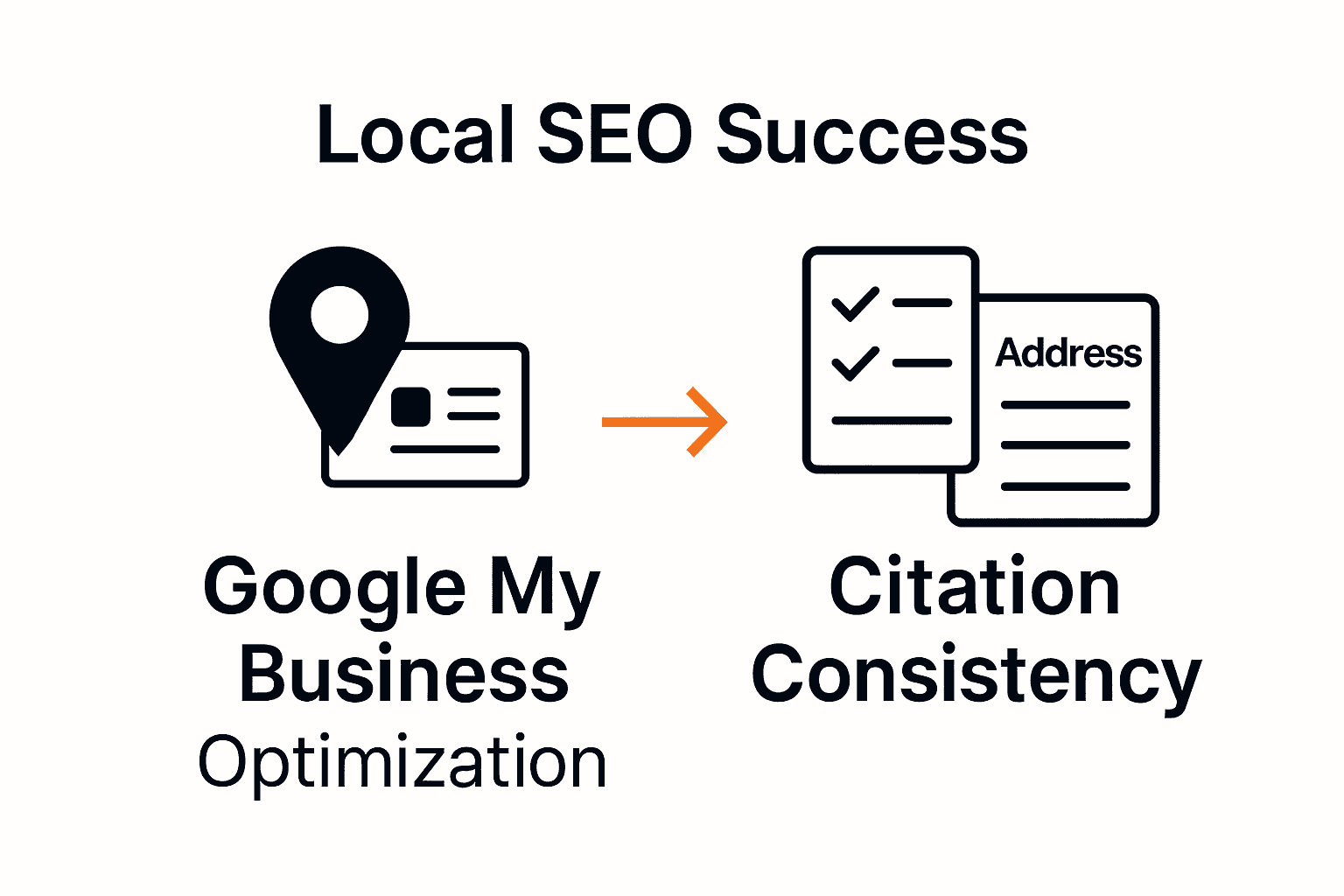
Key local SEO elements for New Zealand businesses include:
- Precise Google My Business profile management
- Consistent NAP (Name, Address, Phone) information
- Location-specific website content
- Local keyword targeting
- Customer review management
- Localised link building
- Mobile-friendly website design
To truly understand the nuanced landscape of local digital marketing, businesses can explore our guide on why local SEO matters, which provides deeper insights into regional search optimisation strategies.
Common Mistakes and How to Avoid Them
TL;DR: SEO success requires avoiding black hat tactics, maintaining content quality, understanding search engine guidelines, and focusing on genuine user value rather than manipulation.
According to Wikipedia’s competitor backlinking entry, many businesses fall into dangerous link-building traps that can severely damage their search engine rankings. Understanding these potential pitfalls becomes crucial for maintaining a robust and sustainable SEO strategy.
Keyword stuffing represents one of the most prevalent SEO mistakes businesses consistently make. This involves cramming excessive keywords into content unnaturally, which not only destroys readability but also triggers search engine penalties. Modern search algorithms are sophisticated enough to detect and punish such manipulative tactics, prioritising content that genuinely serves user intent and provides meaningful information.
From Wikipedia’s SEO contest research, we learn that manipulative link strategies remain a significant risk for businesses seeking quick ranking improvements. Search engines have become increasingly adept at identifying artificial link-building schemes, including:
- Purchasing low-quality backlinks
- Creating link farms
- Using automated link-generation tools
- Participating in link exchange programmes
- Generating spammy comment links
- Duplicating content across multiple sites
- Hiding text or using cloaking techniques
To navigate these challenges effectively, businesses can explore our 7 essential digital marketing tips, which provide strategic insights into building sustainable online visibility.
Unlock Top Google Rankings with Expert Local SEO and Digital Marketing
Understanding the complex world of SEO ranking factors can feel overwhelming when aiming to boost your business online. If you are struggling with improving content relevance, building authoritative backlinks, or fine-tuning your website’s technical SEO, you are not alone. These challenges are common but crucial if you want your small service-based business in New Zealand to dominate local search results and attract more customers.
At Four Stripes, we specialise in helping tradies, contractors, and local professionals achieve exactly that by combining tailored SEO strategies with comprehensive digital marketing solutions. From optimising your Google Business Profile to implementing proven local SEO tactics, our ‘First Page, First Call’ system focuses on delivering measurable results within 90 days.
Take control of your online visibility today and turn search rankings into consistent inbound calls. Reach out to us via contact page now and get started with your custom strategy that targets your unique business goals and local market. Don’t let competitors outrank you—partner with Four Stripes to secure your spot at the top of Google search.
Frequently Asked Questions
What are the main SEO ranking factors?
The main SEO ranking factors include content relevance, authoritative backlink profiles, user engagement metrics, website technical health, and geographical signals. Each of these factors contributes to how search engines evaluate and rank webpages.
How does technical SEO impact rankings?
Technical SEO improves website infrastructure and performance, enabling search engines to effectively crawl, index, and rank content. Key components include secure HTTPS, fast page loading speeds, and a clean HTML structure.
What distinguishes on-page SEO from off-page SEO?
On-page SEO focuses on optimising elements within a website, such as content quality and metadata, while off-page SEO involves external factors like backlinks and online reputation that influence a site’s authority and ranking.
How can businesses optimise their local SEO strategies?
Businesses can optimise local SEO by managing their Google My Business profile, ensuring citation consistency across online platforms, creating location-specific content, and actively collecting customer reviews.
Recommended
- How to Improve Google Rankings for Local Businesses | Website Design & Google Ads That Generate Leads
- 7 Essential Types of Digital Campaigns for Local Success | Website Design & Google Ads That Generate Leads
- Choosing a Search Optimisation Company You Can Trust | Website Design & Google Ads That Generate Leads
- 7 Essential Digital Marketing Tips 2025 for Local Biz | Website Design & Google Ads That Generate Leads