
A great search optimisation company does more than just fiddle with your website. They become a core part of your business growth, connecting you directly with customers who are already looking for what you do.
For a Kiwi business owner, this means more qualified leads, consistent phone calls, and a real, measurable return on your marketing spend. It’s the difference between crossing your fingers for new clients and having a predictable system that brings them to your door.
Why a Great Search Optimisation Company Is a Game Changer

If you're a plumber in Hamilton or a consultant in Auckland, you know the local market is a battlefield. Your potential customers aren't flicking through the Yellow Pages anymore. They’re on their phones, typing "electrician near me" or "business advisor Auckland" into Google.
Being the first name they see at that exact moment is everything.
This is where the right search optimisation partner completely changes the game. It’s not about vanity metrics or just getting to page one; it's about attracting the right kind of traffic—local customers who are ready to book a job or get a quote. A specialist agency knows how to position your business as the most obvious and trusted answer to these local searches.
It’s All About Tangible Business Outcomes
Let's cut through the confusing tech-speak for a minute and focus on what actually matters: results. A top-tier agency translates their work into outcomes you can see in your bank account.
This looks like:
- A steady stream of quote requests from potential customers in your specific service areas.
- An increase in direct phone calls from people who found you through a local search.
- Greater brand visibility in your community, making you the go-to choice over your competitors.
- A much higher return than you'd ever get from old-school advertising like flyers or local radio ads.
At the end of the day, the goal of SEO for a service business is simple: make the phone ring. By understanding why local SEO is so vital for Kiwi businesses, you start to see just how an expert partner makes that happen.
The core job of a search optimisation company is to build you a predictable lead generation engine. Their success isn't measured in clicks or impressions, but in the number of qualified, high-intent customers they send your way each month.
Thriving in New Zealand's Digital Market
Let's be honest, having a strong online presence isn't optional anymore, especially in New Zealand. Google isn't just a search engine here; it's the search engine, owning a staggering 92.12% of all search queries.
And with around 65% of all online searches happening on a phone, a mobile-first strategy is non-negotiable. These numbers show why a professional search optimisation company has gone from a "nice-to-have" to a must-have for any business serious about growth.
What a Top Search Optimisation Agency Actually Does
When you're trying to pick a search optimisation company, it’s easy to get bogged down in technical jargon like "backlinks," "schema," and "domain authority." But what does any of that actually mean for your bottom line? A good agency cuts through the noise and translates those complex tasks into one simple thing: more customers.
Let's forget the buzzwords for a second. A great agency’s real job is to make your business the most obvious, trusted choice for locals who are actively searching online for what you do. They pull this off by focusing on a few core areas, each designed to get your ideal customer to pick up the phone and call you.
To show you what that looks like in practice, here's a breakdown of the core services you should expect and, more importantly, the real-world business outcomes they deliver.
Core Services from a Search Optimisation Company
| Service Offering | What It Is (In Simple Terms) | Why Your Business Needs It (The Outcome) |
|---|---|---|
| Local SEO & GBP Optimisation | Making your business show up first on Google Maps and in local search results when people search for your services in your area. | You become the go-to provider in your local suburbs, capturing high-intent customers who need you now. This builds long-term, sustainable leads without ongoing ad costs. |
| Conversion-Focused Web Design | Building a website that’s fast, easy to use on a phone, and designed to get visitors to call you or fill out a form. | Turns website traffic into actual jobs. It stops you from losing potential customers who get frustrated with a slow or confusing site. |
| Google Ads Management | Running targeted ad campaigns that put your business at the very top of Google for specific keywords, generating immediate enquiries. | Gets the phone ringing from day one. Perfect for filling gaps in your schedule, promoting seasonal services, or getting ahead in a competitive market. |
Each of these services plays a critical role. A solid search optimisation strategy isn't about choosing one; it's about making them all work together to create a predictable flow of profitable work for your business.
Making Your Business a Local Magnet
Imagine you're an electrician in Christchurch. Your best customers aren't just browsing; they have a real problem right now. They’re typing things like "emergency electrician Christchurch" or "switchboard upgrade Riccarton" into Google. A sharp search optimisation company makes sure you’re the first name they see.
It all starts with your Google Business Profile (GBP). This isn't just a simple listing; it’s your most powerful tool for attracting local customers. A good agency will turn it into a lead-generating machine.
This involves meticulous, ongoing work:
- Defining Your Service Areas: Clearly mapping out every suburb you work in, from Merivale to Sumner, so you appear for those valuable "near me" searches.
- Listing Every Service: Detailing everything you offer, like LED lighting upgrades or EV charger installations, to make sure you rank when people search for those specific jobs.
- Managing Customer Reviews: Actively encouraging happy customers to leave reviews and responding to every single one. Why? Because 88% of people trust online reviews as much as a mate’s recommendation.
- Keeping It Fresh: Regularly adding photos of your work, posting updates, and sharing offers. This signals to Google that you're an active, relevant business worth showing to searchers.
When this is done right, your business starts popping up in the Google Map Pack—that prime real estate at the top of the search results. For any service business, that's the win.
Building a Website That Actually Gets You Work
Getting people to your website is only half the job. A top-tier agency knows that traffic means nothing if it doesn't turn into phone calls and quote requests. This is where conversion-focused web design is a game-changer.
Your website needs to be your best salesperson, working 24/7. It should be built from the ground up to guide a visitor from landing on your page to becoming a qualified lead.
The only goal of a service business website is to persuade. Every button, every headline, and every photo should be there for one reason: to convince a potential customer to call you or fill out your quote form.
Here’s what they’ll focus on:
- Obvious Calls-to-Action (CTAs): Your phone number should be plastered at the top of every page. "Request a Free Quote" buttons should be big, bold, and impossible to miss.
- Mobile-First Design: It has to work perfectly on a smartphone, because that’s where most of your customers are searching. If they can't easily tap to call you, they'll just go to your competitor. It’s that simple.
- Blazing-Fast Speed: They'll make sure your site loads in under two seconds. Anything slower frustrates users and gets you penalised by Google.
Running Ads That Bring in Leads Today
While Local SEO is the long game for sustainable growth, sometimes you just need the phone to ring right now. That’s what targeted Google Ads campaigns are for. A specialist can get your business in front of customers the very moment they’re searching for you.
Unlike SEO, which takes time to build up, a well-run Google Ads campaign can generate leads from the day it’s switched on. For our Christchurch electrician, an agency might run a super-specific ad targeting people searching for "heat pump installation Christchurch" in the lead-up to winter.
This isn’t about just chucking money at Google and hoping for the best. It's a science. It involves picking the right keywords, writing ads that get clicks, and constantly tweaking things to get you the lowest possible cost per lead. A key part of the job is refining these campaigns by testing different strategies for marketing campaign optimization to maximise your return.
By combining the long-term visibility of SEO with the immediate impact of paid ads, a great agency delivers a steady, reliable stream of enquiries, giving your business the fuel it needs to grow.
How to Vet and Interview Potential SEO Partners
Picking the right search optimisation company feels like a massive decision, because it is. You’re not just hiring another supplier; you’re bringing in a partner who will have a direct impact on your lead flow and, ultimately, the growth of your business. The trick is to get past the sales pitch and really dig into how they work.
A great agency won't just launch into a monologue about what they do. Instead, they'll want to understand your business inside and out. They should be asking you about your ideal customer, your most profitable services, and what a really good month of leads looks like for you. That first conversation is your biggest clue—if they’re more interested in your business goals than their own services, you're on the right track.
Creating Your Shortlist
Before you even think about jumping on calls, you need to do a bit of homework. A solid shortlist will save you from hours of wasted time and frustrating conversations. Aim to find three to five agencies that look like a good fit.
When you're doing your initial digging, focus on a few key things:
- Industry Experience: Have they actually worked with businesses like yours? A search optimisation company that has helped other Kiwi plumbers or electricians already gets your market and your customer.
- Local Focus: Do they genuinely understand the New Zealand market? Look for case studies or testimonials from local businesses. Getting results in Auckland is a different game than in Dunedin.
- Proof of Results: Can they show you real, tangible results? You're looking for case studies that go beyond fluff and focus on outcomes that matter, like more phone calls or quote requests.
A decent process here ensures any search optimisation company you talk to has a proven track record. The search optimisation industry in New Zealand is competitive, and the good firms hold onto their clients. Many have retention rates well above 80%, which tells you they're delivering results and building strong partnerships.
The Essential Interview Questions
Once you’ve got your shortlist, it’s time to get them on the phone. This is your chance to see if their approach actually lines up with what you need. Don't be shy about asking direct, specific questions.
Here are the non-negotiables you need to cover:
-
"Can you walk me through a case study for a service business like mine?"
Listen carefully to how they define success. Are they talking about rankings and traffic, or are they talking about the increase in qualified leads and phone calls their client received? The difference is huge. -
"Who will be my day-to-day contact, and how often will we actually talk?"
You need absolute clarity on communication. A good partner will have scheduled updates and be easy to get hold of when you have a question. You shouldn't have to chase them for answers. -
"What’s your approach to local SEO and our Google Business Profile?"
For any service business in New Zealand, this is everything. They should be able to talk confidently about getting more reviews, building local citations, and targeting the specific suburbs you work in. -
"How will you measure success, and what will your monthly reports look like?"
The answer should be all about business metrics—leads, calls, and conversions. If they start waffling on about traffic and keyword rankings without connecting it back to your bottom line, that's a red flag. A proper digital marketing strategist focuses on the numbers that actually grow your business.
This visual breaks down the typical process a good search optimisation company follows, from the initial deep-dive and strategy phase right through to delivering measurable growth.
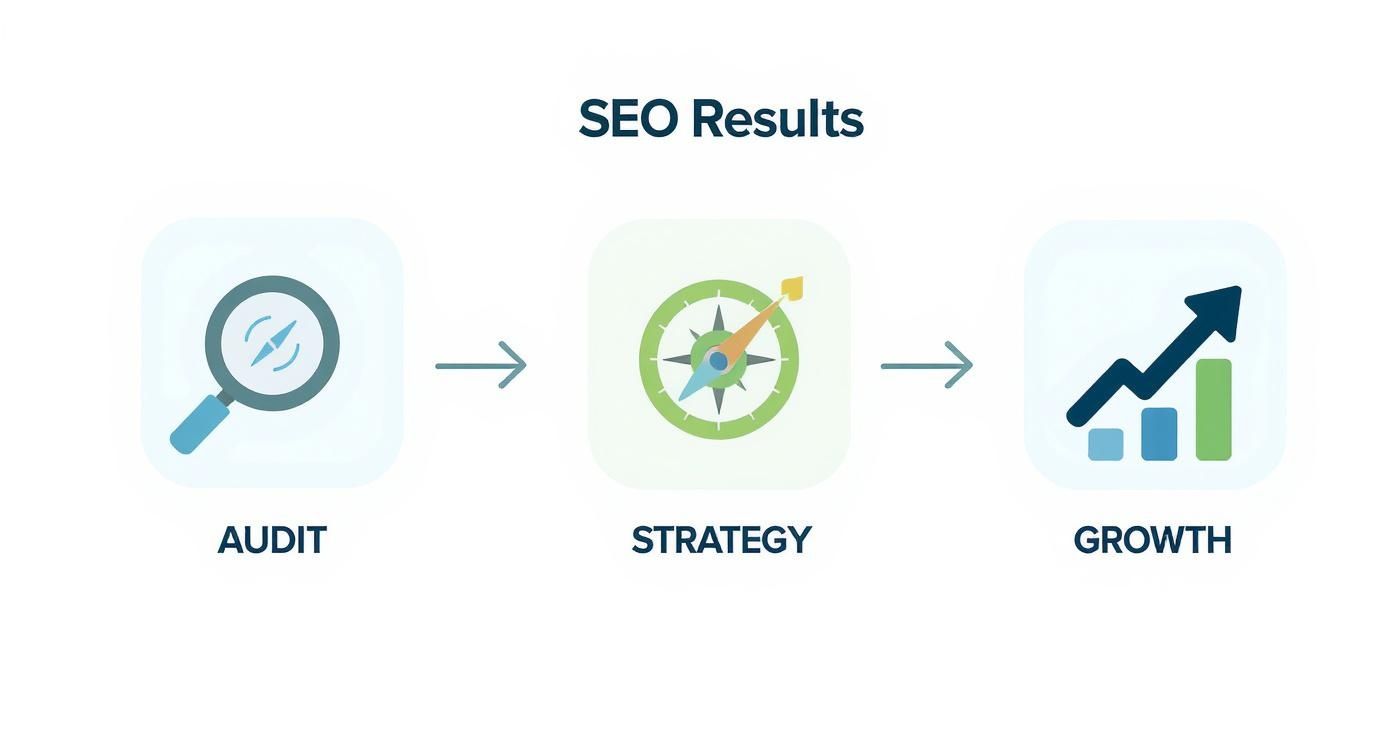
The journey always starts with a proper analysis of where you are right now. That's what informs a smart strategy designed for growth.
Red Flags and Green Flags to Watch For
During your interviews, pay close attention not just to what they say, but how they say it. Some promises and behaviours can signal trouble ahead, while others show you they're thinking like a true partner.
A slick sales pitch can sound great, but real results come from a deep understanding of your business goals. Choose the agency that asks the best questions, not the one that makes the biggest promises.
Red Flags to Avoid:
- Guaranteed #1 Rankings: This is the oldest trick in the book. No reputable search optimisation company can guarantee a specific ranking on Google. The algorithm is far too complex and always changing.
- "Secret Sauce" Strategies: If they're cagey about their methods or use a bunch of jargon they can't explain in simple terms, be careful. Transparency is non-negotiable in a good partnership.
- Focus on Vanity Metrics: If their whole pitch is about "getting you more traffic," push back. Ask them how they make sure that traffic turns into actual paying customers.
Green Flags to Look For:
- They Ask About Your Business: A great partner wants to know about your profit margins, what a customer is worth to you over time, and what your busy and slow seasons are.
- They Set Realistic Expectations: They should be upfront about timelines. SEO is a long game, and they should tell you that results won’t happen overnight. Honesty is a great sign.
- They Talk About Conversion: Their language is all about business outcomes—phone calls, form fills, and revenue. Not just clicks and impressions.
Choosing the right agency is a make-or-break moment for your business. By asking the right questions and knowing what to look for, you can move forward with a partner who is genuinely invested in seeing you win.
Understanding SEO Pricing Models and Timelines
Alright, let's talk money and time. When you decide to work with a search optimisation company, you’re not just buying a service. You're investing in a system built to bring more leads and jobs through your door. It's crucial to understand what that investment looks like and when you can expect to see a return.
Pricing isn't just a random number; it reflects the agency's process, their expertise, and how much attention they'll be giving your business. In New Zealand, you'll mainly come across two ways agencies charge, and each has its pros and cons for a service business like yours.
Common Pricing Models for SEO Services
The most common model you’ll find is the monthly retainer. Think of it like a subscription. You pay a fixed fee each month for ongoing SEO work. This lets the agency roll out a consistent, long-term strategy that builds momentum over time, covering everything from creating new content to technical fixes and building your local authority.
The other option is a project-based fee. This is a one-off cost for a specific, defined task, like building a new website or a one-time local SEO setup. While it's good for isolated jobs, it misses the ongoing tweaks and adjustments that get the best long-term results. If you're curious about what a new website build might cost, our guide on website design pricing breaks it down in detail.
To make it simple, here’s a quick comparison.
SEO Pricing Models Compared
This table breaks down the common pricing structures, helping you see what you're paying for and which model is the best fit for your business goals.
| Pricing Model | How It Works | Best For | Potential Pitfall |
|---|---|---|---|
| Monthly Retainer | A fixed monthly fee for continuous, ongoing optimisation and support. | Service businesses needing sustained growth and a predictable flow of leads. | Requires a longer-term commitment to see the full return on investment. |
| Project-Based Fee | A one-time payment for a specific, clearly defined project with a start and end date. | Businesses needing a one-off fix, like a site audit or a new website launch. | Doesn't account for the ongoing work needed to maintain and improve rankings. |
For most Kiwi service businesses, a monthly retainer just makes more sense. SEO isn't a "set and forget" deal. It needs constant attention to keep up with Google's algorithm changes and what your competitors are doing.
Setting Realistic Timelines for Results
One of the biggest mistakes business owners make is expecting the phone to start ringing off the hook overnight. Any decent search optimisation company will be straight up with you about this: SEO is a marathon, not a sprint. The results are powerful and long-lasting, but they take time to build.
SEO is like planting a tree. The work you do today won't provide shade tomorrow, but with consistent effort, it will grow into a valuable, long-lasting asset that brings benefits for years to come.
So, what should you actually expect to see, and when? Here's a typical timeline we see with local service businesses.
Months 1-3: The Foundation Phase
The first three months are all about strategy, fixing technical issues, and laying a solid foundation. You won't see a huge jump in leads just yet, but there's a heap of crucial work happening behind the scenes.
- What's happening: A deep dive into your website (site audit), figuring out the best keywords, on-page optimisation, and a full setup of your Google Business Profile.
- What you'll see: Your website's technical health will improve, and you might start seeing small ranking improvements for some of your less competitive keywords.
Months 4-6: Gaining Momentum
This is where you should start seeing real movement. The foundational work begins to pay off as Google starts to notice your site's improved relevance and authority in your local area.
- What's happening: Consistent content creation (like blog posts or new service pages), building local citations, and managing customer reviews.
- What you'll see: A noticeable increase in organic traffic and higher rankings for your main local search terms. Your phone should genuinely start ringing more often from people finding you on Google.
Months 7-12: Seeing Measurable Growth
By this point, the SEO campaign should be delivering a clear and obvious return on your investment. Your online visibility should be strong, putting you right up there as a top choice in your local service area.
- What's happening: Refining the strategy, building high-quality links, and optimising your website to turn more visitors into actual leads.
- What you'll see: A steady, predictable flow of qualified leads, top rankings for your most important services, and a real, measurable increase in revenue.
Measuring Success with KPIs That Actually Matter
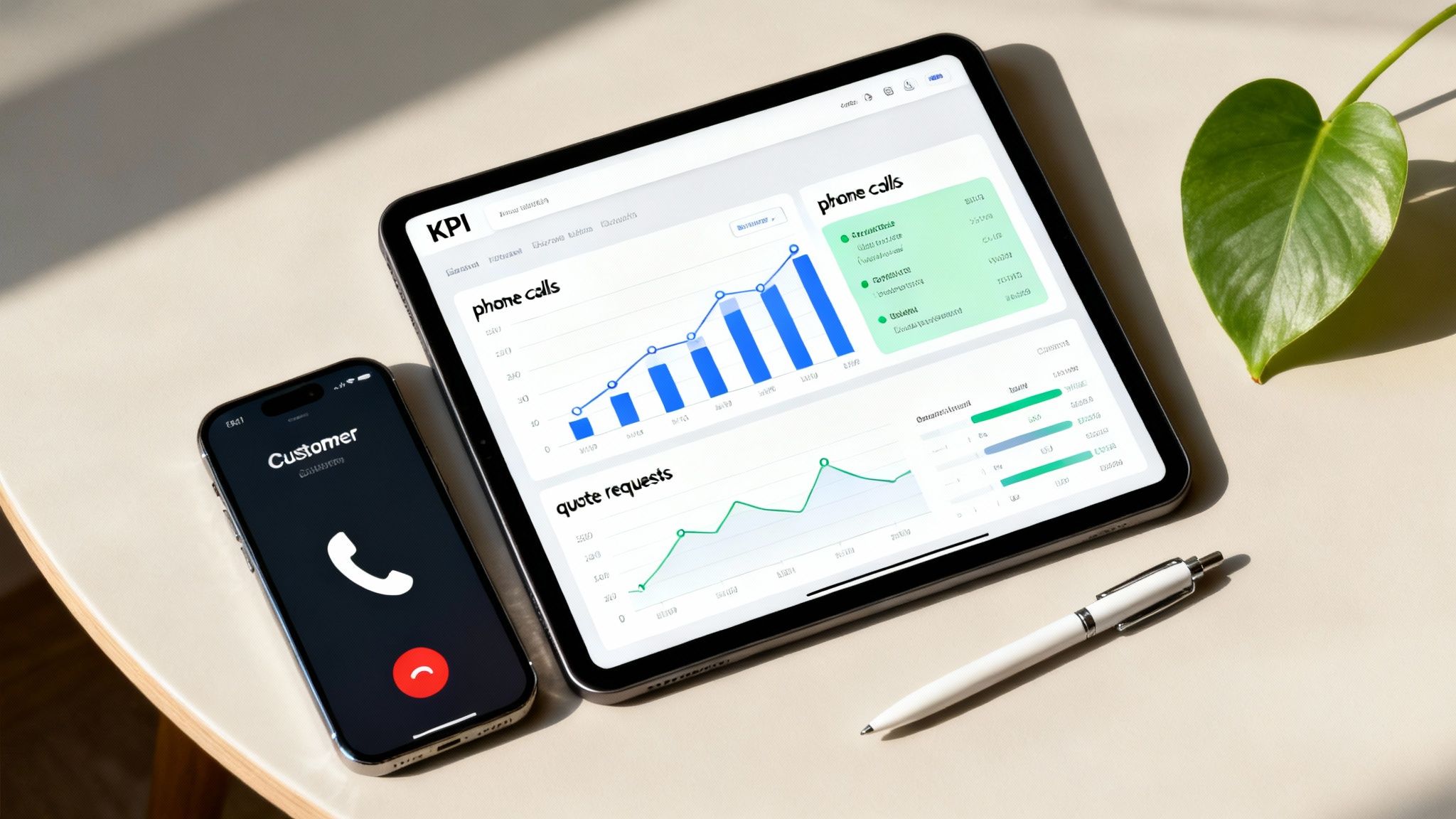
Let's be blunt: impressions and clicks are nice, but they don’t pay the bills. When you hire a search optimisation company, the only numbers that truly count are the ones tied directly to your bottom line. It's time to forget the vanity metrics and start tracking real business outcomes.
For a service business, success isn’t about how many people see you—it’s about how many people hire you. That means focusing on key performance indicators (KPIs) that represent a real customer taking a real action.
Moving Beyond Traffic and Rankings
Now, any decent agency will report on your keyword rankings and website traffic. These are important leading indicators, showing that things are moving in the right direction. But a great agency knows this is just the start of the story. The real measure of success is in the conversions.
Your monthly reports should centre on the numbers that actually grow your business:
- Qualified Phone Calls: How many genuine client calls came straight from your website or Google Business Profile? For most tradies and home service pros, this is the most valuable lead you can get.
- Quote Request Form Submissions: Tracking completed forms shows you how many potential customers are actively looking for your services and are ready to talk numbers.
- Direct Bookings: If you have an online booking system, this is gold. It’s a direct line from their search effort to profitable, scheduled work on your calendar.
These are the metrics that put food on the table. To really understand the value of your investment, you need to know how to measure SEO ROI. It changes the entire conversation from "How many people saw us?" to "How much new business did we actually generate?".
What a Valuable Monthly Report Looks Like
The monthly report you get from your agency shouldn't be a 10-page data dump filled with confusing graphs and industry jargon. That’s useless. It needs to be a clear, concise summary that tells a story about your growth.
A quality report delivers insights, not just numbers. It should connect the dots between the work they did last month and the results you're seeing today.
Your monthly SEO report should be a business tool, not a technical document. It needs to answer one simple question clearly and directly: "Are we getting more qualified leads than we were last month?"
Look for a report structured around these key areas:
- Executive Summary: A short, plain-English overview of the month's performance. It should highlight key wins and, most importantly, the impact on your lead generation.
- Performance Against KPIs: A clear chart or table showing your main goals—calls, forms, and bookings—and how they're trending over time.
- Work Completed: A simple summary of what they actually did. Things like "published two new service pages" or "secured five new local directory listings."
- Insights and Recommendations: This is the most crucial part. The agency should explain why things happened (good or bad) and lay out the plan for next month.
This kind of reporting empowers you to have a proper business conversation with your agency. It shifts the focus from technical SEO tasks to strategic growth, making sure you're both aiming for the same thing: a fuller calendar and a healthier bottom line.
Google is always changing, and a proactive partner is essential. For instance, top Auckland agencies are already adapting to AI-powered search, as some studies suggest up to 60% of searches might end without a click due to AI answers. A forward-thinking search partner will be on top of these changes to keep your leads flowing.
Your Questions About SEO Companies Answered
Pulling the trigger on hiring a search optimisation company is a big move. It’s totally normal to have a few last-minute questions before you sign on the dotted line. After all, you’re not just buying a service—you’re starting a partnership to grow your business.
Let's tackle some of the most common questions we hear from business owners at this stage so you can move forward feeling confident.
How Long Are SEO Contracts Usually?
Most good agencies here in New Zealand won't try to lock you into a long-term contract right off the bat. The most common setup is a monthly retainer, often with an initial three-month commitment that then rolls into a month-to-month agreement.
That first period is critical. It gives the agency enough breathing room to get the foundational work done—think technical audits, keyword strategy, and sorting out your Google Business Profile. It’s also enough time for you to start seeing the early signs of movement. After that, a rolling contract forces them to keep earning your business.
Be very wary of any company demanding a 12-month lock-in from day one. A great agency is confident they can deliver real, measurable results that will make you want to stay, not force you to.
The best partnerships are built on trust and performance, not scary legal documents. A flexible contract is a sign the agency backs its own ability to get you results.
What Happens If I Am Not Happy with the Results?
A fair and vital question. If you’re not happy with the progress, the first port of call is always a frank conversation with your agency contact. Any professional search optimisation company will welcome the feedback and should be able to explain exactly what’s going on.
Before that chat, have a look at your monthly reports. Are you hitting the KPIs you agreed on? More importantly, are phone calls and quote requests trending up?
If you’re not seeing the growth you expected after a reasonable amount of time (usually 6+ months for SEO), and the agency can’t give you a clear plan to fix it, a month-to-month contract means you can walk away. A good partner wants you to succeed and will never hold your business hostage if it’s not the right fit.
How Much Time Do I Need to Commit Myself?
You’re hiring experts to do the heavy lifting, but your input is still crucial for success, especially at the start. A great search optimisation company doesn't work in a bubble; they need your boots-on-the-ground knowledge to get the best results.
Here’s a realistic breakdown of your time commitment:
- Initial Onboarding (2-4 hours total): This is where you'll be needed most. Your agency needs to get inside your head and understand your business—your most profitable services, your ideal customers, and who your main competitors are.
- Monthly Review (30-60 minutes): Block out a bit of time to actually read your monthly report and have a quick yarn with your account manager. This is your chance to ask questions and make sure everyone’s on the same page.
- Ongoing Approvals & Feedback (15-30 minutes per week): Your agency might need you to approve new website content or flick them some photos from a recent job for your Google Business Profile. A quick reply keeps the momentum going.
All up, you should budget for about two to four hours a month after the initial setup. Your job is to be the source of business intelligence and feedback, which lets the agency focus on getting the work done. This teamwork is what ensures the SEO strategy is perfectly aligned with your business goals, leading to better results, faster.
At Four Stripes, we believe in partnerships built on transparency and tangible results. Our First Page, First Call system is designed to get your phone ringing with qualified local leads, and we back it up with no lock-in contracts. If you’re a service-based business in New Zealand ready for predictable growth, let’s talk. Learn how we can help your business dominate local search today.