

Most british small business owners underestimate how much a strong online presence influences customer decisions. With over 85 percent of consumers now going online to check out local services before making contact, the way your business appears online can be the difference between gaining or losing new clients. Understanding where your company stands right now helps you make smart choices for better visibility, stronger credibility, and more local leads.
Table of Contents
- Step 1: Assess Current Online Presence
- Step 2: Optimise Your Website for Local SEO
- Step 3: Enhance Google Business Profile
- Step 4: Build Quality Local Citations
- Step 5: Implement Ongoing Content Updates
- Step 6: Monitor Rankings and Measure Success
Quick Summary
| Key Point | Explanation |
|---|---|
| 1. Assess Your Online Presence | Conduct a digital audit of your website and profiles to identify accuracy and improvement areas. |
| 2. Optimise Your Website for Local SEO | Ensure your site effectively communicates local services, uses relevant keywords, and is mobile-friendly. |
| 3. Enhance Your Google Business Profile | Verify and maintain your Google Business listing to improve local search visibility and attract customers. |
| 4. Build Quality Local Citations | List your business consistently in reputable local directories to enhance online visibility and SEO. |
| 5. Monitor Rankings and Measure Success | Set up tracking to monitor search rankings and website performance, allowing for data-driven adjustments. |
Step 1: Assess Current Online Presence
An online presence assessment provides the critical foundation for understanding your digital marketing potential and identifying improvement opportunities. According to Business.govt.nz, having an up-to-date website is crucial for enhancing business credibility and establishing a professional digital footprint.
Start by conducting a comprehensive digital audit across multiple platforms. This means systematically reviewing your current website, Google Business Profile, social media channels, and online directory listings. Check each platform for accuracy of business information like contact details, operating hours, service descriptions, and current photographs. Look critically at your website design and functionality tracking metrics such as load speed, mobile responsiveness, and user experience. Examine your search engine rankings for key local service keywords related to your business.
Pro tip: Use free tools like Google Analytics and Google Search Console to gain deep insights into your current online performance. These platforms will reveal critical data about website traffic, user behaviour, search visibility, and potential technical issues preventing optimal search rankings. By understanding your starting point, you can develop targeted strategies to improve your local digital presence and attract more potential customers.
The insights gained from this assessment will directly inform your subsequent local SEO optimisation efforts, helping you create a strategic roadmap for digital growth.
Step 2: Optimise Your Website for Local SEO
Optimising your website for local SEO is about creating a digital storefront that attracts and converts local customers effectively. According to Business.govt.nz, making your website mobile-friendly and keeping content updated are crucial steps in improving search engine rankings.
Begin by ensuring your website communicates your local service area clearly. Include your specific location, service regions, and locally relevant keywords throughout your content. Craft detailed service pages that describe what you offer, using natural language that matches how local customers might search. Embed a Google Maps widget showing your business location and include your precise local address in the website footer. Implement schema markup to help search engines understand your business details, including your name, address, phone number, and operating hours.
Pro tip: Learn more about local SEO strategies by understanding how search engines connect businesses with nearby customers. As recommended by NZIE, focus on creating high-quality, shareable content that demonstrates your local expertise and encourages other websites to link back to you. This approach not only improves your search rankings but also builds credibility within your local market.

Step 3: Enhance Google Business Profile
Enhancing your Google Business Profile is crucial for improving local search visibility and attracting potential customers. According to Alliance, creating an optimised profile involves carefully claiming and updating your business information to rank higher in local search results.
Start by verifying your business listing through Google’s official process. Ensure every detail is accurate including your business name, address, phone number, website, and operating hours. Upload high resolution photographs that showcase your workspace, team, and completed service work. Write a compelling business description that incorporates relevant local keywords and clearly explains what makes your service unique. Regularly update your profile with fresh content such as posts about special offers, recent projects, or client testimonials. Encourage satisfied customers to leave genuine reviews, as these significantly impact your local search rankings.
Pro tip: Learn more about Google Business Profile optimisation to understand how strategic profile management can transform your local digital presence. As highlighted by Brewers Guild, a well maintained Google Business Profile increases your visibility in local search results and Google Maps, helping potential customers find and choose your business more easily.
Step 4: Build Quality Local Citations
Building quality local citations is a critical strategy for improving your business’s online visibility and search engine rankings. According to Alliance, listing your business consistently across local directories like Yellow.co.nz can significantly enhance your local SEO performance.
Begin by identifying reputable online directories relevant to your specific industry and local region. Ensure your business name, address, phone number, and website are identical across all platforms to maintain consistency. Prioritise high authority directories such as Google Maps, Yelp, Yellow Pages, local chamber of commerce websites, and industry specific directories. Pay special attention to the accuracy of your business details including precise location, operating hours, contact information, and service descriptions. Where possible, include a link back to your website and add high quality images that represent your business professionally.
Pro tip: Explore our comprehensive local SEO strategies guide to understand how strategic citation building can transform your online presence. As Business.govt.nz recommends, promoting your business on platforms where your ideal customers can find you is essential for increasing visibility and expanding your potential customer reach.
Step 5: Implement Ongoing Content Updates
Implementing ongoing content updates is essential for maintaining and improving your local search engine rankings. According to Business.govt.nz, regularly adding fresh content signals to search engines that your website is active and relevant, which can significantly boost your visibility.
Develop a consistent content strategy that speaks directly to your local audience and addresses their specific needs and interests. Create blog posts that highlight local projects, share industry insights, answer common customer questions, and showcase your expertise in your local service area. Consider developing different content types such as service guides, customer success stories, seasonal advice relevant to your region, and behind the scenes glimpses of your business operations. Aim to publish new content at least once every two weeks, ensuring each piece is well researched, provides genuine value, and incorporates local keywords naturally.
Pro tip: Discover more about effective content marketing strategies to help you create engaging, search engine friendly content that resonates with your local customers. Your content should not only inform but also demonstrate your unique understanding of local market challenges and opportunities, positioning your business as a trusted local expert.
Step 6: Monitor Rankings and Measure Success
Monitoring your local search rankings and measuring success is crucial for understanding the effectiveness of your SEO strategies. As NZIE highlights in their analytics training, tracking key metrics allows businesses to refine their approach and continuously improve their digital performance.
Set up comprehensive tracking using tools like Google Analytics, Google Search Console, and specialised local SEO tracking platforms. Focus on monitoring critical metrics such as local keyword rankings, organic search traffic, website engagement rates, conversion rates, and the number of calls or enquiries generated from your online listings. Pay particular attention to your position in local search results for your most important service keywords.
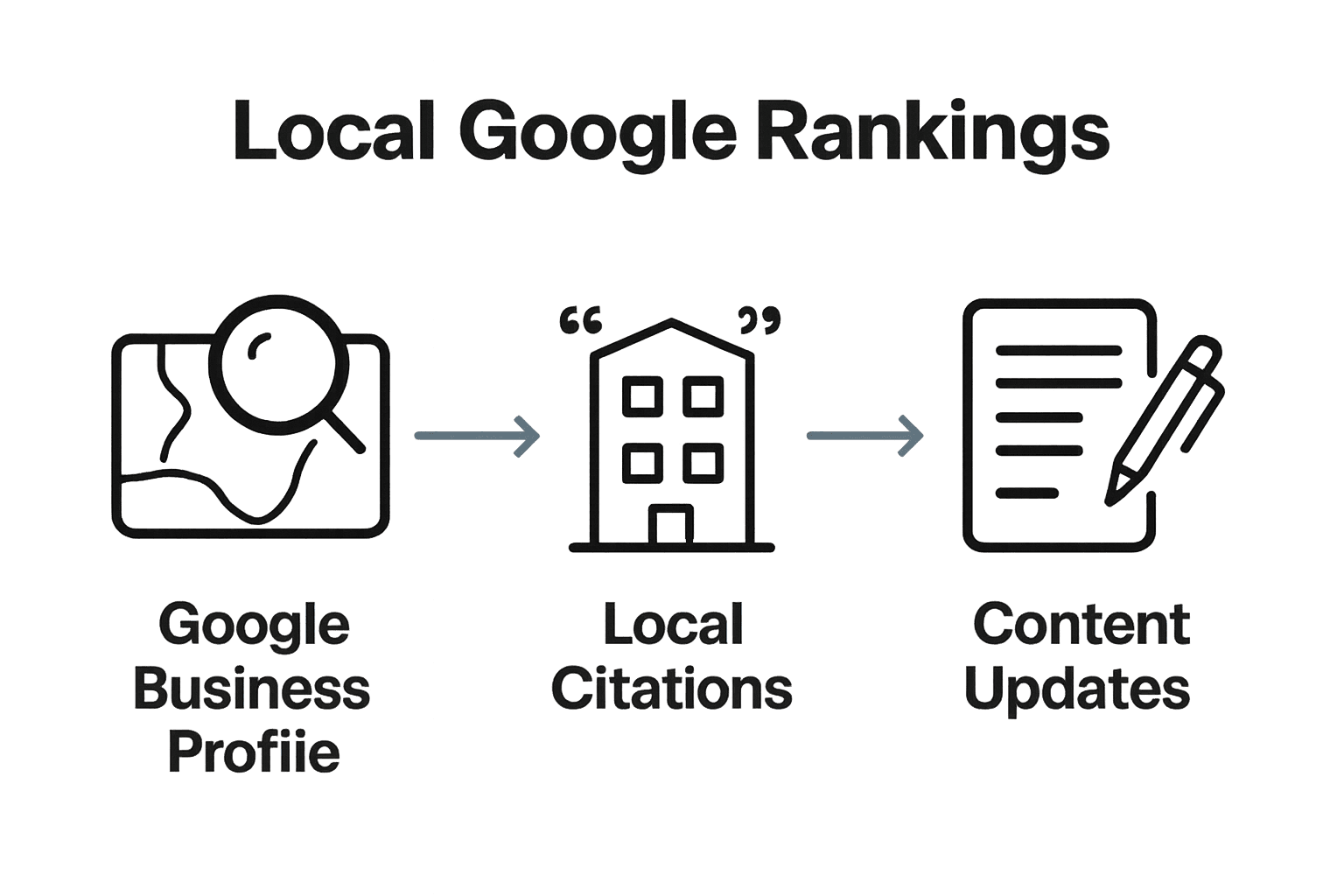 Create a monthly reporting dashboard that tracks these metrics, allowing you to identify trends, understand which strategies are working, and quickly adapt your approach when performance dips.
Pro tip: Explore our comprehensive local SEO strategies guide to gain deeper insights into interpreting your analytics data. Remember that SEO is an ongoing process regular monitoring and strategic adjustments are key to maintaining and improving your local search visibility.
Elevate Your Local Google Rankings with Expert Support
Struggling to boost your local search visibility and attract more customers online can be frustrating. This article highlights key challenges like optimising your Google Business Profile, building consistent local citations, and maintaining fresh content — all essential steps to climb Google rankings and generate leads. If you want to transform these complex tasks into a clear pathway to page one success, our specialised team at Four Stripes is here to help.
Discover proven strategies that combine expert SEO techniques, dynamic Google Business Profile optimisations, and tailored digital marketing campaigns designed specifically for New Zealand service businesses.
Take control of your local online presence and start seeing consistent inbound calls in as little as 90 days with our proprietary “First Page, First Call” system. Don’t let competitors outshine you while you wait. Visit Four Stripes Contact Us now and partner with trusted experts dedicated to making your business the leading local choice.
Frequently Asked Questions
How can I assess my current online presence for improving Google rankings?
Start by conducting a digital audit of your website and online profiles. Check your business information across platforms for accuracy and evaluate your website’s design, load speed, and mobile responsiveness. Ensuring consistency and functionality can enhance your credibility and improve rankings over time.
What steps should I take to optimise my website for local SEO?
Ensure that your website clearly communicates your local service areas and includes relevant local keywords. Create detailed service pages and implement schema markup to help search engines understand your business. This approach can increase your visibility in local searches within a few months.
How do I enhance my Google Business Profile to boost local search visibility?
Verify and optimise your Google Business Profile by ensuring all information, like your address and operating hours, is accurate. Regularly update your profile with fresh content and images that highlight your services. These actions can improve your local rankings and attract new customers quickly.
What are quality local citations, and how can they help my business?
Quality local citations refer to accurate listings of your business in online directories. Listing your business consistently across high-authority directories can enhance your online visibility and search rankings. Aim to build citations within 30 days to see noticeable improvements in your local SEO performance.
How often should I update my content to maintain or improve search engine rankings?
Develop a strategy to publish fresh content consistently, ideally at least once every two weeks. Regular updates signal to search engines that your site is active and relevant, which can enhance your visibility in search results. Focusing on local topics can further engage your target audience.
What key metrics should I monitor to measure the success of my local SEO efforts?
Track critical metrics like local keyword rankings, organic search traffic, and conversion rates to gauge your local SEO success. Create a monthly report to analyse these metrics, enabling you to adjust strategies based on what works best. Regular monitoring helps identify trends and improve search visibility effectively.
Recommended
- 7 Local Marketing Ideas for Service Businesses to Grow Fast | Website Design & Google Ads That Generate Leads
- 7 Essential Digital Marketing Tips 2025 for Local Biz | Website Design & Google Ads That Generate Leads
- Google My Business Optimisation for Local Leads Success | Website Design & Google Ads That Generate Leads
- Complete Guide to Local SEO for Service Businesses | Website Design & Google Ads That Generate Leads