
So, you're wondering what a website is going to set you back. It’s the million-dollar question, isn't it? Well, maybe not a million, but it's a big one. For a professional small business website here in New Zealand, you're typically looking at a range between NZD $2,000 and $9,000. If you need something bigger and more complex, that figure can climb to $10,000 to $30,000 or even higher.
The final price really just depends on what you need your website to do for your business.
What Should a Small Business Website Cost?
Think about it like building a house. A simple one-bedroom bach is never going to cost the same as a custom-built, multi-storey home with all the bells and whistles. It’s the same with websites. A basic "digital brochure" site is worlds away from a powerful lead-generation machine that takes online bookings and integrates with your other systems.
For Kiwi tradies and service providers, getting your head around this is the first step. A simple site gets your name out there, sure. But a strategic, well-built site is what actually gets your phone ringing. The investment you make should reflect the value it's designed to bring back into your business.
Why Do Quotes Vary So Much?
The quote you get is a direct reflection of the time, skill, and complexity involved. A few key things will always move the price tag:
- Custom Design vs. Template: Building a unique website from the ground up costs more than customising a pre-made template. It's the difference between an architect-designed home and a kitset.
- Number of Pages: It’s simple, really. More pages mean more design, more content, and more development work.
- Special Features: Need an online booking system? A payment gateway for deposits? A client-only login area? Each of these custom functions adds to the build time and cost.
This is why there’s no one-size-fits-all answer. For a standard info-based website for a small Kiwi business—say, between 8-16 pages—you should budget somewhere in the NZD $2,000 to NZD $9,000 range.
To give you a clearer picture, here are some typical cost ranges you might see in New Zealand.
Typical Website Cost Ranges in New Zealand
| Website Type | Common For | Estimated Cost Range (NZD) |
|---|---|---|
| Starter / Brochure Website | Sole traders, new businesses needing a basic online presence. | $2,000 – $4,000 |
| Small Business Website | Established tradies, service providers, professional firms. | $4,000 – $9,000 |
| Custom Lead Gen Website | Businesses focused on growth, needing SEO & conversion features. | $9,000 – $18,000 |
| Complex / E-commerce Site | Large service businesses, online stores, custom functionality. | $18,000+ |
Remember, these are just ballpark figures. The final cost will always come down to the specific needs of your business.
Getting a handle on these factors will help you make sense of the quotes you receive and pick a solution that fits your budget and your business goals. If you want to dive deeper into the financial side of things, check out this guide on the small business website cost. You can also learn more about our specific approach to building sites that actually get leads on our small business website design in NZ page.
Understanding What Drives Your Website Quote
When a website design quote lands in your inbox, it can feel like you’re trying to decipher a secret code. What are all these line items, and what are you actually paying for?
Think of it like getting a quote from a builder. The final price depends on whether you’re building a simple garden shed or a custom architectural home. A basic one-page website is the shed—functional, straightforward. A multi-page site with online booking and a client gallery? That’s the bespoke home with all the high-end fittings.
Every choice you make, from the number of pages to the specific features you need, directly impacts the hours and expertise required. And that’s what shapes the final cost.
Core Cost Drivers in Web Design
So, what are the big-ticket items that really determine the price? While every project has its own quirks, the cost usually boils down to a few key factors. As any good pricing guide for New Zealand websites will tell you, things like the number of pages, custom features like booking systems, and how unique the design needs to be are major players. For a really deep dive, you can check out this detailed guide to NZ website pricing.
Ultimately, it all comes down to three main areas:
- Scope (The 'How Big'): This is simply about the number of unique pages your site needs. A standard five-page brochure site is always going to be cheaper and faster to build than a 20-page site with a blog, project galleries, and separate pages for every service you offer. More pages mean more time in design, content layout, and development.
- Design Complexity (The 'How Fancy'): Are you happy with a clean, professional design built on a proven, high-quality template? Or do you need a completely bespoke design, created from a blank canvas just for your brand? A fully custom design costs more because it involves crafting a unique user experience from the ground up.
- Functionality (The 'What It Does'): This covers anything beyond just showing text and images. If your website needs to do something—like take online bookings, process payments, or have a private client login area—it requires specialised development work, which adds to the cost.
The tools a designer uses can also play a part in the complexity and cost. For example, modern page builders have come a long way, and understanding the efficiencies of tools like Visual Composer can help clarify how a great-looking site can be built without a massive custom-coding price tag.
Key Takeaway: Your website quote isn't just a number pulled from thin air. It’s a direct reflection of the scope, design, and functionality your business needs to actually get results online.
Comparing Real-World Website Packages
Right, let's get down to brass tacks. To see how all this pricing talk plays out in the real world, we’ll look at some typical website packages you'll find floating around here in New Zealand.
By looking at what's included in each tier, you get a much clearer picture of what your investment actually buys you. It helps connect the dots between your budget and what you're trying to achieve, whether that's just getting your name out there or turning your website into a lead-generating machine.
The first big decision that shapes any quote is whether you go with a pre-built template or a fully custom design from scratch.
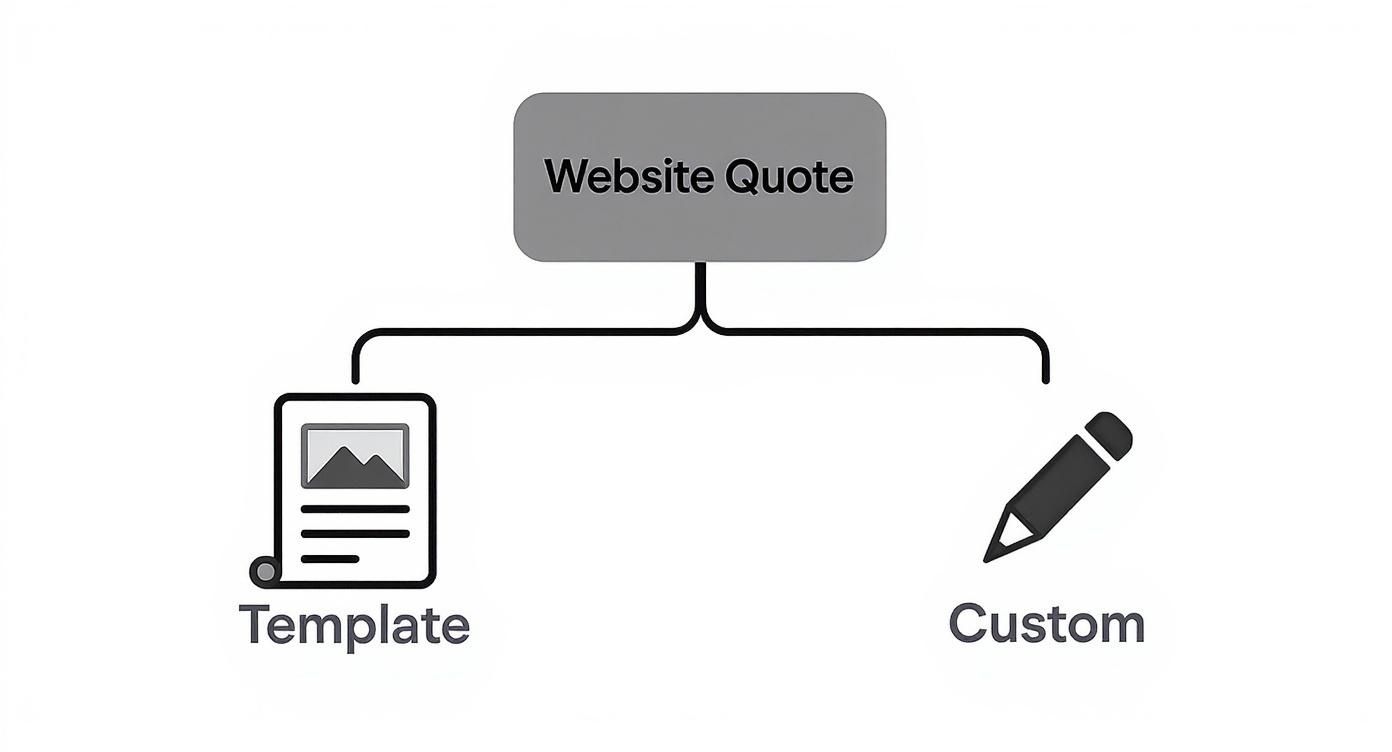
As you can see, starting with a template is the more direct and budget-friendly route. Going custom, on the other hand, gives you complete freedom to build whatever you want, but it comes with a higher price tag to match.
To make this even clearer, here’s a quick breakdown of three common packages you're likely to come across.
Sample Website Packages for NZ Businesses
This table outlines what you can generally expect at different investment levels. Think of it as a guide to match your business needs with the right solution.
| Package Tier | Ideal For | Key Features Included | Ballpark Cost (NZD) |
|---|---|---|---|
| The Starter Package | New businesses, sole traders, or those needing a simple online presence. | A clean 3-5 page website using a professional template, mobile-friendly design, a basic contact form, and foundational on-page SEO. | $2,000 – $4,000 |
| The Business Growth Package | Established businesses ready to actively generate leads and enquiries online. | Everything in Starter, plus up to 10-15 pages, blog setup for content marketing, integration with tools like booking systems, and a more robust SEO strategy. | $4,000 – $9,000 |
| The Custom Solution | Businesses with unique operational needs, complex integrations, or specific long-term growth goals. | A fully bespoke website built from scratch. Includes things like client portals, custom calculators, or deep integration with job management software. | $10,000+ |
As you move up the tiers, you're not just getting more pages; you're investing in more powerful tools designed to bring in more business. Let’s dig into what each of these really means.
The Starter Package
This is your digital business card. It’s perfect for a sole trader or a brand-new business that needs to establish a professional online presence without breaking the bank. Simple, clean, and effective.
- Who it’s for: A plumber, sparky, or consultant who's just getting started and needs to look legitimate online.
- What’s included: A sharp, professional 3-5 page website built from a high-quality template. It will work perfectly on mobile, include a contact form, and have the basic on-page SEO essentials sorted.
- Ballpark Cost: You’re typically looking at $2,000 – $4,000.
The Business Growth Package
Right, this is where your website stops being a brochure and starts working for you. This package is for established businesses ready to use their site as a proper tool for pulling in leads. It’s all about converting visitors into paying customers.
This tier usually has more pages, which allows you to target specific services and suburbs—a must-have for any serious local marketing campaign.
A growth-focused website isn’t just an online brochure; it’s an active part of your sales team, designed to capture enquiries and drive revenue.
So, what should you expect to get for your money here?
- Who it’s for: Established service businesses that want to ramp up their client base and are serious about growth.
- What’s included: Everything from the Starter Package, but scaled up. Think up to 10-15 pages, a blog setup, integration with booking systems, and a much more thorough SEO foundation.
- Ballpark Cost: Expect to invest somewhere between $4,000 – $9,000.
The Custom Solution
For businesses whose needs just don't fit into a box, a custom build is the only way to go. This is where your website is designed and built from the ground up, tailored precisely to your operational workflows and big-picture goals.
Think of it like an architect designing a house just for you—every single element has a specific purpose. This could mean building a client login portal, creating complex quote calculators, or integrating seamlessly with your job management software. The website design cost here reflects the serious development hours and specialised skills needed to pull it off.
The Hidden and Ongoing Costs of a Website

Think of your new website like a brand-new work ute. The upfront cost gets you the keys, but it won't get you far without fuel, insurance, and regular servicing. Your website is exactly the same; the launch is just the beginning.
Beyond that initial build fee, you've got a few non-negotiable running costs that crop up every year. Things like your domain name renewal, website hosting, and professional email all quietly tick over in the background.
Here’s a quick breakdown of what you can expect:
- Domain Renewal: This is your website's address. Expect to pay around $15–$50 per year.
- Web Hosting: This is the plot of land where your website lives. Solid, reliable hosting will set you back $100 to $500 annually.
- SSL Certificates: This keeps your site secure (the little padlock in the browser). Some are free, but premium versions can cost $50–$200 a year.
- Professional Email: Ditch the @gmail.com address. A professional email address costs about $5–$10 per user, per month.
Essential Recurring Elements
A good maintenance plan is your website's WOF and service schedule, all rolled into one. It’s what keeps the engine running smoothly, catches problems before they become disasters, and protects your investment from hackers and glitches.
A proper plan should cover:
- Software Updates: Keeping your WordPress core, theme, and plugins up-to-date to patch security holes.
- Security Monitoring: Active firewalls and malware scans to block threats before they hit.
- Regular Backups: Creating offsite copies of your entire website, so if the worst happens, you can restore it in a flash.
- Performance Checks: Making sure your site stays fast and doesn't slow down over time.
As web security expert Jo Patterson puts it, “Routine maintenance can save up to 60% of potential repair costs.” It’s a small investment to prevent a massive headache down the track.
How To Budget For Ongoing Costs
The key is to avoid surprises. Don't let these costs sneak up on you—plan for them from day one and factor them into your overall budget.
A few simple tips can make a big difference:
- Review your hosting and domain plans each year before they renew.
- Ask your provider if they bundle services like hosting and maintenance for a better deal.
- Choose a maintenance package that makes sense for your business—not every site needs the Fort Knox treatment.
- Opt for predictable monthly or annual billing to keep your cash flow smooth.
For a deeper dive into hosting packages and what you get for your money, check out our guide on WordPress website hosting costs.
Budgeting for these ongoing costs isn't the most exciting part of owning a website, but it's what keeps your lead-generating machine safe, fast, and working for you year after year.
How to Choose the Right Web Design Partner
Picking the right web designer is just as crucial as the website itself. The final website design cost is a direct reflection of their expertise and the quality of their process, so it pays to choose carefully. A great partner isn't just a supplier; they become an extension of your team, genuinely invested in getting you results, not just a pretty website.
First things first, check out their portfolio. Do their websites look professional, clean, and modern? More importantly, have they worked with businesses like yours? If you're a Kiwi tradie, you want to see other tradie websites. A portfolio full of relevant examples is proof they get your industry and know how to talk to your customers.
But a slick portfolio is only half the story. Look for real proof of their success. Testimonials are nice, but detailed case studies are gold. They show you the designer’s thinking, their process, and the actual results they delivered for other businesses, connecting their work to real-world growth.
What to Ask Before You Sign
Once you’ve got a shortlist, it's time to ask some direct questions. A good web designer will have clear, confident answers. How they respond tells you everything about their experience and whether they’re the right fit for you.
- What’s your process from start to finish? You’re looking for a structured plan that includes discovery, design, feedback rounds, and a clear launch strategy. No winging it.
- What exactly is included in this quote? Get specific. Ask about the number of pages, how many revisions you get, if on-page SEO is included, and whether they'll provide training on the CMS.
- What’s a realistic timeline for this project? A pro will give you a proper project timeline with key dates and milestones. Vague answers are a red flag.
- What happens after the site goes live? Ask about their ongoing support. Do they offer maintenance plans? What about hosting? How do they handle future updates or fix things if they break?
It's also a massive plus if they can think beyond just the design. Ask them how the new website will fit into your broader marketing efforts. This shows they're thinking about your business's success, not just ticking off a task. You can get a better sense of this by understanding what a digital marketing strategist looks for when planning for long-term growth.
Be wary of the red flags: suspiciously low prices, a vague or rushed process, or poor communication. These are classic signs of inexperience or a cookie-cutter approach that almost never delivers the leads you actually need. A great partner is an investment, not an expense.
Your Top Website Cost Questions, Answered
Trying to make sense of website quotes can feel like you’re getting tangled in knots. To wrap things up, we're cutting through the jargon and tackling the most common questions we hear from Kiwi business owners about the real website design cost.
Think of this as your final, no-nonsense checklist to clear up any confusion before you pull the trigger.
How Long Does It Actually Take to Build a Website?
This really comes down to the complexity of the build. For a standard 5-10 page brochure-style website—perfect for most service businesses—you're typically looking at four to six weeks from our first chat to launch day. That timeline covers everything: design, getting your content in, the actual build, and a couple of rounds of your feedback.
If you’re after something more involved, like a site with online booking or a private client area, you’ll want to budget more time. Expect something closer to eight to twelve weeks, or even longer for really custom jobs. Honestly, the biggest thing that keeps a project on schedule is you—how quickly you can give us feedback and the content we need at each step.
Can I Update the Website Myself After It's Live?
You bet. Any professional website built today should come with a Content Management System (CMS), like WordPress. This puts you in the driver's seat, letting you make your own updates without having to ring a developer for every little change.
A good web partner won't just hand over the keys and disappear. They’ll include training on how to do the important stuff, like swapping out text, adding new photos to your project gallery, or putting up a new blog post. Always, always check that CMS access and training are included in the quote. It’s what gives you control over your own site without racking up extra bills.
Key Insight: Being able to manage your own content is non-negotiable for keeping your site current and useful to customers. Make sure your quote explicitly includes CMS training so you can take charge from day one.
Why Are Some Quotes So Much Cheaper Than Others?
When you see a massive gap in pricing between quotes, it's almost always because you're not comparing apples with apples. There are huge differences in the process, the quality of the final product, and what’s actually included.
A rock-bottom quote often comes from a freelancer who’s just going to grab a cheap template and change the colours. On the other hand, a higher quote from an agency will likely cover a custom design process, help with brand strategy, professional copywriting, and proper testing on all devices. For example, in Christchurch, a basic 3–5 page site can range from NZD 2,000 to NZD 5,000, which usually means a simple design on a pre-made template. You can get a more detailed look at local website pricing in Christchurch on newmediadesign.nz.
You have to look past the final number and dig into what you’re actually getting for your money—things like custom design, how many revisions you get, if SEO foundations are included, and what kind of support is offered after launch. That's where you'll find the real value.
Ready to invest in a website that actually gets the phone ringing? The team at Four Stripes specialises in building conversion-focused websites for Kiwi tradies and service businesses. Our proven process combines smart design with powerful local SEO to deliver a steady stream of qualified leads. Get in touch today for a clear, no-nonsense quote.