
For a decent, hard-working tradie website here in New Zealand, you're looking at an upfront website construction cost anywhere from $1,500 for a simple online brochure to over $10,000 for a full-blown, lead-generating machine. Where your business lands on that scale comes down to what you need your website to actually do.
Your Quick Guide to Website Costs for Kiwi Tradies
Trying to pin down the cost of a new website can feel a lot like quoting a job with vague plans. You know you need one, but the prices you hear can be all over the map. So, why does one quote come in at a couple of grand while the next is five figures?
It all boils down to the website's purpose.
Think of it like buying a new work vehicle. A standard ute will get you and your gear to the job site, no problem. But if you need custom-built toolboxes, heavy-duty roof racks for your ladders, and professional signwriting to get your name out there, the price naturally goes up. Each add-on has a specific job to make you more money. Your website works the exact same way.
Matching Your Spend to Your Business Goals
The initial investment you make in your site is directly tied to the results you can expect. A basic "digital business card" website is great for building trust and proving you’re a legitimate business. A more advanced site, however, becomes an active part of your team, bringing in new customer enquiries around the clock.
It’s not just an expense; it’s a tool for growth. This chart breaks down three common investment levels for Kiwi service businesses, giving you a clearer picture of where your needs might fit.
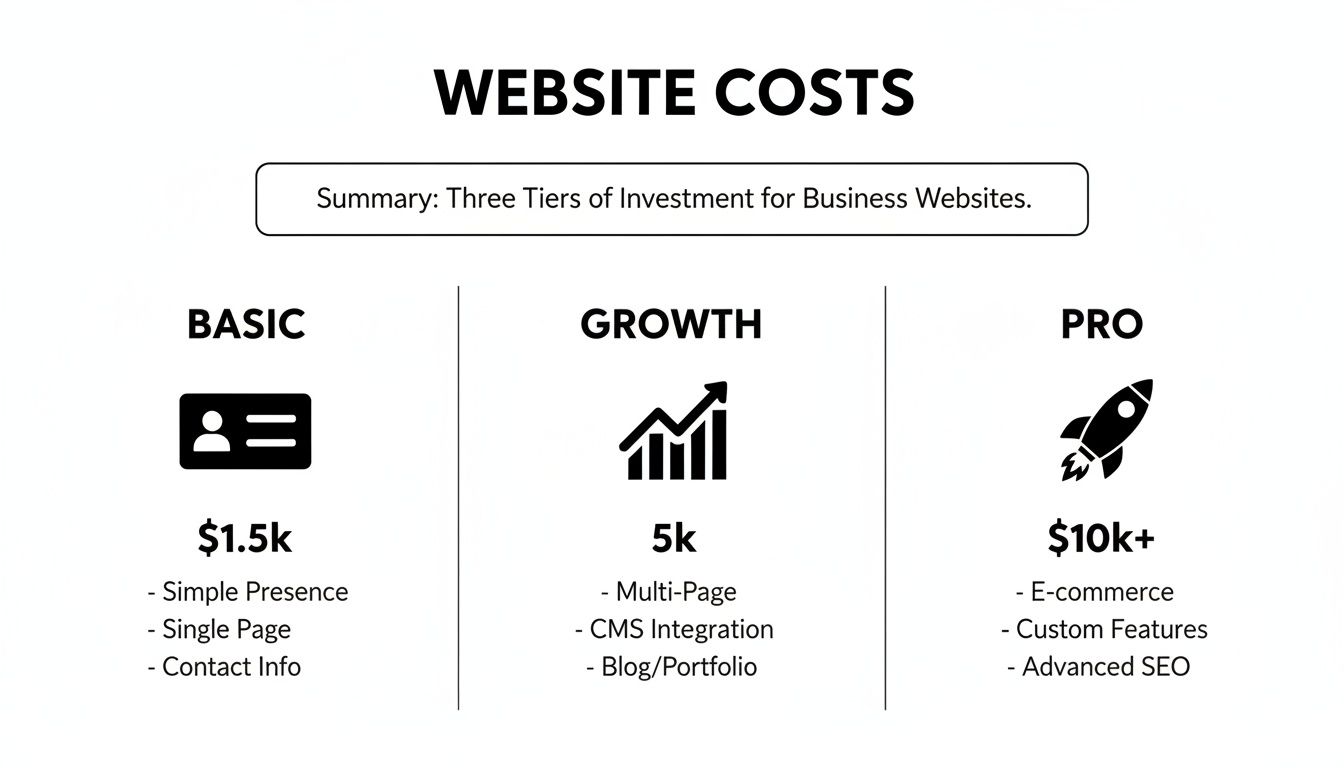
As you can see, a bigger investment unlocks more powerful features designed to drive real business. The goal is to align your website construction cost with tangible outcomes, like getting more quote requests and phone calls.
So, What Are You Actually Paying For?
When you hire a professional, you're paying for a lot more than just a pretty design. The price tag reflects a combination of strategic thinking, technical skill, and marketing know-how that all work together to win you more jobs.
You're really investing in these core parts:
- Professional Design: A clean, modern look that builds instant trust and reflects the quality of your workmanship.
- Conversion-Focused Layout: Smartly placing contact forms, click-to-call phone numbers, and clear calls-to-action that make it dead simple for potential customers to get in touch.
- Solid SEO Foundations: Building the site so that Google can easily understand what you do and where you do it, helping you show up in local search results.
- Flawless Mobile Experience: Making sure your site looks and works perfectly on a smartphone, which is where most of your customers will find you.
A great tradie website isn't just an online brochure; it's your hardest-working salesperson. It qualifies leads, showcases your best work, and answers common questions before a customer even picks up the phone.
At the end of the day, understanding what goes into the price helps you make a smarter choice. It shifts the question from "How much does it cost?" to "What business results will this investment deliver?" That's the key to finding a web partner who will build you a genuine asset, not just another business expense.
What Actually Drives Your Website Construction Cost
When you start getting quotes for a new website, the price difference can be baffling. One agency might quote you $3,000, while another comes in at over $15,000. It's not that someone is trying to pull a fast one; it’s that building a website is a lot like quoting a construction job.
The final invoice comes down to the scope, the complexity of the plans, and the quality of the materials. A simple sleepout has a very different price tag to a multi-storey home with custom fittings, and the exact same logic applies to your website.
Understanding what goes into the website construction cost helps you have a much better chat with a developer. More importantly, it means you know exactly what you’re paying for and why it matters to your business.
Design: Custom vs Template
One of the biggest cost drivers right off the bat is the design. Think of it as choosing between a pre-designed kitset home and a fully custom architectural build.
A template-based design is the more budget-friendly option. Your developer starts with a professional, pre-built layout and then customises it with your logo, brand colours, images, and text. This approach cuts down design and development hours massively, making it a great way to get a sharp, functional site live without breaking the bank.
A fully custom design, on the other hand, is built from the ground up, just for you. A designer works with you to create a unique experience tailored specifically to your business and your ideal customers. This involves wireframing, mock-ups, and a lot more development time, which naturally comes with a higher price tag.
Scope and Functionality
The size and features of your website are the next major factors. Just like every extra room or bathroom adds to a building’s cost, every additional page and special feature increases your website's price.
A simple five-page brochure site (Home, About, Services, Gallery, Contact) will cost far less than a 20-page site with a dedicated page for every single service you offer. More pages mean more time spent on design, loading in content, and optimising each one for Google.
Specialised functionality also adds to the complexity and cost. These are the "custom fittings" of your website that help you automate your business and get more leads.
- Online Booking Systems: Lets clients book appointments or consults directly on your site.
- Custom Job Calculators: An interactive tool that gives potential customers an instant estimate, capturing their details in the process.
- Advanced Photo Galleries: Slick galleries to showcase your project portfolio with filters and categories.
- E-commerce Functionality: The ability to sell products or services directly online, which requires payment gateways, product pages, and a secure checkout.
The key is to see these features not as costs, but as investments. A well-implemented online booking system might cost an extra $1,000 to build, but if it saves you hours of admin time each week, it pays for itself very quickly.
The Critical 'Unseen' Work
Finally, a huge chunk of a professional website build goes into work you can't even see. This is the digital version of laying solid foundations, running proper wiring, and making sure the plumbing is spot on. You don't see it, but the entire structure relies on it.
This foundational work includes:
- On-Page SEO Setup: This is all about structuring your site so Google can easily understand what you do and where you do it. It involves keyword research, writing meta titles and descriptions, structuring headings, and optimising images. Without this, your chances of showing up in search results are pretty slim.
- Mobile Responsiveness: Over 60% of website traffic now comes from mobile phones. A professional build ensures your site looks and works perfectly on any screen, from a small smartphone to a big desktop monitor. A shoddy mobile experience frustrates users and makes Google rank your site lower.
- Site Speed Optimisation: People are impatient. If your website takes more than a few seconds to load, potential customers will just leave and go to your competitor. Optimising image sizes, cleaning up code, and using quality hosting are all essential for a fast, user-friendly site.
Cutting corners on these "unseen" jobs is often why cheap websites fail to get results. Investing in a solid technical foundation ensures your website isn't just a pretty online brochure, but a reliable, hard-working tool built to attract customers and grow your business.
Understanding Pricing Models: Fixed Price vs Hourly Rate
How you pay for your new website is just as important as what you’re paying for. Once you start getting quotes, you'll see they generally fall into two camps: fixed-price projects or hourly rates. Getting your head around the difference is key to managing your website construction cost and avoiding nasty surprises.
Think of it like quoting a job for a client. A fixed price is like quoting for a standard bathroom reno where the scope is crystal clear and the materials are all picked out. An hourly rate is more like a tricky repair job where you don't know what you'll find until you start pulling back the plasterboard.
Each model has its place, and picking the right one protects both you and the developer, making sure the project runs smoothly.
The Certainty of a Fixed-Price Project
For most tradies getting a brand-new website built, a fixed-price agreement is the way to go. You and your web developer agree on a specific list of deliverables—say, a five-page site with a gallery and a contact form—for one set price. Simple as that.
This approach gives you absolute budget certainty. You know exactly what the final invoice will be before a single line of code is written, which is a massive plus for managing cash flow. It also forces a really clear conversation about the project scope upfront, so everyone is on the same page.
The main drawback? It’s not very flexible. If you decide halfway through you want to add an online booking system, that’s going to fall outside the original agreement. This is what's known as "scope creep," and it’ll require a new quote for the extra work.
The Flexibility of an Hourly Rate
An hourly rate model is exactly what it sounds like: you pay the developer for the actual time they put in. In New Zealand, you can expect professional freelance or agency rates to range from $100 to $200+ per hour, depending on their experience and skillset.
This model is perfect for a few specific scenarios:
- Ongoing Maintenance and Updates: Ideal for when you need small tweaks, new photos loaded up, or a bit of technical support after the site is live.
- Projects with Unclear Scope: If you've got a complex idea that you know will probably evolve as you go, an hourly rate gives you that freedom without being locked into a rigid plan.
- Consulting and Strategy: When you just need an expert’s brain to help you plan your marketing, paying for their time makes perfect sense.
The big risk here is pretty obvious: the budget can blow out. Without a clear finish line, costs can add up fast, especially if the project isn’t managed tightly.
For a standard tradie website, the best approach is often a hybrid one. Lock in a fixed-price agreement for the initial build to control your upfront website construction cost. Once the site is up and running, switch to an hourly rate or a monthly retainer for any ongoing support you need.
Choosing the right pricing structure is a key part of the process. For a deeper dive into what goes into a quote, you can explore our detailed guide on web design fees for NZ businesses. This will give you the confidence to talk terms with any web designer, knowing which model suits your business best right now and for the future.
Budgeting for Ongoing Website Running Costs
Getting your initial website construction cost sorted is a huge milestone, but it’s only half the picture. A new website isn't a set-and-forget purchase. Think of it like your work van – it needs fuel, insurance, and regular servicing to stay reliable and on the road making you money.
It helps to think of your website as a new team member. The initial build is their hiring cost, and the ongoing fees are their salary. To keep this "employee" generating leads and paying for itself, you need to budget for its upkeep. If you don't, that powerful new asset can quickly turn into a rusty, broken-down tool that's costing you business.
Getting your head around these running costs from day one is absolutely critical. It’s what keeps your site secure, visible on Google, and ensures it remains a profitable, lead-generating machine for years to come.
The Non-Negotiable Running Costs
Just like every van needs a WOF and rego, every website has a few essential costs you simply can't skip. These are the bare minimums needed to keep your site live on the internet, secure, and accessible to your customers.
These core costs are:
- Website Hosting: Think of this as the rent you pay for your website's spot on the internet. It's where all your site files, images, and content are stored. Good quality hosting means your site loads fast and doesn't go down, which is vital for keeping visitors happy and Google on your side.
- Domain Name Renewal: This is the annual fee to keep your website address (e.g.,
yourbusiness.co.nz). If you forget to pay it, your site goes offline, and you risk someone else grabbing your domain. - SSL Certificate: This is what gives you the little padlock icon in the browser bar. It encrypts the connection between your site and your visitors, which is non-negotiable for security and building trust. Google actually penalises sites that don't have one.
If you want to dive deeper into getting this foundation right, check out our guide on choosing the best web hosting in NZ for your business.
Growth-Focused Investments
Once the essentials are covered, you can think about optional investments that act like high-octane fuel for your website. While they aren't strictly necessary to keep the lights on, they are what actively bring new customers to your digital front door and turn your website into a serious lead generator.
The two most powerful growth investments are:
- Ongoing SEO (Search Engine Optimisation): This is the long-game of climbing the Google rankings for valuable local searches like "electrician Auckland" or "plumber Christchurch." It involves creating useful content, building your site's authority, and ongoing technical tune-ups. Consistent SEO is how you build a pipeline of free, organic leads that show up month after month.
- Google Ads Management: Need leads right now? Google Ads is the fastest way to get your name at the very top of the search results. Paying a pro to manage your campaigns ensures you're not just burning cash, but actually targeting the right customers and getting the most out of every dollar spent.
Smart budgeting means planning for these operational costs from day one. Failing to account for ongoing maintenance and marketing is like buying a top-of-the-line work truck but never putting any fuel in it—it looks great, but it won’t take your business anywhere.
Just like the price of plasterboard or timber goes up and down, so do the costs of digital services. Your digital assets need the same kind of forward-thinking budget that you'd apply to your physical ones. To make sure you can cover both the initial build and the ongoing costs without stress, it’s worth brushing up on expert tips on small business cash flow management.
Real Cost Examples for New Zealand Tradies
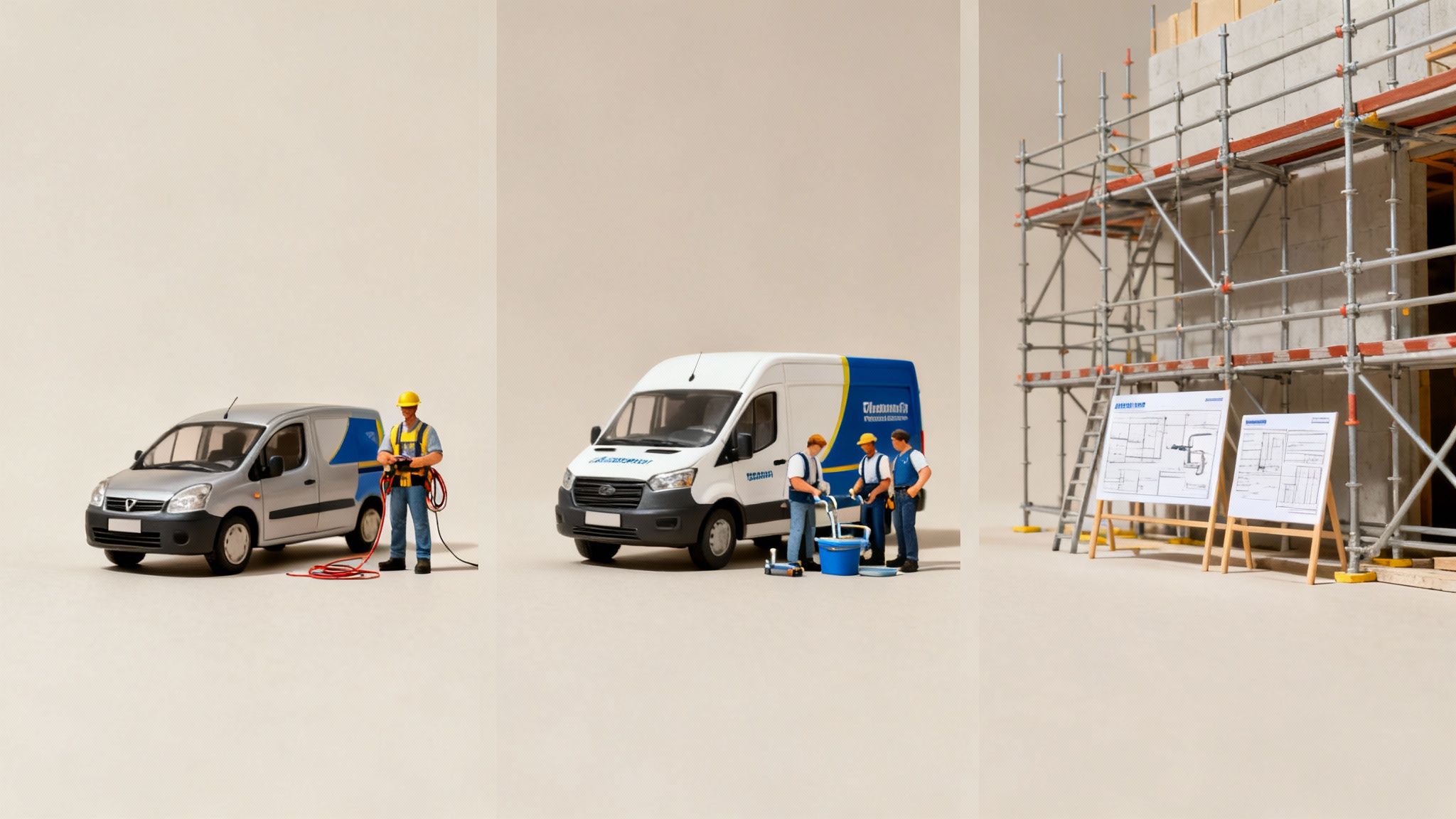
Okay, let's stop talking theory and get down to brass tacks. Numbers on a page are one thing, but seeing how that investment turns into a real tool for a business like yours is what really matters. We’ll walk through three common scenarios for Kiwi trade businesses to show you what you can actually expect for your money.
Each example breaks down the cost, but more importantly, it connects the dots between the website and the results. This is about the return you get, not just the price tag.
Case Study 1: Dave the Sparky
Dave's a one-man-band electrician in Auckland. He’s brilliant on the tools, but his work comes from word-of-mouth, which is patchy at best. He needs a professional website that makes him look as good online as he is in person—something that builds instant trust.
His main goal is to have a "digital business card." It's a place he can send potential clients to show his qualifications, photos of his latest jobs, and a dead-simple contact form.
- Project Scope: A 5-page brochure website (Home, About, Services, Gallery, Contact).
- Design: A clean, professional template customised with his own logo and colours.
- Key Features: Mobile-friendly design, basic on-page SEO setup, and a simple contact form.
- Total Investment: Around $2,500 + GST.
For Dave, this website is all about legitimacy. When he quotes a decent-sized job, he can now point the client to a professional site that proves he’s the real deal. It’s a foundational tool that helps him win bigger, better projects.
Case Study 2: Pristine Plumbers
Pristine Plumbers is a growing outfit with three vans on the road across Wellington. They're past the point of needing just a brochure; they need a constant flow of local leads to keep the team busy. Their website has one job: make the phone ring.
Their site needs to be built from the ground up to rank for local searches like "emergency plumber Lower Hutt" or "hot water cylinder repairs Porirua." This means a much more strategic approach to the site's content and technical setup.
- Project Scope: A 10-15 page lead-generation website.
- Design: A conversion-focused layout with big, obvious calls-to-action on every single page.
- Key Features: Dedicated pages for each core service, advanced local SEO, a click-to-call phone number, and a "Get a Free Quote" form you can't miss.
- Total Investment: Around $6,000 + GST.
This kind of website is a lead-generation machine. By showing up on Google for profitable local searches, the site actively brings in new, qualified enquiries every week. It provides a measurable return on investment that fuels the company's growth.
A website's value isn't just in how it looks; it's in what it does. For a growing business, that means generating phone calls, quote requests, and ultimately, profitable work that keeps your team on the tools.
Case Study 3: BuildRight Construction
BuildRight is an established construction company in Christchurch, tackling large-scale renovations and new builds. They’re bidding for high-value contracts and need a website that screams quality and positions them as the go-to experts.
Their site has to be comprehensive, featuring detailed project case studies, glowing client testimonials, and in-depth info about their building process. It's a sales tool designed to win over architects, developers, and discerning homeowners before they even pick up the phone. The construction sector here is booming, projected to hit US$4.68 billion in 2025. A rock-solid digital presence is essential to grab a piece of that pie. You can find more about the projections for New Zealand's building construction market on Statista.
- Project Scope: A 20+ page authority website.
- Design: A fully custom design to create a unique and premium brand experience.
- Key Features: Advanced project galleries with high-res photos, a blog for sharing expert advice, client testimonials, and highly detailed service pages.
- Total Investment: $12,000+ GST.
For BuildRight, this website is a core business asset. It justifies their premium pricing, shortens the sales process by answering key questions upfront, and builds the powerful brand authority they need to land six-figure contracts. The investment directly supports their position at the top of the market.
How to Get a Quality Website Without Overspending
When you're running a trade business, every dollar has a job to do. You need a website that pulls its weight and actually brings in work, not one that's just another bill to pay. The good news? Keeping your website construction cost in check doesn't mean you have to settle for a cheap-looking site that doesn't perform.
The key is thinking smart right from the start. It's just like being on the tools – a bit of proper planning and prep upfront saves you a small fortune down the track. Taking a few simple steps before you even ring a web designer can make the whole project faster, smoother, and a lot more affordable.
Prepare Your Materials in Advance
One of the quickest ways to keep costs down is having all your content ready to roll. When a web designer is stuck chasing you for text or waiting weeks for you to send through photos, that time gets added to the bill. It's as simple as that.
Before you kick things off, get these basics sorted:
- Write Your Text: Get a rough draft of the content for your main pages – Home, About Us, and your key Services. It doesn’t have to be perfect, but a solid starting point saves a huge amount of back-and-forth.
- Gather Your Photos: Round up high-quality photos of your best jobs, your team in action, and your sign-written van. Real photos build trust in a way that generic stock images never can.
Handing this over as a neat package means the designer can get straight to work without any delays. This one step can genuinely shave hours off the project time and reduce your final invoice.
Think of it like hiring a subbie. If you’ve got all the materials on-site and the area prepped, they can get the job done faster and more efficiently. The exact same principle applies to building a website.
Start Lean and Grow Over Time
You don't need a massive, bells-and-whistles website from day one. A much smarter move is to start with a lean, professional site that nails the essentials. Focus on a clean design, clear descriptions of what you do, and obvious ways for potential customers to get in touch.
Once that solid foundation is in place and starts making the phone ring, you can reinvest some of that profit into adding more features. Maybe you'll add more detailed project galleries, a blog, or an online booking system later on. This phased approach makes the initial cost much easier to swallow and ensures your money goes towards things that actually generate leads. For a practical look at what's essential, our guide to small business website design in NZ breaks it down perfectly.
Why the Cheapest Quote Is Rarely the Best Value
It’s always tempting to grab the lowest price, but this is almost always a false economy. You know it from your own industry – the cheapest subbie is usually cheap for a reason. They cut corners, use dodgy materials, or just don't have the experience, which ends up costing you more in rework later.
It’s no different with websites. An unusually low quote often means the developer is skipping critical "under the hood" work, like setting up your site for Google (SEO) or making sure it works properly on a phone.
In a market where building costs are watched like a hawk—Cordell's latest index noted a modest 0.6% rise in residential construction costs for the June 2024 quarter—every investment needs to deliver real value. Paying a fair price for genuine expertise upfront gets you a reliable, high-performance tool that won’t need expensive repairs six months down the line. You can see more on these trends and how NZ residential construction costs are edging higher in the full report.
Your Top Questions Answered
We get it. Investing in a website brings up a lot of questions. Here are some straight-up, no-fluff answers to the things we hear most often from Kiwi tradies and service businesses.
How Long Does a New Tradie Website Take to Build?
Realistically, you should plan for about 3-4 weeks to get a high-quality, professional website built from scratch. The biggest variable here is you – how quickly you can get us your photos and text, and give feedback on the design.
Sure, you could slap something together on a DIY builder over a weekend. But a professional build means getting the technical stuff and the local SEO right from day one, which saves you a massive headache and lost business down the track.
My Old Website Still Works. Is a New One Really Worth It?
That old website is probably costing you more than you think. If it’s slow, clunky on a phone, or not secure, it’s actively pushing customers away and telling Google not to rank you. Most people will leave a slow website in just a few seconds.
Don't think of a new website as just another bill. See it for what it is: an investment in your best salesperson. It’s the hardest-working member of your team, pulling in leads 24/7 while you're out on the tools.
Why Do You Recommend WordPress for My Business?
Simple: ownership and performance. With WordPress, you own your website outright. It’s your asset. On platforms like Wix or Squarespace, you're just renting space, and if you ever want to leave, you can't take your site with you.
WordPress is also an absolute beast for local SEO, helping you get found by customers in your area. As your business grows, it grows with you – whether that’s adding a new service page or plugging in a full booking system. It's the smart, long-term choice that gives you total control.
Ready to build a website that actually gets the phone ringing? The team at Four Stripes specialises in creating high-performance websites for Kiwi tradies that deliver a steady stream of qualified leads. Learn more about our conversion-focused web design services.