A logo in New Zealand is so much more than a pretty picture; it’s your brand’s story, wrapped up in a single mark that speaks directly to the culture and landscapes of Aotearoa. When done right, a Kiwi logo uses elements of our natural environment and powerful Māori heritage to build instant recognition and trust with your local customers.
What Defines Authentic New Zealand Logo Design
Think of your logo as your business's digital handshake. For any service business here in New Zealand, that first impression has to feel genuinely Kiwi to make a real connection. A generic, cookie-cutter logo downloaded from an international site just won't cut it—it fails to connect with the values and visual cues that local customers know and trust.
An authentic New Zealand logo is grounded in a sense of place. Its power comes from our country's unmistakable identity, which is really shaped by two major forces: our breathtaking natural environment and the deep cultural influence of Māori art and symbolism.
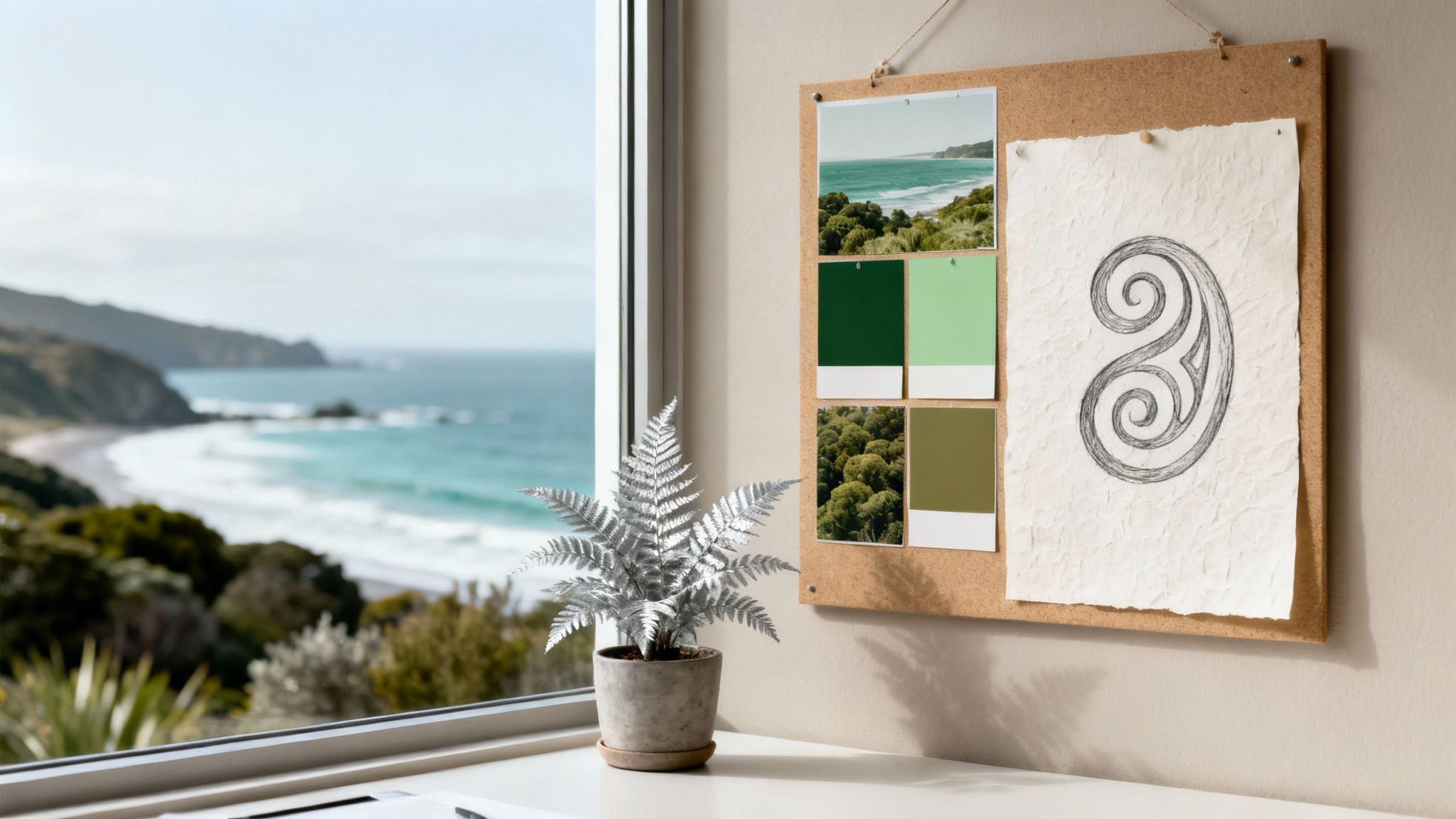
The Influence of Aotearoa's Landscape
Just picture the colours and shapes of New Zealand for a moment. You’ve got the deep greens of the native bush, the moody blues of our coastline, and the earthy tones of volcanic rock. This gives us an incredible palette to work with when building a brand. A logo doesn't need a literal drawing of a mountain to feel connected to the land.
Instead, the best designs use subtle hints:
- Evocative Colour Palettes: Think greens, blues, and browns that feel natural and instantly familiar.
- Organic Shapes: Flowing lines that echo our coastlines, rolling hills, or the curve of a fern frond.
- Grounded Typography: Fonts that feel solid and dependable, not flimsy or like they were designed for a business halfway across the world.
When these elements come together, they create a visual identity that feels like it truly belongs here.
The Power of Māori Symbolism
Māori culture offers a rich visual language that is uniquely New Zealand. Symbols like the koru, which represents new life and growth, or the mangōpare (the hammerhead shark), a symbol of strength and determination, carry enormous weight and meaning. Using these motifs can forge a powerful connection, but it must be done with care.
This isn't about a quick copy-and-paste job.
True integration demands understanding and respect. The aim is to capture the spirit and meaning behind the symbolism, not just to borrow it for looks. A designer with real experience in New Zealand logo design knows how to navigate this cultural space carefully.
This might mean talking with cultural advisors and making sure the symbol you choose genuinely reflects your brand's values. It’s a fine line between inspiration and appropriation. Getting this right is a huge part of building a strong brand, and you can learn more about this in these digital branding tips for local service businesses. By embracing these local design principles, your service business can have a logo that not only looks sharp but feels right at home in New Zealand.
Crafting Your Essential Design Brief
Think of your logo as your digital handshake and the design brief as the script that tells it what to say. So many Kiwi business owners fall into the trap of giving vague instructions like, "just make it look modern and professional." That’s like asking a builder to construct a house without any blueprints. You end up with something that’s not quite right, which means costly changes and a lot of wasted time.
A strong design brief is your strategic foundation. It's the document that translates your business goals, target audience, and unique Kiwi identity into a clear, actionable guide for your designer. Putting in the hard yards upfront makes the whole creative process more focused, efficient, and far more likely to deliver a logo that actually works for you.
This isn’t just about picking out a few colours you like. It’s about digging deep and forcing yourself to answer the hard questions before a single sketch is drawn. You need to give your designer the clarity they need to build something meaningful.
Answering The Critical Questions
Your brief has to be the single source of truth for your business. When a designer really understands your world, they can create a logo that speaks directly to it. Vague answers get you vague results, so take the time to be specific.
Start by nailing these core areas:
- Your Business Story: What do you actually do, and why should anyone care? Explain your services, your history, and the values that drive you to show up every day.
- Your Ideal Kiwi Customer: Who are you trying to connect with? Get specific. Are they farmers in Canterbury, tech startups in Auckland, or families in Wellington? What do they care about, and what problem are you solving for them?
- Your Competitive Edge: Who are your main competitors in the New Zealand market? What do their logos look like? More importantly, how are you different? The last thing you want is to accidentally blend in with the business down the road.
This process of defining your identity is crucial. Even national symbols evolve. Take New Zealand's official coat of arms—it was completely redesigned in 1956 to better reflect the nation's growing independence. The new design moved away from heavy British symbolism towards something that felt distinctly Kiwi. You can read more about this historic design shift on Te Ara. It’s a perfect example of how deliberate, strategic thinking is vital for creating symbols that resonate.
A great brief doesn't just describe what you want the logo to look like; it describes who your business is. The visual style should grow naturally from that core identity.
From Strategy To Specifics
Once you’ve got the big picture sorted, it's time to give some creative direction. This isn't about telling the designer exactly what to do, but about setting the right tone and providing some useful guardrails. This is where you translate your strategy into visual cues.
Think about the following:
- Brand Personality: If your brand walked into a room, what three words would describe it? Are you trustworthy and traditional, or innovative and energetic? This helps the designer make decisions on everything from the font to the colour palette.
- Visual Mood & Feeling: How do you want customers to feel when they see your logo? Should it inspire confidence, excitement, or a sense of calm reliability?
- Specific Likes & Dislikes: It’s always helpful to show examples. Find a few logos you admire (they don't have to be in your industry) and explain why you like them. Is it the clean font, the clever symbol, or the colours? Just as important, show them what you don't like.
This document becomes the shared map for you and your designer, making sure you’re both heading for the same destination. By investing your time in a detailed and thoughtful brief, you're empowering your designer to skip the guesswork and focus on what they do best: creating a powerful, authentic, and effective piece of New Zealand logo design for your business.
The Logo Design Process From Concept to Completion
Ever wondered how a logo goes from a vague idea in your head to a finished design? For many business owners, it feels like a bit of a black box. You hand over your ideas, and some time later, a logo appears. We're here to pull back the curtain and show you the proven, step-by-step process that a professional New Zealand logo design project actually follows.
Think of it like building a house. You wouldn't let a builder start laying foundations without a proper set of architectural plans. You need to know the layout, the materials, and what the finished home will look like. It’s the exact same with your logo; a solid foundation of research and strategy has to be laid before a single pixel is pushed. This methodical approach makes sure the final logo isn't just a pretty picture, but a hard-working asset for your business.
Stage 1: The Foundation of Research and Discovery
This first stage is all about listening. Before a designer even thinks about fonts or colours, they need to get inside your business. They’ll take the design brief you prepared and dig even deeper, asking the right questions to understand your market, your customers, and your vision.
A good designer will want to know:
- Your Brand's Core: What’s your mission? What are your values? What really makes you different from the competitor down the road?
- Competitor Analysis: They'll take a hard look at what other local businesses in your industry are doing. The goal isn’t to copy them, but to find a unique visual space for you to own.
- Audience Insights: Who is your ideal Kiwi customer? The design needs to speak their language and connect with them on a gut level.
Getting this groundwork right is easily the most important part of the whole project. It sets the direction for every creative decision that comes next.
Stage 2: Creative Exploration and Concept Development
With a solid strategy in place, the fun part begins. This is where your designer starts turning all that research into actual visual ideas. They won't jump straight to a final, polished design—that’s a rookie mistake. Instead, they'll explore different creative paths.
This phase usually kicks off with rough sketches and brainstorming, starting with broad ideas and slowly refining them into solid concepts. The designer will play with different typography, symbols, and layouts to see what truly captures your brand’s personality. From all this exploration, they’ll develop a small number of distinct logo concepts to show you. Each concept will represent a different strategic direction, giving you a real choice for your brand's future.
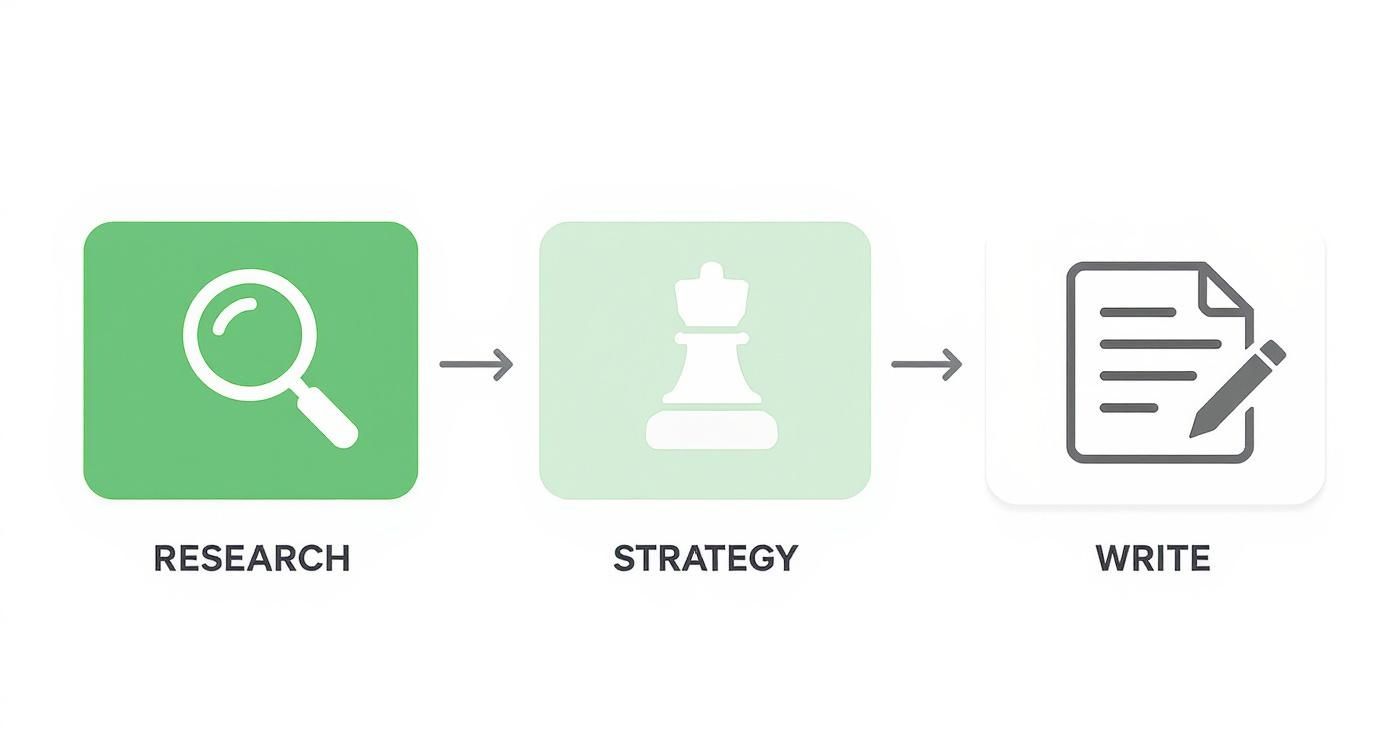
This simple graphic shows how the initial research and strategy come together to form the brief that guides the whole creative process.
Stage 3: Refinement and Finalisation
Once you've picked your favourite concept, it's time to polish it. This is a team effort where you give clear, constructive feedback and the designer makes targeted tweaks. It’s all in the details—adjusting the spacing between letters, changing the thickness of a line, or finding the absolute perfect shade for your colour palette.
The goal of feedback isn't to start over from scratch. It's about taking a strong concept and making it perfect. Clear communication here is the key to getting it done right, and done fast.
After you've given the final thumbs-up, the designer gets everything ready for handover. This isn't just a single file. You’ll get a complete package with every file type you could possibly need, from printing on your ute to putting on your website. This includes vector files (like .AI, .EPS, and .SVG) that can be scaled to any size without losing quality, and raster files (like .PNG and .JPG) for all your digital needs. Knowing the difference is crucial for making your new logo look sharp everywhere it appears.
Iconic Kiwi Logos and What They Teach Us
Looking at the big players can feel a million miles away from the day-to-day grind of running a small business. But some of New Zealand's most well-known logos pack powerful, practical lessons that any Kiwi business can steal. These designs didn't become iconic by accident; they were born from sharp thinking, cultural respect, and clever design.
By pulling them apart, we can see what makes them tick and apply those same principles to our own brands. You don't need a corporate budget to think this smart. It’s about understanding the why behind the design, not just the what. These brands show us how a great logo can tell a story, build trust, and become part of our national identity.
Air New Zealand: The Power of Cultural Authenticity
The Air New Zealand Koru is probably the most famous example of Kiwi branding done right. It's so much more than a stylised swirl; it's a masterclass in weaving cultural meaning into a corporate identity. The koru, a Māori symbol representing new life, growth, and strength, is instantly recognisable and holds real meaning for Kiwis.
What's the lesson here? Authenticity connects. Air New Zealand didn't just slap a symbol on their planes; they embraced its meaning and built their brand story around it. For your small business, this means looking inward at your own values. What's your story? A logo that genuinely reflects who you are will always hit home harder than one that just chases the latest trend.
Canterbury: Clever Symbolism and Negative Space
At first glance, the Canterbury clothing logo is three bold 'C's arranged in a circle. Simple enough. But look a little closer, and you'll see the genius use of negative space reveals three kiwis tucked inside the design. This isn't just a party trick; it's a brilliant way to embed a national icon and a nod to the company’s heritage right into its mark.
The takeaway for your business is to think beyond the obvious. A great logo often has hidden depths. Can you use symbolism or clever visual ideas to tell a bigger story about your brand? It’s this kind of smart design that makes a logo stick in someone's mind and gets them to take a second look.
A logo becomes iconic when it successfully blends simplicity with a meaningful story. It needs to work hard at a glance but reward those who look closer.
If you look back at New Zealand's most celebrated logos, you can see a clear shift from literal pictures to more conceptual, symbolic designs. The Air New Zealand koru, for instance, doubles as a symbol of new growth and a mangōpare (hammerhead shark), representing strength. This dual meaning is key. Likewise, the hidden kiwis in the Canterbury logo show a playful cleverness that sticks with you. These examples prove that the best New Zealand logo design balances cultural respect, strategic thinking, and visual smarts. You can see more of these design stories over on The Spinoff's ranking of NZ logos.
Whittaker’s: Building Trust Through Typography
Finally, let's talk Whittaker’s. Their logo is almost all typography, relying on a bold, classic font. There's no fancy symbol, just the family name presented with confidence and heritage. That specific typeface screams tradition, quality, and trustworthiness—everything you want from a chocolate maker that’s been around since 1896.
This teaches us a huge lesson: sometimes, the simplest answer is the best one. The font you choose says a lot about your brand before people read a single word.
- Serif fonts (with the little 'feet' on the letters) can feel traditional, established, and reliable.
- Sans-serif fonts (without the feet) often feel modern, clean, and approachable.
Never underestimate the power of a well-chosen font. It can communicate your brand’s personality just as powerfully as any picture or symbol.
Choosing Your Designer: Freelancer vs Agency in NZ
Right, you’ve got your design brief sorted. Now comes one of the biggest calls you’ll make: who are you actually going to trust to bring your brand to life? For most Kiwi service businesses, this choice usually boils down to two paths: hiring a freelance designer or partnering with an agency.
There’s no magic answer here. The best fit depends entirely on your budget, how big your goals are, and the scale of the job. Getting this decision right from the get-go will save you a world of pain later on. It’s really about matching the provider to your specific situation. Are you a one-man-band electrician needing a sharp, professional logo, or are you a growing consultancy that needs a full brand identity from the ground up? Let’s break it down.
The Case for a Freelance Designer
Working with a freelance designer in New Zealand is often a much more personal and direct affair. You’re usually talking directly to the person doing the creative work, which means communication is quick, clear, and cuts out the middlemen. No account managers, no layers of admin—just you and the designer.
That direct line is a massive plus. What's more, freelancers typically have lower overheads than agencies, meaning their prices are often a lot more friendly for small businesses and startups. This makes them a brilliant choice if you have a clear idea of what you want and need to keep a close eye on the budget.
A great freelance designer is more than just a pair of hands; they become a dedicated creative partner who is personally invested in your project's success.
Here’s why hiring a freelancer can be a smart move:
- Direct Communication: You speak straight to the designer, which massively reduces the chance of your vision getting lost in translation.
- Cost-Effectiveness: With fewer costs to cover, freelancers can often offer more competitive pricing for a New Zealand logo design.
- Flexibility: They can often be more nimble and adapt to changes as the project evolves without a lot of fuss.
When to Consider a Design Agency
On the other side of the coin, a design agency brings a different kind of horsepower. An agency gives you access to a whole team of specialists—you might have a brand strategist, a lead designer, a copywriter, and a project manager all chipping in. That collective brainpower is perfect for businesses that need more than just a logo.
If you’re after a complete brand identity, a new website, and ongoing marketing help, an agency is your one-stop shop. Their processes are generally more structured and buttoned-down, which can give you peace of mind on bigger, more complex projects. Of course, all that expertise and a larger team comes with a higher price tag. Understanding what things cost is a crucial part of the conversation; it pays to look into typical website design pricing to see how a logo fits into the bigger picture.
Choosing the right partner is a massive decision. If you want to dig a bit deeper, it's worth exploring the agency vs. freelancer vs. DIY/AI debate for brand creation to see how other founders are tackling this exact problem.
Freelancer vs Agency: Which Is Right for Your NZ Business?
To make things clearer, here’s a quick comparison of the key factors to weigh up when making your decision.
| Factor | Freelance Designer | Design Agency |
|---|---|---|
| Cost | Generally more affordable due to lower overheads. | Higher investment, reflecting the larger team and broader services. |
| Communication | Direct one-on-one with the creator. | Usually through an account or project manager. |
| Scope | Best for specific tasks like logo design or a single brochure. | Ideal for comprehensive projects: branding, web, marketing, etc. |
| Speed | Often faster and more agile for smaller projects. | More structured timelines, can handle larger workloads simultaneously. |
| Expertise | Deep expertise in their specific niche (e.g., logo design, illustration). | A diverse team of specialists (strategy, design, copy, web). |
| Best For | Startups, sole traders, and businesses with clear, focused needs. | Growing businesses needing a complete brand overhaul or ongoing support. |
Making the Right Choice for Your Business
So, how do you decide? It all comes down to lining up your needs with what each option does best.
A freelance designer is often the perfect choice for a small business or sole trader who needs a top-quality, professional logo but doesn’t need all the bells and whistles of a full branding overhaul.
On the other hand, a design agency is a better fit for a growing business that needs a comprehensive brand strategy and a wider range of services under one roof. Think of it as a strategic decision based not just on where your business is today, but where you want to take it tomorrow.
Putting Your New Logo to Work
Your new logo isn't the finish line; it's the starting pistol. Having a sharp, professional design is brilliant, but its real value comes from getting it out there and putting it to work consistently. This is where your investment starts paying for itself, turning a creative file into a tool that builds real recognition and brings in customers.
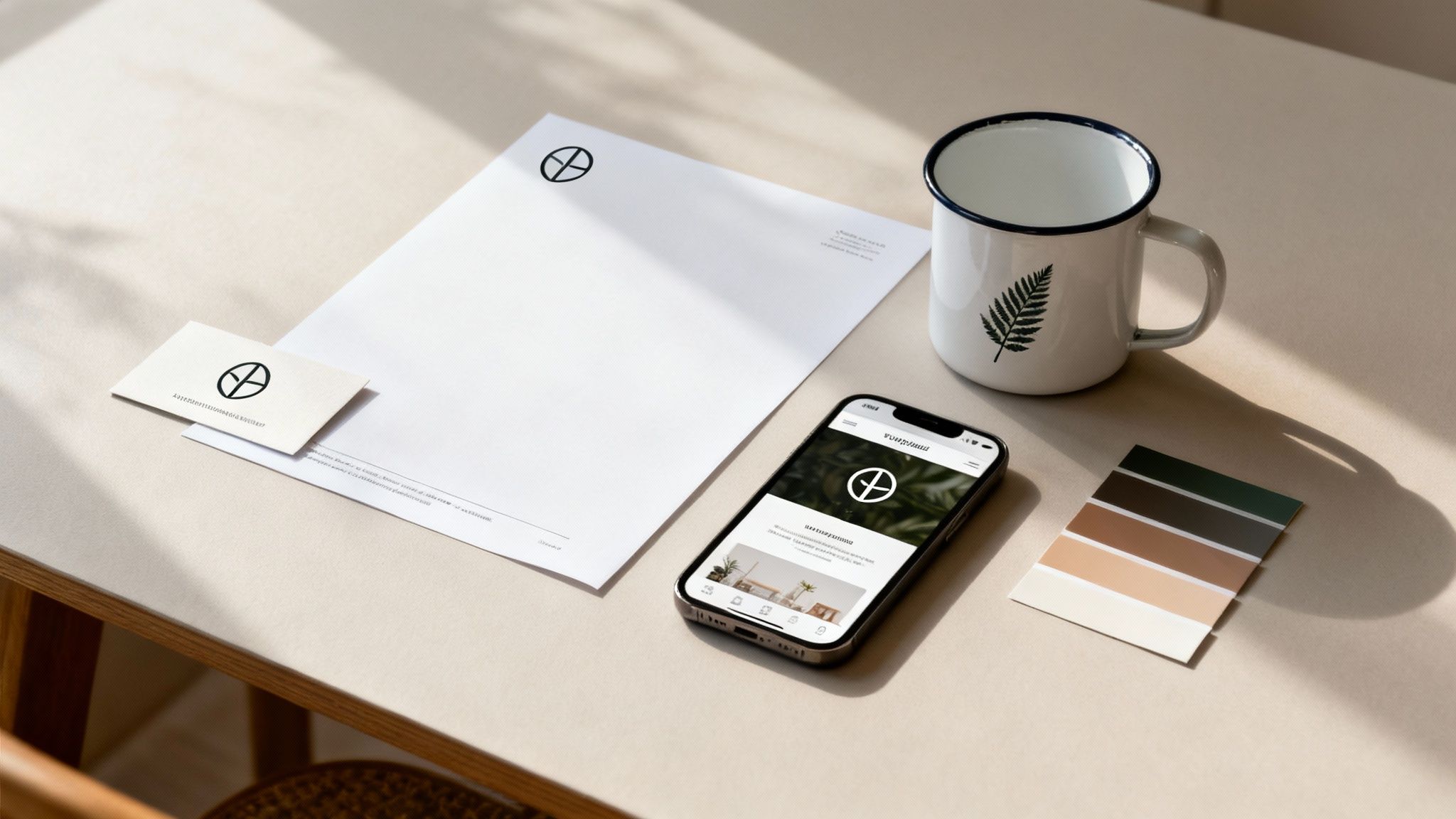
First things first, you need a simple brand style guide. This doesn’t have to be some hundred-page corporate manual. A simple one-pager is perfect. It just needs to lock in the rules for how your logo is used, listing your official brand colours and fonts. Consistency is everything when it comes to building a brand that people remember.
Deploying Your Logo Across All Touchpoints
With your style guide sorted, it’s time to roll out the new look. The goal is to update every single place a customer might interact with your business. This creates a unified, professional image that builds trust and makes you instantly recognisable, whether someone sees your van on the road or finds you online.
For a physical space, think about how things like custom neon signs can bring your logo to life and make a serious impression. Every single application, from the tiny icon on a browser tab to a big sign on your building, reinforces who you are.
A logo seen consistently across multiple platforms becomes familiar. Familiarity builds trust, and trust drives business. It’s a simple but powerful formula.
Your Digital Integration Checklist
Online, your logo is a crucial stamp of professionalism and authority. Your website is the most important place to start. A strong logo immediately lifts the whole look and feel of your site, making a killer first impression on potential customers. You can learn more about how this fits into the bigger picture in our guide to small business website design in NZ.
Here’s a quick checklist of the first places to get your new branding updated:
- Website Header and Favicon: These are the very first things visitors see.
- Social Media Profiles: Get your profile picture and cover photos updated on Facebook, Instagram, and LinkedIn.
- Google Business Profile: Your logo helps you stand out in local search results and on Google Maps.
- Email Signature: A professional sign-off on every single email you send.
- Digital Invoices and Quotes: Reinforce your brand with every financial interaction.
- Business Cards: Your go-to networking tool. Make sure it’s sharp.
- Company Vehicle Signage: Turn your ute or van into a mobile billboard.
Common Questions About Logo Design in New Zealand
When you’re ready to get a professional logo sorted, a few practical questions always pop up. For most Kiwi small business owners, it’s the nuts and bolts—cost, timing, and legal stuff—that are the final hurdle before jumping in.
So, let's clear the air and tackle those big questions head-on. Our goal here is to give you the confidence to move forward, knowing exactly what to expect.
How Much Does Professional Logo Design Cost in New Zealand?
The honest answer? It varies massively, depending on who you hire and what you actually need. Think of it like buying a car—you can get a reliable runabout or a high-performance machine. Both get you from A to B, but the experience and long-term value are very different.
A simple logo from a junior freelance designer might start around $500 to $1,500. This is a solid starting point if you just need a basic mark to get your business off the ground.
If you’re after a more thought-out branding package from an experienced freelancer or a small studio, you’re likely looking at an investment between $2,000 and $5,000. This usually gets you a more strategic process and a more versatile logo system.
For a full brand strategy and identity system from a larger agency, projects often kick off at $10,000 and can go way up from there. The trick is to see this as a long-term investment in a core business asset, not just another expense on the books.
How Long Does the Logo Design Process Take?
A quality logo simply can't be cooked up overnight. For a typical project with a Kiwi freelancer or a small design studio, you should plan for a timeline of 2 to 6 weeks from start to finish.
That timeframe gives the designer proper breathing room for the important stuff:
- Discovery & Research: Getting to know your business, your customers, and what your competitors are up to.
- Concept Development: Sketching out ideas and exploring different creative paths.
- Feedback & Revisions: This is where you come in, helping to refine and perfect the chosen concept.
- Finalisation & Delivery: Polishing the final design and packaging up all the file formats you’ll ever need.
Rushing this process is the fastest way to get a weak, forgettable logo. Building this time into your business plan is one of the smartest things you can do for a great result.
Do I Own the Copyright to My Final Logo?
Yes, 100%. Once you’ve paid the final invoice, any professional designer or agency in New Zealand should have a clause in their contract that formally transfers the full copyright and ownership of the final, approved logo to you.
It's super important to get this in writing before any work starts. This transfer gives you the exclusive legal right to use your new logo however you want, wherever you want. The designer usually just keeps the right to show the work in their portfolio—basically, to prove they did a good job. Any early drafts or unused ideas from the process stay as the designer's property.
Ready to build a brand that gets noticed and gets the phone ringing? At Four Stripes, we create conversion-focused websites and powerful local SEO campaigns for Kiwi service businesses just like yours. Start your project with us today.