
In New Zealand's tough market, a loyalty card is way more than just another marketing trick. It's a proper tool for keeping your customers coming back and building real, lasting relationships. For a small business, a smart loyalty programme can be a massive advantage, turning one-off buyers into regulars and even fans who'll sing your praises.
Why Loyalty Programmes Matter for NZ Businesses

Let's be honest, customers here have heaps of choices. Just having a great product or service is the bare minimum these days. The real hustle is getting people to walk through your door again and again, and that's where loyalty programmes come into their own. They're basically a constant "cheers for picking us" to your customers.
Think of it like a handshake with your regulars—a promise that you'll keep offering them value, which builds trust and a genuine connection. This is pure gold because it encourages them to return, spend more, and tell their mates about you. It’s a core part of any decent local marketing plan, making sure your business is the first one people think of.
The Changing Loyalty Landscape in New Zealand
The whole customer loyalty scene in NZ has had a massive shake-up. When a giant like Fly Buys shut down—a scheme that served nearly three million Kiwis for decades—it left a huge gap. This pushed a lot of businesses to finally create their own programmes so they could own their customer data and offer rewards that actually meant something.
The proof is in the numbers. The number of loyalty providers in New Zealand nearly doubled in just one year, jumping from 65 to 127 as businesses scrambled to fill that void.
This shift means Kiwi customers are now actively looking for new local businesses to be loyal to. For a small outfit, this is a golden opportunity. You can grab their attention and build those direct relationships without having to shout over the big players.
A well-structured loyalty programme does more than just offer discounts; it builds a community around your brand. It gives customers a solid reason to choose you consistently, transforming casual shoppers into advocates who feel genuinely valued and understood.
At the end of the day, putting money into loyalty is putting money into predictable growth. These programmes hand you incredibly useful data on what your customers are doing, helping you make smarter decisions. If you want to get your head around this, it's worth learning how to increase customer lifetime value with proven tactics that build long-term relationships.
A solid customer base makes your business more stable, which is a massive part of building a powerful https://fourstripes.co.nz/role-of-digital-presence-nz/.
The Psychology Behind a Successful Loyalty Programme
So, what actually makes a customer walk past your competitor and straight into your store, time and time again? It’s rarely just about having a decent product or a sharp price. The real secret is tapping into a few basic human truths: we all want to feel recognised, valued, and part of something.
A well-thought-out loyalty programme is your best tool for building these powerful emotional connections.
Think of it like a business handshake. The first sale is just the introduction. The loyalty card? That's the promise that there's more to come. It’s a simple signal to your customers that you see them, you appreciate their business, and you want to build a relationship that’s more than just a one-off transaction.
This simple act builds trust and makes people feel genuinely appreciated, not just like another number on a sales spreadsheet. And when customers feel valued, they come back. It’s the foundation for turning a casual shopper into one of your regulars.
Turning Recognition into Revenue
A good loyalty scheme does more than just hand out discounts; it creates a satisfying little feedback loop. Every time a customer earns a point or cashes in a reward, their brain gets a small hit of dopamine. That positive feeling makes them want to repeat the behaviour—which, in this case, is shopping with you.
This isn't just a marketing theory; it has a massive impact on how people shop right here in New Zealand. Loyalty schemes are everywhere, with research showing that around 97% of New Zealanders belong to at least one. These programmes directly shape where Kiwis choose to spend their money. You can get the full rundown on local loyalty habits in this report on the top loyalty programs and insights in New Zealand.
A loyalty programme changes the whole dynamic. Suddenly, spending money with you isn't just a cost—it's an investment. Each purchase becomes a step toward a tangible reward, completely shifting how customers see the value you offer.
This psychological shift delivers real, measurable results for your NZ business. It’s not just about bumping up sales; it’s about making your income more predictable. When 61% of shoppers say they actively shop more often with brands that have loyalty programmes they like, you’re building a reliable customer base that helps insulate you from the market's ups and downs.
Building a Community of Advocates
Ultimately, the goal is to create more than just repeat customers. You want to turn them into genuine fans. A great programme does this by making them feel like they're part of an exclusive club, transforming them from passive buyers into active supporters of your business.
It’s a natural progression:
- First Contact: A customer signs up, curious about the rewards on offer.
- Repeat Business: They come back to build up their points, working towards that next reward.
- Emotional Connection: After a few good experiences and feeling recognised, they start to genuinely prefer your business over others.
- Brand Advocacy: They begin recommending you to friends and family, becoming one of your most powerful—and free—marketing assets.
This is where the real return on investment kicks in. These advocates don’t just spend more themselves—with 37% of Kiwis happy to spend more with brands that reward them—they also bring new customers in the door. That's how you create a sustainable cycle of growth.
Choosing Your Loyalty Programme: Physical vs Digital
Once you've decided to launch a loyalty programme, one of the first big calls you'll need to make is about its format. Are you going to stick with the classic, tangible feel of a physical card, or jump into the convenience of a modern digital solution? This isn't just a small detail—it massively impacts your setup costs, the customer experience, and your ability to gather genuinely useful data.
For a lot of Kiwi businesses, especially local cafes and small shops, the old-school punch card is still king. It’s dead simple, cheap to print, and incredibly easy for both your staff and your customers to figure out. No tech headaches, no complex systems. It’s a straightforward way to start rewarding your regulars without a fuss.
But that simplicity has its downsides. Physical cards get lost, left in the car, or just plain forgotten. Worse still, they offer you zero insight into what your customers are actually doing. You can see how often a card gets stamped, sure, but you have no idea who your best customers are, what they love buying, or when they last popped in.
The Rise of Digital Loyalty Cards
There's a reason digital loyalty programmes are quickly becoming the new standard. Instead of stuffing another card into a bursting wallet, customers can get their rewards through a smartphone app or a quick scan at the till. That convenience alone is a huge win for today's shoppers.
The real game-changer with digital, though, is the data. A digital system tracks every purchase, letting you see which products are flying off the shelves, who your most valuable customers are, and their buying patterns. When you're looking at this option, don't just think of it as a digital punch card. To really get a sense of what's possible, it’s worth exploring things like leveraging digital coupons and mobile wallet integration to create a slick, modern experience for your customers.
This data opens the door to some powerful, personalised marketing. Imagine sending a special discount to coffee lovers who haven't visited in a month. It makes your marketing smarter and a whole lot more effective.
Comparing Your Options
So, which way should you go? Both have clear pros and cons, and the right answer depends entirely on your budget, your customers, and what you’re trying to achieve in the long run.
Here's a quick breakdown to help you decide.
Physical vs Digital Loyalty Cards for NZ Businesses
A comparison of the key features, benefits, and drawbacks of physical and digital loyalty card options for small to medium-sized enterprises.
| Feature | Physical Cards | Digital Cards |
|---|---|---|
| Upfront Cost | Low. Just design and printing costs. | Higher. Can involve app development or monthly software subscription fees. |
| Ongoing Costs | Can add up over time with reprinting. | Usually a predictable monthly or annual fee. |
| Customer Convenience | Can be easily lost or forgotten. Adds wallet clutter. | Stored on a smartphone, so it's always with them. One less thing to carry. |
| Data & Insights | Almost none. You can't track individual spending habits. | Goldmine of data. Tracks purchase history, frequency, and customer lifetime value. |
| Personalisation | Impossible. Every customer gets the same generic offer. | Highly personal. You can send targeted offers and messages based on behaviour. |
| Ease of Management | Simple to hand out, but no real way to manage or track performance. | Managed via a central dashboard. Easy to update offers and see real-time results. |
| Best For | Businesses wanting a simple, low-cost "thank you" with no tech requirements. | Businesses focused on growth, customer relationships, and data-driven marketing. |
Choosing between physical and digital really boils down to your core business goals.
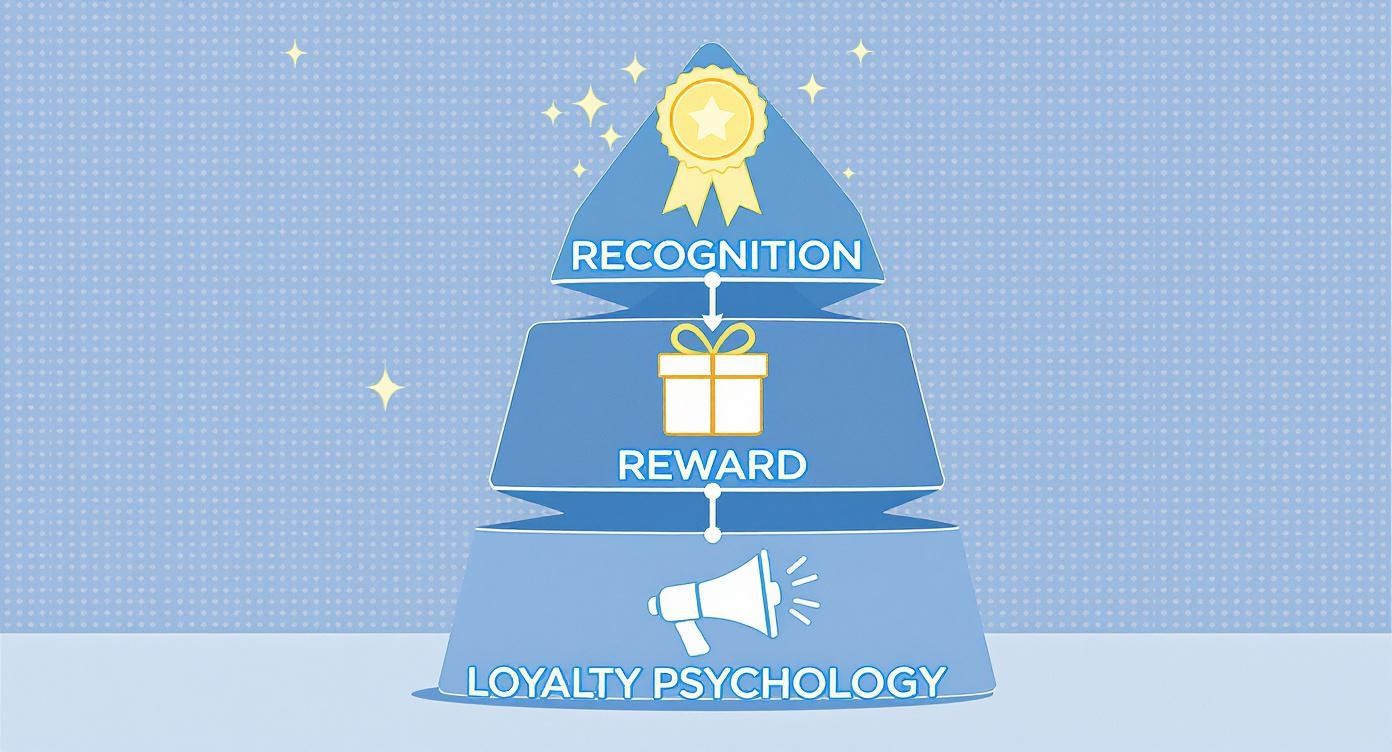
As this shows, the journey starts by making a customer feel seen and appreciated. That's the first step to earning their loyalty and turning them into someone who tells their friends about you.
Ultimately, if your goal is just a simple, low-cost way to say "thanks," a physical card might be all you need. But if you’re serious about building deeper relationships with your customers and making smart, data-driven decisions, then investing in a digital programme is the way to go for your NZ business.
Setting Your Loyalty Programme Up for Success
Jumping into a loyalty programme without a plan is like setting sail without a map. If you want to get it right, you need to sort out the money, the tech, and the legal stuff first. Think of this as your pre-launch checklist to make sure your programme is built on solid ground from day one.
Before you do anything else, you need a clear budget. The costs can swing wildly, from a simple cardboard stamp card to a feature-rich digital system. Getting your head around these differences is crucial for any NZ business wanting to roll out a loyalty scheme without breaking the bank.
Budgeting for Your Loyalty Scheme
The money side of a loyalty programme really breaks down into two parts: the initial setup and the ongoing running costs.
With physical cards, your main upfront cost is design and printing. This can be pretty cheap to get started, but don't forget you'll be reprinting them forever as you run out or as they get worn out and dog-eared in customers' wallets.
Digital systems usually work on a monthly subscription fee for the software. While this might seem more expensive at first glance, those fees are predictable and typically cover everything from updates and support to hosting. It’s absolutely vital to think beyond the setup costs and factor in what it will cost to keep the programme running long-term.
One of the most common mistakes we see is underestimating the cost of the rewards themselves. Whether you're offering discounts, freebies, or points, every single redemption is a real cost to your business. You need to crunch the numbers and build this into your pricing so the whole thing stays profitable.
Technical and Legal Considerations
Once you've got the budget sorted, it's time to think about the tech. If you're going digital, your loyalty software absolutely must play nicely with your existing Point of Sale (POS) system. A clunky, disconnected setup will only frustrate your staff and your customers, completely defeating the purpose. Always, always check for compatibility before you sign on the dotted line. The goal here is to make earning and redeeming rewards feel completely seamless at the checkout.
Even more importantly, you have to handle customer data with care. When a customer signs up, they’re trusting you with their personal information, and your obligations under New Zealand's Privacy Act are non-negotiable.
You need to be completely upfront about:
- What data you collect: Be specific. Tell them you’re collecting names, email addresses, and purchase history.
- How you use it: Explain that you’ll use their info to send them personalised offers and make their experience better.
- How you protect it: Assure them you have secure systems in place to stop their data from being breached.
Transparency is everything when it comes to building trust. Have a clear privacy policy ready and get explicit consent from every customer before they join. This isn't just about staying on the right side of the law; it shows your customers you actually respect their privacy.
Plus, using this data well can feed into your wider marketing efforts. To see how, check out our guide on what is marketing automation and learn how you can use customer data to build much stronger relationships.
Inspiration from Successful NZ Loyalty Programmes
You don’t need the budget of a supermarket giant to create a loyalty programme that really connects with your customers. All over New Zealand, small businesses are proving that a smart, well-designed scheme can build a fiercely loyal following. The secret isn’t a massive budget; it's about understanding what your customers truly value.
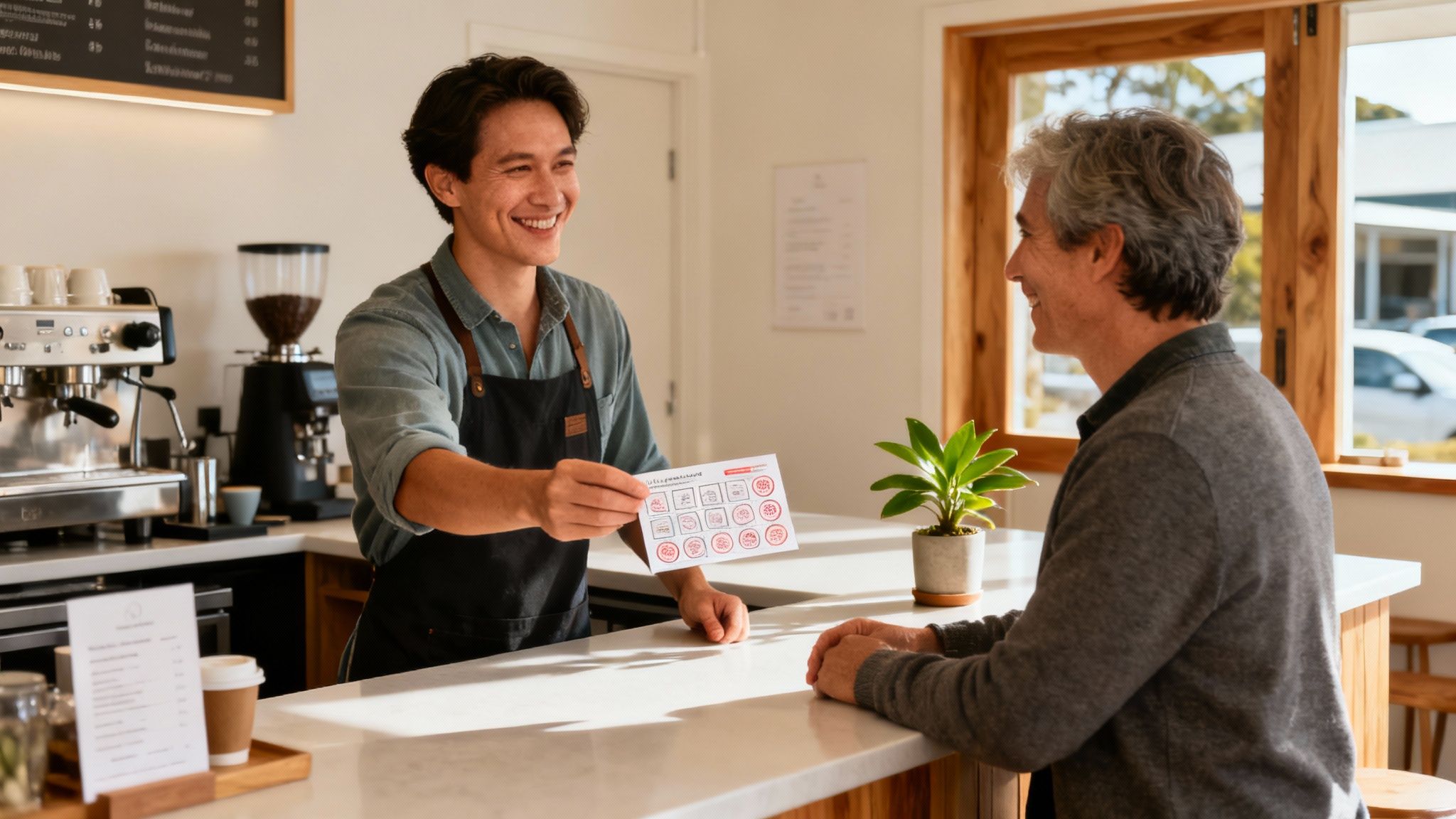
These success stories show that even the simplest ideas can be incredibly powerful. A local café might stick with a classic "buy nine, get one free" stamp card, which works because it’s dead simple to understand and the reward feels achievable. On the other hand, a boutique clothing store could use a digital system to offer exclusive early access to new stock, making their best customers feel like genuine insiders.
The key is to match the reward to your brand and your customers. The best loyalty cards in NZ are the ones that feel less like a marketing trick and more like a genuine "thank you" for choosing local.
Lessons from Local Successes
Looking at what works for other Kiwi businesses gives you a blueprint for your own efforts. Whether it’s a simple reward or a way to build a community, these examples offer real ideas you can adapt.
Here are a few common threads you’ll see in successful local programmes:
- Simplicity is Key: A programme that’s hard to understand or a pain to use will get ignored. The best schemes, like the ones you see in countless independent coffee shops, offer a clear, instant benefit without needing a manual to explain it.
- Exclusivity Feels Special: Offering rewards that money can't buy—like VIP event invites or first dibs on sales—makes loyal customers feel properly valued and part of a special club.
- Seamless Experience: Whether it's a physical card or a digital app, the process has to be frictionless. Customers won't bother if it's a hassle to earn or redeem points, so making it part of your normal payment process is vital.
The most powerful loyalty programmes are built on a deep understanding of customer behaviour. They don't just reward transactions; they recognise and reinforce the emotional connection a customer has with a local business.
This kind of thinking has a real financial impact. Recent data shows Kiwis made around 181 million card transactions in a single month, and a smart loyalty scheme can increase basket sizes by up to 319%. You can dig deeper into how New Zealanders are spending by checking out these New Zealand card spending insights.
Ultimately, these examples prove that a successful loyalty scheme is well within reach for any NZ business. For more inspiration, explore these local marketing ideas for service businesses to see how loyalty fits into a bigger strategy for growth.
Your Step-by-Step Implementation Guide
Alright, you're ready to get this thing off the ground. But just like any good project, a loyalty programme needs a solid plan, not just a vague idea. This is your roadmap for turning one-off customers into regulars who wouldn't dream of going elsewhere.
First things first: you need to know what you’re trying to fix or improve. Are you trying to get people to come in more often? Get them to spend a bit more each time they visit? Or is it all about getting customer data to understand them better?
Your answer here shapes everything else. If you just want more frequent visits to your café, a simple "buy 9 coffees, get the 10th free" stamp card is a no-brainer. If you want to increase average spend, a points-based system that rewards bigger purchases might be the ticket. Get this right, and the rest of the puzzle starts falling into place.
Designing and Launching Your Programme
With your goals clear, it's time to think about the rewards. They need to hit that sweet spot of being genuinely valuable to your customers without sinking your profits. A reward that feels impossible to reach will just get ignored. Keep it simple and make it something people actually want.
Next, you'll need to choose your tools. Are you going old school with a local printer for physical cards, or are you looking at a digital app? The right partner will make your life a lot easier.
Here's a simple, no-fluff checklist to get you started:
- Nail Down Your Business Goals: Before anything else, decide what success looks like. Is it more repeat business, higher transaction values, or better customer insights?
- Design Rewards People Actually Want: Create a reward structure that’s easy to understand, genuinely appealing to your customers, and makes financial sense for you.
- Pick the Right Provider: Find a partner that fits your needs. This could be a local printer for loyalty cards NZ or a digital platform that plays nicely with your existing POS system.
- Get Your Staff On Board: Your team needs to be your biggest cheerleader. Make sure they know the programme inside-out, can explain the benefits, and are genuinely keen to sign people up.
- Plan Your Launch: Don't just quietly release it and hope for the best. Build some hype! Use in-store signs, post on social media, and maybe run a special offer for the first wave of sign-ups to get the ball rolling.
Remember, the launch isn't the finish line—it's the starting pistol. The real work begins now, keeping an eye on what’s working and what isn't.
Finally, make sure you can actually track your results. You need to know your numbers. Key things to watch are your sign-up rate, how many people are actually claiming their rewards (redemption rate), and whether members are spending more than non-members. This data is gold—it tells you what to tweak and proves whether your investment is paying off.
Frequently Asked Questions About Loyalty Cards
Thinking about starting a loyalty programme? It’s normal to have a few questions swirling around. We've pulled together the most common queries we hear from NZ business owners to give you some clarity before you dive in.
This is your no-fluff guide to the essentials, covering everything from budgeting for your cards to your legal duties around customer data.
How Much Do Loyalty Cards Cost to Set Up in NZ?
The real answer? It depends entirely on whether you go old-school with physical cards or jump into a digital system.
For traditional printed cards, you’re mostly looking at design and printing fees. You can get a basic run done for a couple of hundred dollars, making it a super cheap way to get started. Just don’t forget you’ll need to keep paying for reprints down the track.
Digital programmes usually come with a monthly software subscription. While that sounds more expensive upfront, the cost is predictable and it unlocks a goldmine of features like customer data, automated marketing, and POS integration that deliver a much bigger return over time.
Are Loyalty Programmes Still Effective?
You bet they are. Here in New Zealand, a good loyalty programme is more valuable than ever. The numbers don't lie: 61% of Kiwi customers say they shop more often with brands that have a loyalty scheme they actually like. It's a proven method for keeping customers coming back through your door.
But a great programme is about more than just dangling a discount. It’s about building a real connection and making your customers feel genuinely valued. In a crowded market, that feeling is what sets you apart.
The purpose of a modern loyalty programme isn't just to reward transactions, but to build a relationship. By making customers feel valued and recognised, you turn casual shoppers into long-term advocates for your brand.
What Is the Most Common Type of Loyalty Programme?
The classic, and still the most popular, is the points-based system. It’s simple: customers earn points for every dollar they spend, and then cash those points in for discounts, freebies, or other rewards.
Its strength is its simplicity. Everyone gets it instantly—both your customers and your staff—which makes it a fantastic starting point for any NZ business. Whether it’s a humble coffee stamp card or a slick digital wallet, this model is incredibly flexible and just plain works.
Ready to build a loyal customer base that drives real growth for your business? At Four Stripes, we create digital marketing strategies that turn clicks into calls and casual visitors into repeat customers. Find out how we can help your NZ service business dominate local search by visiting https://fourstripes.co.nz.