
British service businesses often underestimate how much a clear customer profile impacts their bottom line. In fact, companies that personalise their local marketing can achieve up to 63 percent more qualified leads compared to generic campaigns. Whether you run a London-based cleaning company or manage a local consultancy, knowing exactly who your ideal clients are unlocks smarter targeting. Discover how precise steps give you a real advantage in attracting and converting local customers.
Table of Contents
- Step 1: Define Your Ideal Local Customer Profile
- Step 2: Optimise Your Website for Local Search Visibility
- Step 3: Launch Targeted Google Ads Campaigns
- Step 4: Engage and Nurture Leads with Clear Follow-Up Systems
- Step 5: Track Results and Refine Your Lead Generation Approach
Quick Summary
| Key Insight | Explanation |
|---|---|
| 1. Define Your Customer Profile | Develop a detailed profile of your ideal local customer to guide your marketing strategies effectively. |
| 2. Optimise Website for Local Search | Ensure your website features local keywords and consistent information to improve local search visibility. |
| 3. Launch Targeted Google Ads | Create focused Google Ads campaigns aimed at specific customer segments in your local area to maximise engagement. |
| 4. Establish a Follow-Up System | Implement a structured follow-up process to convert leads into customers while personalising communication. |
| 5. Track and Measure Results | Regularly analyse marketing performance to identify what works and refine your lead generation strategies accordingly. |
Step 1: Define your ideal local customer profile
Building a precise customer profile transforms how service businesses attract and convert leads. By understanding exactly who your most valuable local customers are, you can craft targeted marketing strategies that speak directly to their needs and preferences.
Starting with quantitative data collection, map out the demographic and psychographic characteristics of your best existing clients. Consider factors like business size, annual revenue, industry vertical, growth rate, and specific pain points. Gartner suggests creating a comprehensive database that includes historical customer interactions, technological attitudes, and operational models to identify organisations most likely to become loyal customers.
To refine your profile, analyse your current customer base and look for common threads. Which clients generate the most revenue? What industries do they represent? What specific challenges do they consistently face that your service solves? Create a detailed template that captures both hard data (revenue, location, business type) and soft attributes (decision maker personality, communication preferences, typical purchasing behaviours). This granular understanding will help you target similar prospects more effectively and streamline your local marketing efforts.
Warning: Avoid making your customer profile too broad. A vague description reduces your marketing precision and wastes valuable resources targeting the wrong audience.
Step 2: Optimise your website for local search visibility
Improving your website’s local search performance is crucial for attracting nearby customers and establishing your business as a trusted local service provider. By implementing strategic optimisation techniques, you can significantly increase your chances of appearing in local search results.
Begin by focusing on critical search engine optimisation elements that enhance local discoverability. This includes crafting descriptive page titles that incorporate your location and primary services, developing clear meta descriptions that highlight your local expertise, and implementing structured data markup. Ensure your business name, address, and phone number are consistent across all web pages, creating a robust local signal for search engines.
Optimise your website content to reflect local search intent by incorporating region specific keywords naturally throughout your pages. Include neighbourhood names, city references, and local landmarks in your text. Add a dedicated ‘service areas’ page that details the specific locations you serve, and embed a Google Maps widget to reinforce your local presence. Create location specific landing pages if you serve multiple areas, each tailored with unique content that speaks directly to local customers’ needs.
Warning: Avoid keyword stuffing or using excessive location references that make your content feel unnatural. Search engines prioritise high quality, readable content that genuinely serves user needs.
Step 3: Launch targeted Google Ads campaigns
Targeting the right local customers through Google Ads can dramatically transform your service business’s lead generation strategy. By creating precisely focused advertising campaigns, you can connect directly with potential clients who are actively searching for your specific services in your local area.
Begin by implementing targeted digital advertising strategies that maximise your campaign’s effectiveness. Start by selecting hyper local keywords that reflect your service offerings and geographic region. Create separate ad groups for different service types, ensuring each campaign speaks directly to a specific customer segment. Use location targeting to narrow your audience to precise suburbs or regions where your ideal customers live and work. Develop compelling ad copy that highlights your unique value proposition, incorporating local references and specific service benefits that resonate with your target market.

Refine your Google Ads approach by implementing detailed audience targeting options. Utilise demographic filters such as age, income level, and professional interests to ensure your ads reach the most relevant potential customers. Set up conversion tracking to monitor which ads generate actual leads, and continuously adjust your bidding strategy to maximise return on investment. Create multiple ad variations to test different messaging approaches, allowing you to identify the most effective communication style for your local market.
Warning: Avoid broad targeting that wastes advertising budget. Precision is key in local service advertising.
Step 4: Engage and nurture leads with clear follow-up systems
Transforming initial enquiries into profitable client relationships requires a strategic and consistent approach to lead management. Your follow-up system will determine whether potential customers become loyal clients or slip away to competitors.
Implement a robust customer relationship management strategy that tracks and personalises interactions with every lead. Begin by establishing a standardised communication workflow that includes immediate acknowledgement of enquiries, personalised follow-up emails, and structured touchpoint sequences. Create email templates that feel authentic and tailored to different customer segments, ensuring each communication addresses specific pain points and demonstrates your understanding of their unique requirements.
Develop a disciplined lead tracking process that segments prospects based on their engagement level and potential value. Utilise automated tools to schedule timely follow-ups, send targeted content, and maintain consistent communication without becoming intrusive. Set up reminder systems that prompt your team to reach out at strategic intervals, combining personalised phone calls with strategic email nurturing. Monitor response rates and adjust your approach continuously, using data insights to refine your communication strategy and improve conversion rates.
Warning: Inconsistent or sporadic follow-up can permanently damage your business reputation. Establish clear communication protocols and stick to them rigorously.
Step 5: Track results and refine your lead generation approach
Measuring and analysing your marketing performance is crucial for continuous improvement and sustainable business growth. By systematically evaluating your lead generation strategies, you can identify what works and eliminate tactics that drain your resources.
Begin by implementing comprehensive web analytics and measurement techniques that provide granular insights into your marketing performance. Set up tracking for key performance indicators such as conversion rates, cost per lead, lead quality, and customer acquisition metrics. Use tools that integrate data from multiple sources including website analytics, Google Ads performance, email marketing responses, and customer relationship management systems. Establish a regular reporting schedule where you review these metrics monthly, looking for trends and patterns that reveal the effectiveness of your different marketing channels.
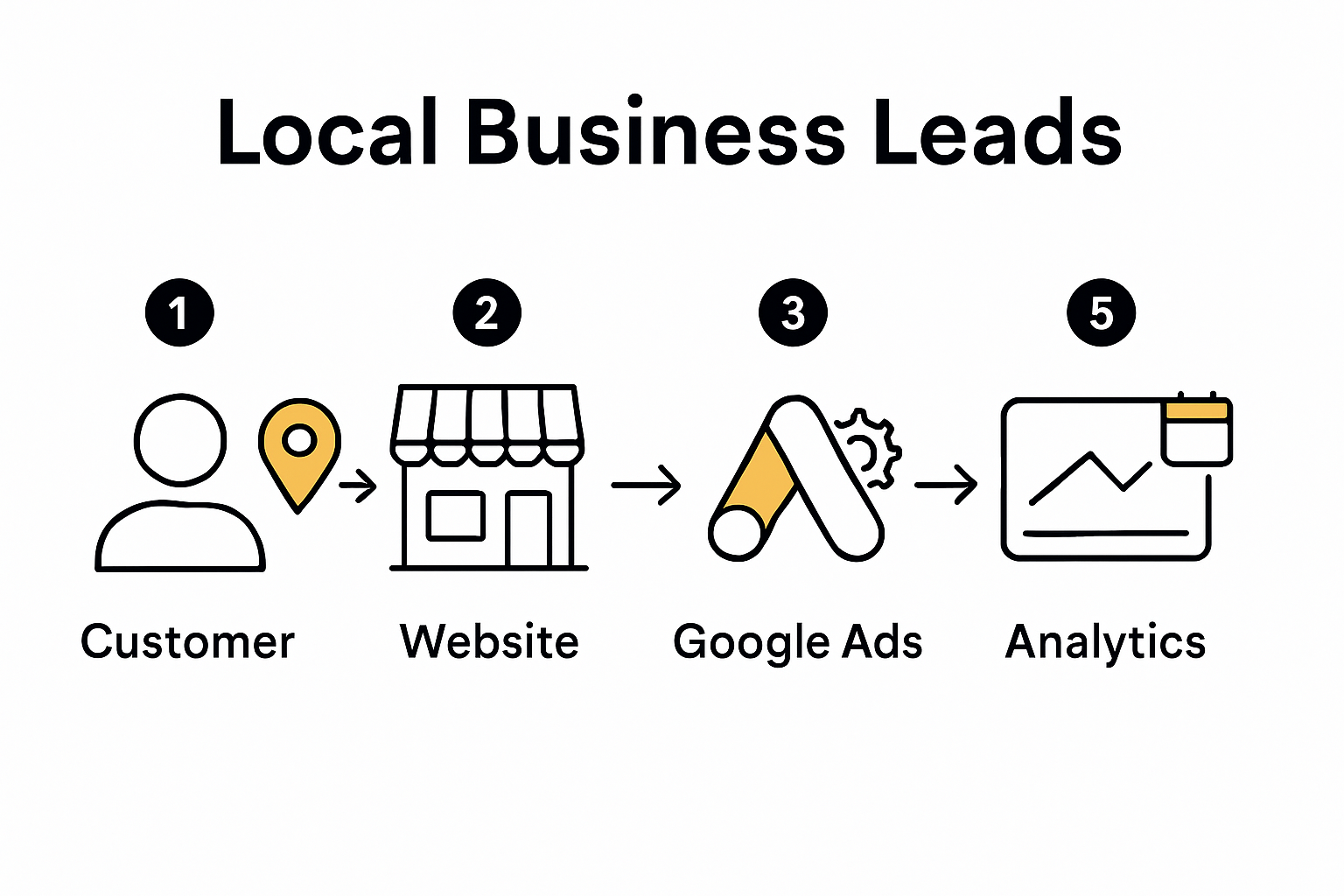
Develop a systematic approach to iterative improvement by creating a feedback loop that allows you to rapidly test and adjust your strategies. Segment your data to understand which marketing tactics generate the highest quality leads for different service types or customer demographics. Conduct periodic experiments by slightly modifying your targeting, ad copy, or landing pages to see how these changes impact lead generation performance. Be prepared to reallocate your marketing budget dynamically, shifting resources towards channels and strategies that demonstrably produce the best results.
Warning: Avoid making knee-jerk reactions based on short-term data. Look for consistent trends and give each strategy sufficient time to demonstrate its true potential.
Transform Your Local Lead Generation with Expert Digital Marketing Support
Struggling to precisely define your ideal customer or optimise your local search visibility can stall your service business growth. This article highlights common challenges such as targeting the right leads, managing follow-ups, and measuring results effectively. If you want to stop wasting resources on broad marketing and start attracting high-quality local clients consistently, our Digital Marketing services are tailored just for you. We combine local SEO, Google Ads expertise, and strategic website design to help you dominate your local market.
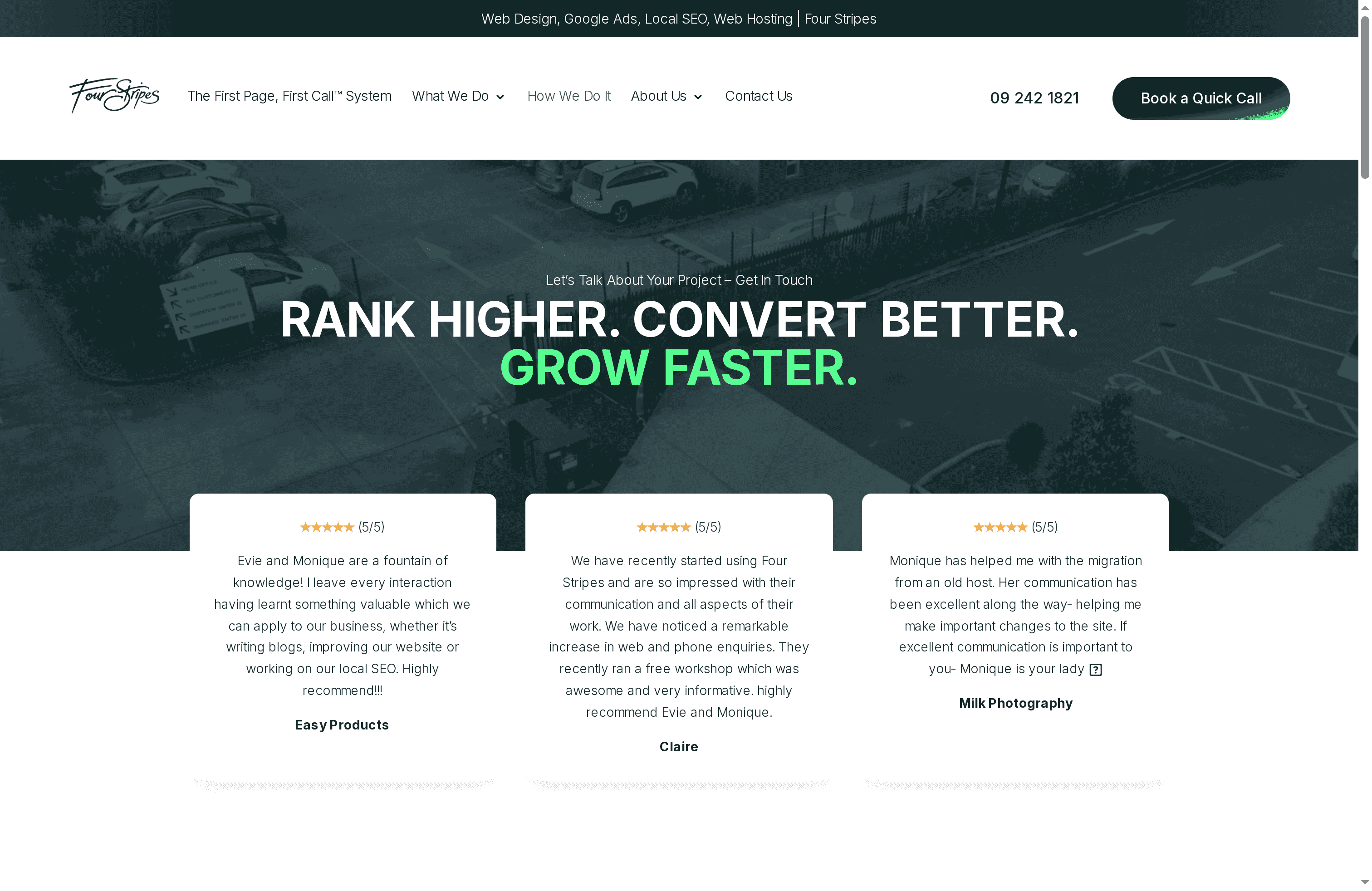
Ready to experience a 90-day transformation that puts your business on page one and drives inbound calls? Take control of your lead generation today by connecting with our team at Four Stripes. Discover personalised strategies grounded in accurate customer profiling and proven advertising techniques described in the article. Start your journey towards sustainable growth by reaching out now.
Frequently Asked Questions
How can I define my ideal local customer profile for lead generation?
To define your ideal local customer profile, start by analysing the demographics and psychographics of your top clients. Consider factors like business size, annual revenue, and common pain points, then create a detailed template that captures both hard data and soft attributes.
What steps should I take to optimise my website for local search visibility?
To enhance your website’s local search visibility, focus on SEO techniques such as using descriptive page titles that include your location and services. Additionally, create a dedicated ‘service areas’ page and include local keywords to ensure that your content aligns with local search intent, aiming for a noticeable increase in local traffic within 30–60 days.
How can I create effective Google Ads campaigns to attract local customers?
To connect with local customers through Google Ads, select specific local keywords that reflect your services and create separate ad groups for different service types. Incorporate compelling ad copy that highlights your unique value proposition, targeting precise suburbs or regions to maximise engagement and leads.
What systems can I implement to follow up with leads effectively?
Implement a clear follow-up system to engage with leads by establishing a standardised communication workflow that includes immediate responses and personalised touchpoints. Use email templates that address specific pain points, aiming to convert enquiries into loyal clients through consistent and timely outreach.
How can I track results and refine my lead generation approach?
To track results effectively, set up analytics to monitor key performance indicators such as conversion rates and lead quality. Regularly review your metrics and adjust your strategies based on aggregated data, allowing for more informed decisions and improvement of your lead generation efforts over time.
Recommended
- What Is Lead Generation? Complete Breakdown for NZ | Website Design & Google Ads That Generate Leads
- How to Generate Local Leads for NZ Service Businesses | Website Design & Google Ads That Generate Leads
- 7 Local Marketing Ideas for Service Businesses to Grow Fast | Website Design & Google Ads That Generate Leads
- How to Create Digital Strategy for Local Business Success | Website Design & Google Ads That Generate Leads