

Do you ever wonder why another plumber or electrician nearby seems to get all the calls? It is not luck. It is because they know their competition better than you know yours. Knowing what your rivals are doing online is the first step to beating them. This guide explains the most important things to look at, the key competitor analysis -parameters, so you can stop guessing and start winning more jobs.
This is not about copying your rivals; it is about finding their weaknesses and making them your strengths. We will give you a simple, step-by-step plan to look at what works for them and what does not. You will learn how to check their Google rankings, look at their website speed, and even see what they are doing with their Google Ads. By the end, you will have a clear plan to make your own online presence better.
This article is made for Kiwi tradies and service businesses, whether you are in Auckland, Wellington, or Christchurch. The goal is simple: get your phone ringing with more good leads. We will show you exactly what to measure, which tools to use, and what to do with the information you find. Let’s get started on finding the ideas that will help you do better than your local competition. You will get a real advantage by understanding the important competitor analysis -parameters that truly matter for service businesses in New Zealand.
1. Local Search Rankings & Map Pack Place
When someone in Auckland needs a plumber, electrician, or builder, they usually search on Google first. This is where your local search rankings matter most. This parameter measures where your business and your competitors show up in local search results, especially in the Google "Map Pack" (the top three map listings) and the normal results that follow. For a New Zealand tradie, ranking high for local searches is the difference between a phone that rings and one that stays quiet.
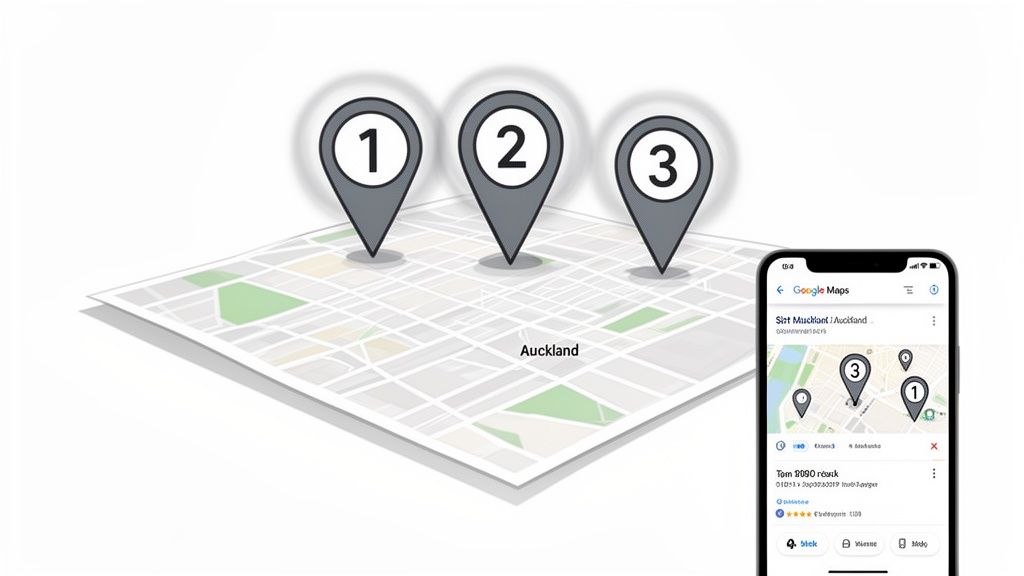
Understanding these rankings shows how easy it is for customers in certain suburbs to see your competitors. For example, a rival electrician might be number one for "electrician North Shore" but not show up for "electrician Manukau". This information shows their strengths and, more importantly, shows you chances to do well in areas they are not covering. Looking at this key part of your competitor analysis -parameters helps you see exactly where you should put your marketing efforts.
How to Measure and Take Action
Tracking your place against competitors is key to winning the local search game. It tells you who the top players are in your service areas and what you need to do to catch up or stay ahead.
- Track Key Service & Suburb Keywords: Make a list of 15-20 main keyword combinations your customers use. Think like them: "emergency plumber Mt Albert" or "builder quotes Ponsonby". Track these every month.
- Use a Rank Tracking Tool: Use tools like Semrush, Ahrefs, or a special local tracker to automatically check your rankings and your top 3-5 competitors' rankings for your chosen keywords. This gives you steady, fair data.
- Find Ranking Gaps: Look for valuable suburbs where your competitors are weak. If you see a rival is strong in West Auckland but weak in the East, focus your SEO efforts on an "electrician Pakuranga" service page to get that market.
- Watch GBP Changes: Notice a competitor suddenly jump into the Map Pack? Check their Google Business Profile. They may have added new photos, got more reviews, or updated their services. Learn from their good changes.
2. Google Business Profile Optimisation & Customer Reviews / Online Reputation
More than just ranking, your Google Business Profile (GBP) is your digital shop front on the world's biggest search engine. This parameter checks how well your competitors manage their GBP and their online reputation in general. For a Kiwi tradie, this is often the final factor for a customer choosing between you and a rival. It covers everything from the number and quality of photos, to the amount, rating, and newness of customer reviews.
A well-optimised GBP builds trust right away. A competitor with 150 five-star reviews, recent before-and-after project photos, and quick replies to customer questions will almost always win the click over a business with only 15 reviews and old information. Looking at these competitor analysis -parameters shows you exactly how your rivals are building trust with potential customers and shows the standards you need to meet or beat. Understanding the details of optimizing your Google Business Profile is vital for seeing why some competitors turn watchers into callers so well.
How to Measure and Take Action
Tracking your competitors' reputation signs gives a clear plan for building customer trust and making your conversion rates better. It shows who is winning the trust game and what you can do to compete.
- Set a Standard for Review Scores: Check your top 5 competitors on Google. Note their total number of reviews, average star rating, and how recently they got reviews. A builder with a 4.8-star rating from 100+ reviews sets a high standard.
- Look at Photo & Post Strategy: Look at the types of photos your rivals use. Are they showing their team, their vans, or certain jobs in progress? Also, check their GBP posts for recent offers or project updates. This shows their content plan.
- Check Review Replies: How quickly and professionally do your competitors reply to reviews, both good and bad? A business that ignores bad feedback or uses standard replies gives you a chance to stand out with real customer care.
- Check Service Listings: Look at the services listed on your competitors' GBP. This can show if they are moving into new areas, like a plumber now offering gasfitting services. This information helps you guess market changes. To learn more about making your profile a lead-making machine, find out more about why you should be using Google Business Profile in NZ.
3. Website Performance & User Experience Metrics
In today’s fast digital world, your website's speed and ease of use are just as important as the quality of your work. This parameter measures how quickly your competitors' websites load, how well they work on mobile phones, and how easy they are for customers to use. For a potential customer needing an urgent repair, a slow or confusing website means they’ll click away and call your competitor instead.
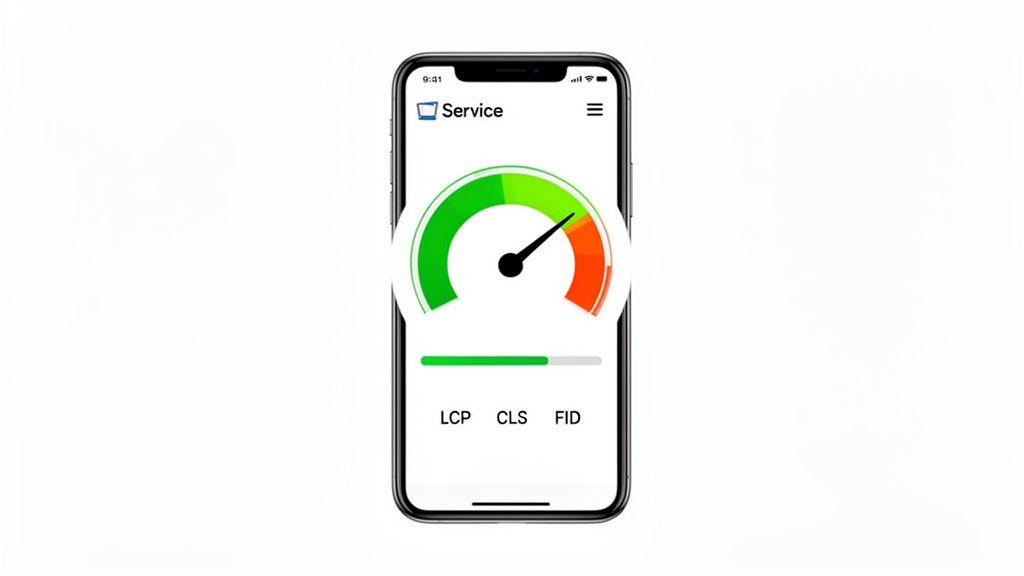
Looking at a competitor’s site performance shows big competitive advantages. If a rival builder's website takes four seconds to load while yours loads in under two, Google will prefer your site in search results, and customers are more likely to stay and contact you. Understanding these competitor analysis -parameters helps you make sure your online "front door" is more welcoming than anyone else's, which directly affects your lead generation and money. A good user experience designer can be key to getting this right.
How to Measure and Take Action
Measuring your website's performance against the competition is vital for turning online visitors into paying customers. It shows technical weaknesses you can use to get ahead.
- Set a Standard with PageSpeed Insights: Use Google's free PageSpeed Insights tool to test your own site and your top 3-5 competitors. Enter their website addresses and compare the "Performance" scores for both mobile and desktop.
- Focus on Mobile First: Pay close attention to the mobile score. Many businesses in NZ build great desktop sites but forget that most customers search on their phones. A competitor with a poor mobile experience is an easy target to beat.
- Look at Calls-to-Action (CTAs): Look at how your competitors ask for business. Do they have a "Click to Call" button that stays at the top of the screen on mobile? Is their "Request a Quote" form simple, or does it have too many questions?
- Check Core Web Vitals: Look at the Core Web Vitals report in PageSpeed Insights. If a competitor has a "Poor" score for "Largest Contentful Paint" (LCP), it means their page loads slowly. This creates a chance for your faster site to rank higher.
4. Keyword Strategy & Content Coverage
Besides just rankings, you need to understand which keywords your competitors are aiming for and the content they use to get that traffic. This parameter means looking at their keyword choices, from general service terms to very specific long questions, to see which customer groups they are actively trying to reach. For a Kiwi tradie, this shows if a competitor is aiming for urgent, high-value jobs or more general, research-based questions.
Understanding a competitor's keyword strategy shows the market talks they are trying to lead. For example, a rival builder with detailed blog posts about "passive house building costs" is aiming for a high-end, eco-friendly market. If they are ranking for 'plumber Auckland' but have no content for 'emergency plumber same-day Auckland', they are leaving a gap for urgent, profitable work. Looking at this key part of your competitor analysis -parameters shows you exactly which customer needs are being ignored.
How to Measure and Take Action
Mapping your competitors' keyword footprint shows which services and suburbs they focus on, giving you a clear path to find unused opportunities.
- Get Competitor Keywords: Use a tool like Ahrefs or Semrush to get a list of the top 50-100 keywords your main competitors rank for. This gives you a direct look into their organic traffic plan.
- Find Keyword Groups: Group their keywords by topic. Are they putting services and suburbs together, like 'home renovations Remuera' or 'electrical wiring Christchurch'? This shows their location and service focus.
- Search for Intent Gaps: Look for high-intent keywords they are missing. If they do not rank for terms like '24/7 electrician quote' or 'fix leaking tap now', you can create specific service pages to get that urgent demand.
- Look at Content Types: See if competitors are using blogs for informational keywords ('how to unblock a drain') and service pages for buying ones ('drain unblocking services'). This can help with your own content plan and show how they might be using automated keyword research for SEO success to find these chances.
5. Paid Search (Google Ads) Strategy & Ad Spend
While SEO builds long-term visibility, Google Ads puts you at the top of the search results right away. This is vital for service businesses that need a constant stream of leads. This parameter looks at your competitors' paid search plans, including their ad text, chosen keywords, and estimated budget. For a Kiwi tradie, understanding how much rivals are willing to pay for a click shows just how profitable certain services and suburbs are, helping you avoid costly mistakes.
By looking closely at a competitor's Google Ads campaign, you can find their most effective messages and targeting. For example, a rival plumber in Christchurch might bid a lot on "24/7 emergency plumber". This shows that this is a high-converting, profitable keyword. This information allows you to decide whether to compete directly or find a less competitive, more affordable niche. Examining these competitor analysis -parameters gives you a clear picture of the paid advertising world before you spend a single dollar.
How to Measure and Take Action
Looking at your competitors' paid plans is vital for making the most of your own budget and getting a better return on investment. It shows you what works, how much it costs, and where the opportunities are.
- Look at Competitor Ad Copy: Look at the headlines and descriptions your top competitors use. Do they highlight "20+ years' experience," "licensed & insured," or "same-day service"? This language directly speaks to customer worries like trust and urgency.
- Use an Ads Analysis Tool: Tools like Semrush's Advertising Research toolkit can show you the keywords your competitors are bidding on, their estimated ad spend, and examples of their live ads. Track your top 3-5 rivals monthly.
- Check Their Landing Pages: Where do their ads go? A competitor sending traffic to a special "hot water cylinder repair" page instead of their homepage likely gets better conversion rates. This shows the importance of specific, relevant landing pages.
- Estimate Budgets to Gauge Market Value: If a competitor is spending thousands per month on ads, it is a strong sign that the keywords they are targeting are very profitable. This helps you understand how much you might need to invest to compete and what the possible returns are. Learn more about estimating Google Ads costs in NZ to set a realistic budget.
6. Backlink Profile & Link Authority
In the online world, backlinks are like votes of confidence from other websites. A strong backlink profile tells search engines like Google that your business is a credible, trustworthy source of information, which helps your rankings. This parameter means looking at the number, quality, and relevance of the links pointing to your competitors' websites. For a New Zealand tradie, high-quality local links are far more valuable than dozens of irrelevant international ones.
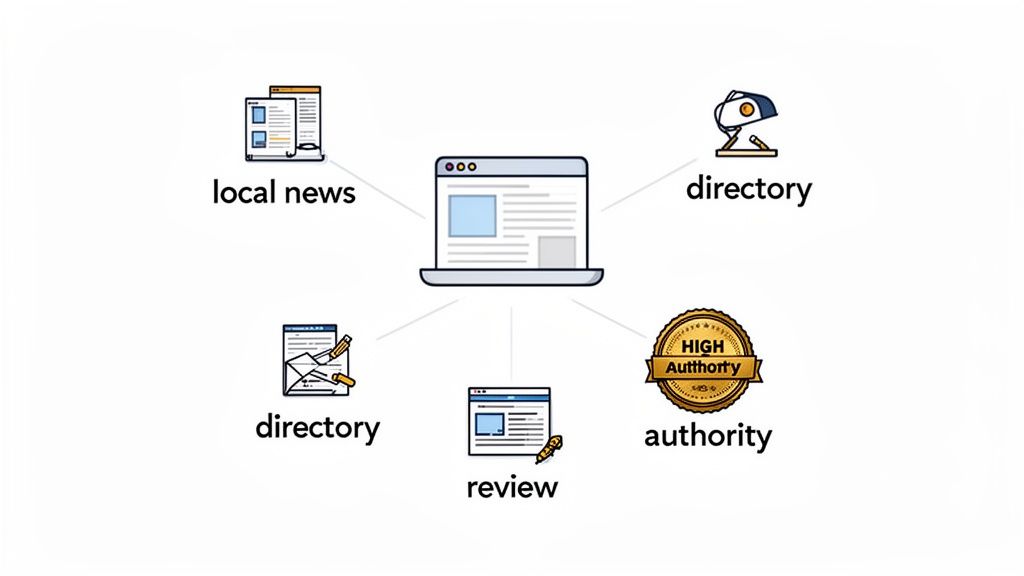
Understanding your competitors' backlink profiles shows you exactly how they've built their online authority. For instance, a rival builder in Christchurch might have a powerful link from a story in The Press or be listed in every major NZ business directory. These links signal to Google that they are a real and trusted local business. Looking into this part of your competitor analysis -parameters gives you a clear plan to build your own website's authority and outrank them.
How to Measure and Take Action
Looking at competitor backlinks is not just about counting links; it is about understanding the plan behind them. This helps you copy their successes and find opportunities they have missed.
- Run a Backlink Report: Use a tool like Ahrefs or Semrush to look at your top 3-5 competitors. Export a list of their referring domains (the websites linking to them) to see who is supporting them online.
- Find High-Value Local Links: Look for links from local directories (like Finda or Yellow.co.nz), industry groups (e.g., Master Builders), or local news sites. These are powerful signals for local SEO and often easy to get for your own business.
- Look for 'Quick Win' Opportunities: Does your top competitor have a link from a local sports club they sponsor or a community event page? These are often simple relationships you can build yourself to earn a similar, valuable link.
- Look at Anchor Text: Check the words used in the links pointing to their site. If a competitor is ranking for "emergency electrician Hamilton," they likely have backlinks with that exact phrase. This shows you what anchor text is most effective for your target keywords.
7. Conversion Rate & Lead Generation Effectiveness
A great website that gets lots of visitors is only useful if those visitors actually contact you for a job. This parameter measures how well your competitors turn their website visitors into paying customers. It looks at how effective their calls-to-action (CTAs), contact forms, and phone numbers are at getting real leads. While you cannot see their exact conversion numbers, you can spot clues that show how good they are at making the phone ring.
Understanding your competitors' lead generation plan shows you how to build a website that works harder for your business. For instance, a rival builder in Christchurch might have a simple "Get a Free Quote" form with just three fields at the top of every page. This simple design likely converts far better than a site with a complicated, ten-field form hidden on a contact page. Looking at these conversion-focused competitor analysis -parameters helps you find simple ways to get more leads from the website traffic you already have.
How to Measure and Take Action
Gauging a competitor's ability to get leads is about looking for signs of a smart, customer-focused setup. It tells you who is making it easy for customers to take the next step and what you can learn from them.
- Look at Calls-to-Action (CTAs): Look at your competitors' websites. Do they have clear, visible buttons like "Call Us Now" or "Book a Job Online"? A competitor with a phone number in a sticky header that stays at the top of the screen as you scroll is likely converting more visitors.
- Test Their Contact Forms: Go through the process of filling out their forms. Is it short and simple, or does it ask for too much information? Forms with fewer than three fields can convert up to five times higher than long ones, especially for mobile users.
- Look for Trust Signals: Check for things that build customer confidence. A plumber's website that clearly displays "★★★★★ 200+ Reviews" and "Licensed & Insured" badges will almost always get more leads than a generic site without them.
- Check Their Ad Landing Pages: When a competitor runs a Google Ad, where does it send you? If it links to their homepage, that is a weak approach. If it links to a specific page, like "Hamilton Emergency Hot Water Repairs," that is built to convert, they are taking lead generation seriously.
8. Social Media Presence & Engagement Strategy
While social media might not directly help your Google rankings, it is a powerful tool for building trust and brand loyalty in your local community. This parameter looks at your competitors' social media activity, including their follower counts, how often they post, what they post, and how customers interact with their content. For a Kiwi tradie, an active and engaging Facebook or Instagram page acts as a modern-day word-of-mouth referral. It can influence customer decisions long before they search for your services.
Watching a competitor's social plan shows how they connect with their audience. For example, a rival builder in Christchurch with high engagement on posts showing before-and-after photos has found a winning formula for showing their quality. A low follower count with high engagement is often more valuable than a huge, silent audience. It shows a loyal customer base. Understanding these social dynamics is a key part of your competitor analysis -parameters because it shows you how to build a community, not just a client list.
How to Measure and Take Action
Looking at your competitors' social media gives you a plan for what your target customers like. It helps you avoid content that does not work and focus on what builds trust and gets leads.
- Check Competitor Profiles: Check the top 3-5 competitors on platforms that are right for your trade (Facebook and Instagram are great for visual trades like building and landscaping). Note their follower counts, how often they post, and general content themes.
- Look at Engagement Rates: Do not just look at follower numbers. Work out their engagement rate (likes + comments + shares ÷ followers x 100) on their last 10 posts. A high rate shows their content is successful.
- Find Top-Performing Content: Look for their most popular posts. Are they 'how-to' videos, project showcases, team introductions, or customer testimonials? This tells you what potential customers in your area want to see.
- Set a Standard for Their Content Mix: Note the balance between promotional posts ("call us now!") and value-driven content (tips, project stories). A common successful mix is 80% helpful content and 20% sales-focused posts. Copy this balanced approach to build your own audience.
9. Pricing Strategy & Value Proposition Transparency
How much do your competitors charge? The answer is not just a number; it is a powerful sign of their confidence, target market, and value. Looking at a competitor's pricing plan shows how they place themselves in the market, whether as a premium, high-value provider or an affordable, budget-friendly option. For a Kiwi tradie, clear pricing builds trust right away and can be a huge competitive advantage.
Understanding how rivals present their costs shows you how to position your own services. A competitor who clearly states a '$180 call-out fee including the first hour' is targeting customers who hate surprises. On the other hand, a competitor with a vague "request a quote" button might be targeting large, complex jobs where fixed pricing is impossible. This part of your competitor analysis -parameters helps you find a pricing sweet spot that attracts your ideal customer while showing your value.
How to Measure and Take Action
Looking at competitor pricing helps you create a strong offer that stands out. It is not about being the cheapest; it is about being the clearest and offering the best value for your stated price.
- Check Competitor Pricing Pages: Visit the websites of your top five competitors. Write down whether they publish prices, offer packages, or hide behind a contact form. Those who hide pricing often struggle with a higher cost to get a lead.
- Find Pricing Tiers: Note any different rates they offer, such as standard hours, after-hours, and emergency call-outs. A rival might charge double for an emergency leak repair, which tells you what the local market will accept for urgent jobs.
- Look at Value Justification: Look for how they justify their prices. Do they mention being "Master Electricians," offer a "10-year workmanship guarantee," or promise a "24/7 response"? These are trust signals they use to ask for a higher rate.
- Check for Financial Incentives: See if competitors offer payment plans or financing options like Afterpay for larger projects, such as a bathroom renovation. This makes it easier for customers facing a big expense and could be an advantage for you to offer.
10. Content Marketing & SEO Authority Signals
While great service gets you referrals, high-quality content gets you found on Google by customers who do not know your name yet. This parameter checks your competitors' use of blogs, guides, case studies, and other educational resources. For a Kiwi tradie, creating helpful content like a guide on "DIY gib patching" or "choosing the right heat pump" builds trust and authority. It attracts organic traffic long before a customer needs to make a call.
When a competitor consistently publishes valuable content, they are not just sharing tips; they are building a library of assets that rank for hundreds of informational keywords. A rival plumber with 50 blog posts on topics from "leaky tap fixes" to "hot water cylinder costs" will appear in far more search results than a competitor with only a basic services page. Looking at these competitor analysis -parameters shows you how your rivals are educating their way to the top of Google. This creates a powerful, long-term lead generation engine that does not rely on paid ads.
How to Measure and Take Action
Looking at your competitors' content plan shows the topics that your audience likes and the level of effort needed to become a trusted voice in your industry. It helps you find content gaps you can fill to attract new customers.
- Check Competitor Blog Volume & Frequency: Visit the blogs of your top 3-5 competitors. How many articles have they published? Are they posting weekly, monthly, or have they not updated it since 2019? This shows their level of commitment.
- Find High-Traffic Topics: Use a tool like Semrush or Ahrefs to see which of their articles bring in the most organic traffic. This tells you exactly what potential customers in New Zealand are searching for.
- Look at Content Depth and Format: Compare their content. Are they writing short 500-word posts, or are they creating in-depth 2,000-word guides with videos and checklists? Deeper, more helpful content often ranks better for valuable keywords.
- Look for Content Gaps: Find the valuable topics your competitors are not writing about. If rival builders have covered "deck building costs" but not "retaining wall regulations in Auckland," that is your opportunity to create the best resource and get that audience.
Turning These Ideas Into More Phone Calls
We have looked at the ten key competitor analysis -parameters that can change your marketing from a guessing game into a precise, targeted plan. From looking closely at Local Search rankings and Google Business Profile signals to checking website speed, keyword gaps, and Google Ads tactics, you now have a full plan for understanding your competition in New Zealand.
The goal was never to simply copy what the top-ranking plumber in Auckland or the most visible builder in Christchurch is doing. The real power is in finding their weaknesses and turning them into your strengths. Knowledge is only potential power; action is where you truly get ahead and make the phone ring.
Your Strategic Plan to Gaining Market Share
The large amount of data can feel like too much, but you do not need to do every parameter at once. The key is to prioritise based on what will have the biggest effect. Start by focusing on the areas that offer the biggest results for the least effort. This creates a series of small, smart wins that build up over time.
Think of it like this:
- Is your top competitor ranking well but has a slow, clunky website? This is your chance. Making your site faster and easier to use can help you get leads they are losing because of frustration.
- Are their Google reviews few or unanswered? A proactive plan to get real, positive reviews can quickly make your business the most trusted and reliable choice in your service area.
- Do they dominate paid ads but ignore their organic SEO? Focusing on creating valuable, keyword-rich content for your website can build a long-term, lasting source of leads that does not need a big ad budget.
Each parameter is a lever you can pull. By looking at your competitors, you find which levers will move your business forward the fastest. You are not just looking at data; you are building a clear plan to more jobs.
From Analysis to Action: Your Next Steps
Let's make this practical. Over the next week, choose just two of the competitor analysis -parameters we have talked about. Perhaps you will start by looking at your rival's Google Business Profile and their online reviews. Use the tools and methods described to find a clear gap.
For example, you might find their reviews often mention poor communication. This is a golden insight. You can then make "excellent communication" a core part of your marketing message, highlight it on your website, and encourage your happy customers to mention it in their reviews. This simple action directly uses a competitor's weakness and positions you as the better choice.
The journey to leading your local market is a marathon, not a sprint. It is built on steady, informed actions. By regularly checking these competitor analysis -parameters, you stay one step ahead, changing your plan as the market changes. You stop reacting to what your competitors do and start making them react to you. This is how you move from being just another tradie in the search results to becoming the first and only call for your ideal customers.
Feeling swamped by the data and unsure where to start? At Four Stripes, we specialise in turning these complex competitor analysis -parameters into a simple, effective plan that gets your phone ringing. Our First Page, First Call system is designed just for NZ service businesses to dominate local search and get a steady flow of high-quality leads. Let us handle the analysis so you can focus on running your business – visit Four Stripes to see how we can help you get ahead.