
Trying to pin down a website design price in the UK can feel like you're guessing in the dark. Costs are all over the place, and it's tough to know what's fair. For a small business, a decent, professional website usually starts somewhere between £1,500 and £6,000. If you're looking at a bigger corporate site or a full-blown e-commerce store, that number can easily climb past £9,000.
Ultimately, what you invest comes down to what you need the website to do for your business.
Understanding Website Design Prices In The UK
Think of it like building a house. You wouldn't expect a simple, one-bedroom cottage to cost the same as an architecturally designed home with all the bells and whistles. It's the exact same with websites. The final price tag is tied directly to how complex it is, what features you need, and the results it has to deliver.
Because every business is different, there’s no such thing as a 'one-size-fits-all' price. This first section will break down the numbers so you can understand what really goes into a quote.
To give you a quick snapshot, here are some typical price ranges you'll see around the UK.
Typical Website Price Ranges in the UK
| Website Type | Typical Price Range (GBP) | Best For |
|---|---|---|
| Basic Brochure Site (3-5 pages) | £1,500 – £4,000 | Startups, freelancers, or businesses needing a simple online presence. |
| Small Business Website (5-10 pages) | £4,000 – £8,000 | Tradespeople, cafes, consultants, and service businesses wanting to generate leads. |
| E-commerce Store (Small) | £6,000 – £12,000+ | Businesses starting to sell products online with basic payment processing. |
| Corporate/Custom Website (10+ pages) | £9,000 – £25,000+ | Established companies needing advanced features, integrations, and custom design. |
These figures give you a solid baseline. Now, let's look at what's actually included in a standard package.
What Goes Into a Standard Quote?
Most quotes for UK businesses cover the essential building blocks for getting your business online properly. This usually includes:
- Design and Development: The actual work of creating the site’s look, feel, and making it all work.
- Content Management System (CMS): A platform like WordPress that lets you easily update your own content without calling a developer.
- Mobile Responsiveness: Making sure your site looks and works perfectly on any device—desktops, tablets, and especially smartphones.
- Basic SEO Setup: The foundational work to help Google find, understand, and start ranking your new website.
For most tradespeople, cafes, and consultants in the UK's competitive market, a small business website with 5-10 pages is the perfect starting point. It's enough to showcase your services, build trust, and get the phone ringing. This price typically covers the initial design, a solid CMS, and the basic SEO needed to get found. To see a more granular breakdown, check out our website design pricing page.
The image below gives a good visual of how the costs scale up from a small business site to a larger corporate project.
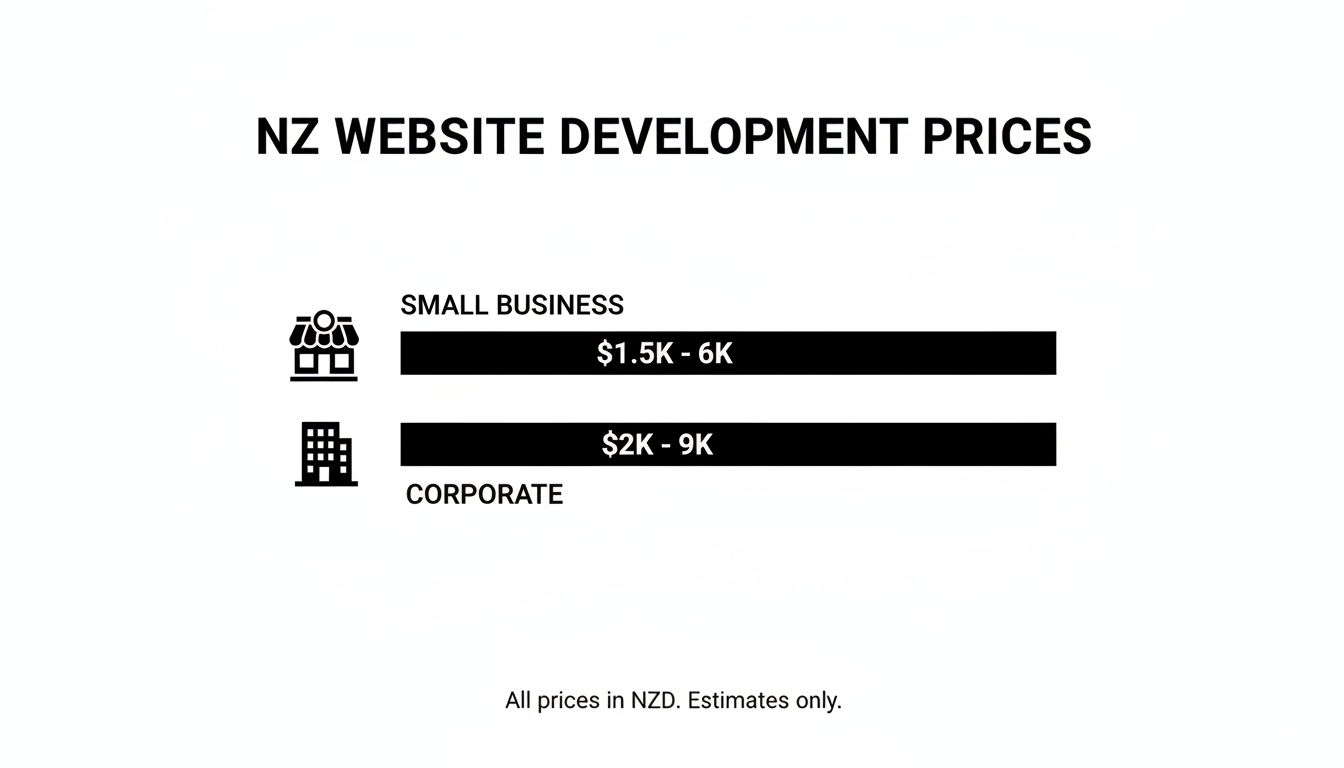
As you can see, while a small business can get a killer online presence for a reasonable investment, bigger companies need to budget more for their more complex needs. For another great resource on this topic, this guide offers a solid look at what drives costs: Web Design Pricing: How Much Does a Website Cost?.
Being upfront about pricing builds trust from day one. When potential customers see clear, straightforward information, they feel more confident and it saves everyone a lot of time.
At the end of the day, having a clear picture of these price ranges helps you make a smarter decision for your business's future.
The Core Factors That Influence Your Website Cost
When you get a quote for a new website, the total figure can seem like a number plucked from thin air. But if you peel back the layers, you’ll find several key drivers that directly shape your final website design price. Understanding these helps you see exactly what you’re paying for and why costs can vary so dramatically between quotes.
One of the first big decisions is whether to go with a template or a fully custom build. Think of it like buying a suit: a template is your off-the-rack option. It's affordable and gets the job done fast, but it might not fit your brand perfectly. A custom design is like a bespoke, tailored suit—it’s built from the ground up to match your unique brand, your customers, and your business goals, which naturally comes with a higher price tag.
Project Scope and Complexity
Beyond the design, the project's scope is the single biggest thing that moves the needle on cost. A simple five-page "brochure" website to introduce your business is a world away from building a dynamic, 20-page site with multiple service categories, galleries, and interactive tools.
The bigger and more complex your requirements, the more time, skill, and coffee are needed to get it done right. The main things that affect the scope are:
- Number of Pages: It's simple maths. More pages mean more design, development, and content work.
- Custom Features: Need a live booking calendar, a mortgage calculator, or a secure client-only area? Every unique feature adds development hours.
- Content Creation: Are you supplying all the text and images, or do you need a pro to handle copywriting and photography?
To keep things from spiralling out of control, you need to understand the strategies for avoiding scope creep that can quietly inflate your costs. A clearly defined plan from day one is your best defence against a budget blowout.
The Role of a Content Management System
Almost every website we build these days runs on a Content Management System (CMS). This is basically the engine under the bonnet. For most UK businesses, that engine is WordPress, a seriously powerful and flexible platform that runs over 43% of all websites on the internet for a good reason.
A CMS gives you the keys, letting you log in and make simple updates yourself—like adding a blog post or changing your phone number—without having to call a developer for every little thing. While setting up and customising the CMS is part of the initial build cost, it saves you a fortune in the long run.
A well-built CMS puts you in control of your own digital asset. It’s the difference between owning your own van and having to call a taxi for every single job—one gives you freedom and long-term value, the other creates constant dependency.
Essential Features That Add Value and Cost
A few other critical pieces contribute to the final price, and each one adds a layer of functionality that's vital for a website that actually works for your business. These aren't just fancy add-ons; they're fundamental for generating leads and giving customers a good experience.
These common essentials include:
- E-commerce Functionality: If you want to sell products online, you'll need product pages, a shopping cart, and secure payment systems. This turns your website into a digital storefront, which is a much bigger job than a simple informational site.
- Responsive Design: This is non-negotiable. Your website has to look great and work perfectly on every device, from a big desktop monitor right down to the smallest smartphone. With most of your customers browsing on their phones, a site that isn't mobile-friendly is a dead end.
- Foundational SEO: This means building your site in a way that Google can actually find, read, and understand it. It includes optimising page titles, meta descriptions, image text, and building a logical site map. Building a site without this is like opening a shop but forgetting to put a sign on the door.
- Third-Party Integrations: Need your website to talk to your accounting software, your CRM, or your social media feeds? Each connection streamlines your workflow but requires development time to ensure the two systems communicate without any drama.
Each of these elements adds real, tangible value, turning your website from an online brochure into your hardest-working employee.
Beyond The Build: Ongoing Website Costs You Must Budget For
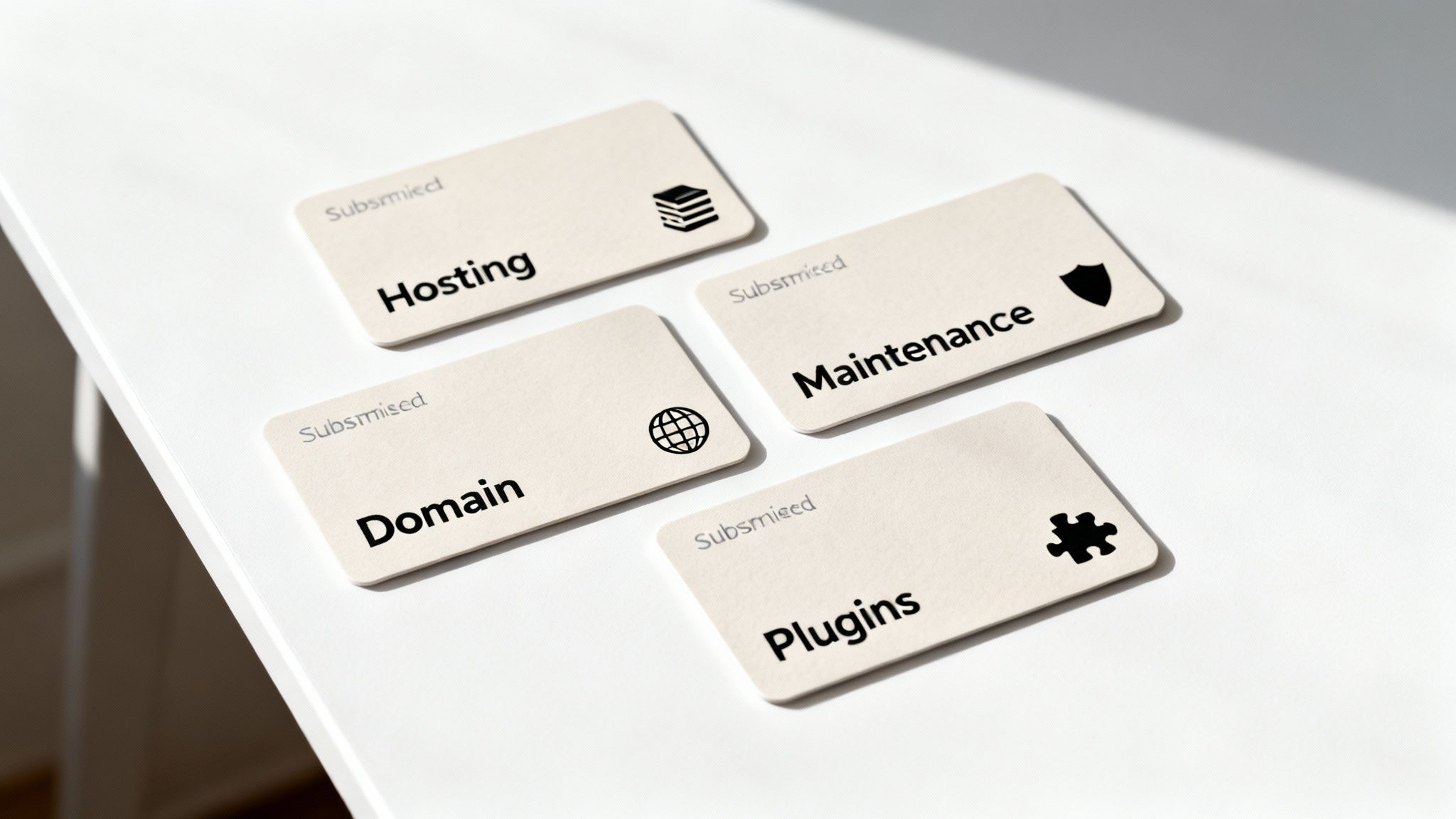
It’s a classic mistake we see all the time: a business owner thinks their website is a 'set and forget' purchase. But the initial design and build price is just the down payment. A great website is a living, breathing part of your business, and just like your van or your tools, it needs regular upkeep to stay secure, fast, and actually do its job.
Factoring these ongoing costs into your budget from day one saves you from nasty surprises later. It’s what keeps your digital front door open, running smoothly for customers, and consistently bringing in new leads.
Annual Domain Name and Hosting
Every website needs two non-negotiable things just to exist online: a domain name and hosting. Think of the domain as your business’s street address (like yourbusiness.co.uk) and the hosting as the actual plot of land your workshop is built on. You’re essentially renting this digital real estate.
-
Domain Name Registration: This is a small but critical annual fee that proves you own your web address. In the UK, this usually costs between £10 – £25 per year.
-
Website Hosting: This is the server where all your website files are stored. The price tag here can vary wildly, from cheap shared plans for tiny sites to powerful dedicated servers for big e-commerce operations. To get your head around the options, our guide on web hosting in NZ breaks it all down.
These two are the absolute bare minimum you’ll need to pay each year just to keep the lights on.
Critical Website Maintenance Plans
A solid website maintenance plan is your digital insurance policy. The software that runs your site—like WordPress and its plugins—is constantly being updated to patch security holes, squash bugs, and add new features. Ignoring these updates is like leaving the keys in the ignition of your work van overnight. It's not a matter of if something will go wrong, but when.
A proper maintenance plan should always include:
- Regular Backups: Making secure copies of your entire site, so if the worst happens, you can restore it in minutes, not weeks.
- Software and Plugin Updates: Keeping every component current to block security threats and ensure everything plays nicely together.
- Security Monitoring: Actively scanning for malware, hacking attempts, and other suspicious activity.
- Performance Checks: Making sure your site stays quick and doesn’t slow down over time, which is a killer for both users and Google rankings.
A maintenance plan isn’t an optional extra; it's a non-negotiable part of owning a professional website. The cost and headache of cleaning up a hacked site will always be far, far more than the small monthly fee for preventative care.
For a UK business, annual maintenance costs reflect the site's complexity. A simple small business site might need £300 to £1,000 per year for the basics. In contrast, larger corporate or e-commerce sites can easily run from £1,500 to £8,000+ for more intensive security management and performance audits.
Annual Website Running Costs Breakdown
To give you a clearer picture, here’s a quick summary of what you should be budgeting for annually to keep your website healthy and effective.
| Expense Item | Estimated Annual Cost (GBP) | Purpose |
|---|---|---|
| Domain Name | £10 – £25 | Your website's address (e.g., yourbusiness.co.uk) |
| Website Hosting | £250 – £700+ | The 'land' your website is built on; where files are stored |
| Website Maintenance | £300 – £1,500+ | Security, updates, backups, and performance checks |
| Premium Plugin Fees | £80 – £400+ | Annual licences for key features (e.g., forms, SEO tools) |
| SSL Certificate | £0 – £120 | Encrypts data for security (the padlock icon); often free with hosting |
| SEO & Content | Variable | Ongoing work to rank on Google and attract customers |
These figures give you a realistic baseline for your financial planning, ensuring your website continues to be a valuable asset, not a forgotten liability.
Other Potential Ongoing Expenses
Once you’ve got the essentials covered, a few other costs might pop up depending on your goals. These are often the investments that turn a static online brochure into a machine that actively generates work for you.
You should also keep in mind:
- Premium Plugin Licences: Many of the best tools—from advanced booking systems to slick SEO plugins—require an annual subscription to get crucial updates and support.
- SSL Certificate: While most good hosts include a free SSL certificate (that little padlock in the address bar), some businesses might need an advanced one for extra security, which carries an annual fee.
- Content Creation and SEO: If you want to show up on Google when people search for your services, you'll need to invest in ongoing work like writing blog posts, adding service pages, or hiring an SEO expert.
- Digital Marketing: Planning to run Google Ads or social media campaigns? That’s a separate, ongoing marketing budget you’ll need to account for.
Thinking about these recurring costs from the start is the key to making sure your website remains a powerful, profitable tool for your business for years to come.
Real-World Pricing Scenarios For UK Businesses

Theory is one thing, but seeing actual numbers makes the decision a lot clearer. Let’s break down two common scenarios we see with UK businesses every day.
First up, we'll look at a local tradesperson—say, a plumber in Manchester.
Then, we’ll switch gears to a professional services firm, like a law practice in London, to see how their needs change the game.
Local Tradesperson Website Example
A plumber in Manchester doesn't need a bells-and-whistles masterpiece. What they need is a digital billboard that works 24/7, turning searches into phone calls.
The core of their site would be a few hard-working pages: a clear services list, a gallery to show off their work, a simple quote form, and some customer reviews to build trust.
- Services Page: A no-nonsense list of every plumbing service they offer.
- Project Gallery: Real before-and-after photos of jobs they've completed.
- Quote Request Form: An easy way for potential customers to send in their job details.
- Customer Testimonials: Proof from happy clients that they’re the right choice.
A website like this typically lands in the £3,000 to £5,000 range.
It strikes the perfect balance between looking professional and being a practical tool for capturing leads. Because the focus is on a quick launch, usually around 3–4 weeks, costs are kept lean and manageable.
This kind of site quickly becomes a lead-generation machine that pays for itself over and over again.
Professional Services Website Example
Now, let's take a London law firm. Their online presence needs to do more than just generate leads; it has to project authority, expertise, and trust.
They’ll need deeper content, including detailed service pages for each practice area, professional team profiles, an expert blog to showcase their knowledge, and maybe even a secure portal for clients.
- Service Pages: In-depth explanations of complex practice areas.
- Team Profiles: Professional bios with photos and qualifications to build credibility.
- Industry Blog: Regular articles to establish themselves as thought leaders.
- Client Login Area: A secure portal for sharing sensitive documents.
A more complex site with these features will cost anywhere from £8,000 to £15,000+.
What drives the price up here? Things like custom CMS development and beefed-up security protocols. The longer development timeframes and the need to meet compliance standards also add to the investment.
Think of a professional services site as a custom-built office—complete with secure filing cabinets, a professional receptionist, and private meeting rooms.
So, which path is right for you? It all comes down to your business goals and your budget. The tradesperson model is perfect for lean operations that need results fast, while the professional build is an investment for high-stakes industries where credibility is everything.
Comparing Both Models
To make it even clearer, let's put the two options side-by-side.
| Factor | Tradesperson Website | Professional Services |
|---|---|---|
| Price Range | £3,000–£5,000 | £8,000–£15,000+ |
| Page Count | 5–8 pages | 10–20+ pages |
| Build Time | 3–4 weeks | 6–10 weeks |
| Custom Features | Gallery, form, testimonials | Client portal, blog |
| Ongoing Maintenance Estimate | £300–£700 per year | £1,000–£2,500 per year |
Your decision really boils down to how much custom work, content depth, and security your business requires.
A lean starter site gets you in the game quickly without breaking the bank. A robust professional site is a long-term investment in your brand's authority and functionality.
The key is to match your website design price to the value it needs to deliver for your business.
Before you look at any quotes, sit down and make a list of your absolute "must-haves." Then, you can see which price bracket they realistically fall into, saving you from any nasty surprises later on.
When you start talking to designers, use these scenarios as your guide. You'll be able to have a much more informed conversation about what you need and what it should cost.
As you compare quotes, make sure you're looking at the fine print:
- Are you getting a proper CMS you can update yourself?
- Is the site fully mobile-responsive?
- Are the SEO basics included from the get-go?
- What are the ongoing maintenance fees after the first year?
Having these answers will help you properly weigh up your options.
Here at Four Stripes, this is exactly what we do. We help UK businesses get the right website, on time and on budget. Our team can build a hard-working tradesperson site in 3–4 weeks or a comprehensive professional site in 6–10 weeks.
If you're ready to get started, contact us to chat about your project and we’ll give you a tailored quote. Remember, investing in the right website isn't an expense—it’s a tool that generates real ROI. Even a 20% bump in enquiries can see your site pay for itself within months.
Evaluating Quotes And Maximising Your Investment
Getting a few quotes for your new website is an exciting step, but it’s dangerously easy to fall into the trap of just picking the cheapest one. While it might feel like you're saving money, the lowest price often comes with hidden costs you pay for later. A bargain-bin website can end up crippling your business with security holes, painfully slow load times, and a confusing design that sends potential customers straight to your competition.
Instead of hunting for the cheapest deal, the smart move is to focus on value. A well-built website isn’t an expense; it’s a hard-working asset designed to bring in leads and grow your business. The initial investment might be higher, but a quality site will pay for itself many times over through new customers and a stronger brand.
What To Look For In A Quote
A professional, transparent quote is way more than just a single number at the bottom of a page. It's a detailed game plan that shows you exactly what you’re getting for your money. If a quote is vague or missing key details, that’s a massive red flag.
A good proposal should always include:
- A Clear Project Scope: This should break down every single page, feature, and function being built. There should be no grey areas about what’s included and, just as importantly, what’s not.
- Specific Deliverables: Look for a clear list of what you'll actually receive. Things like design mockups, a fully built WordPress site, training on how to use it, and a foundational SEO setup.
- Realistic Timelines: The quote has to include a projected timeline with key milestones, from the first design concepts right through to development, testing, and the day it goes live.
- Transparent Payment Terms: It should clearly lay out the total cost, the deposit required to get started, and the schedule for any further payments.
A detailed quote is the sign of a professional who has actually listened. It shows they understand your business goals and have a clear, organised plan to build a website that will achieve them.
Shifting Your Mindset From Cost To Investment
It’s time to stop thinking of your website as a one-off business expense, like your electricity bill. Think of it as a powerful investment, just like buying a new piece of equipment for your workshop. A great website is a revenue-generating machine that works for you 24/7. To learn more about how a well-structured site can drive growth, check out our guide on small business website design in NZ.
The real measure of success isn't what it costs, but its Return on Investment (ROI). You can track this by measuring the real-world results it brings into your business.
How To Measure Your Website’s ROI
Calculating the ROI from your website helps you see its true value, well beyond the initial price tag. It’s the proof that your investment is actively making you money.
Here are a few key things to track:
- Lead Generation: How many new enquiries or quote requests are coming through your website's contact form each month? Even a 20% increase in leads can mean your website pays for itself within just a few months.
- Sales Conversion: If you sell online, how many sales come directly from the website? For service businesses, track how many of those website leads actually turn into paying customers.
- Enhanced Brand Credibility: This one is a bit harder to measure, but a professional website builds trust. This leads to better quality clients who are willing to pay more because your online presence reassures them that you’re a legitimate, expert operation.
Essential Questions To Ask Before Hiring A Web Designer
Picking the right web design partner is one of the biggest calls you’ll make for your business. The right team can build you a lead-generating machine that works while you sleep. The wrong one can leave you with a costly digital paperweight and a whole lot of frustration.
To make sure your investment pays off and you find a team that actually gets what you're trying to achieve, you need to go in armed with the right questions. This moves the conversation beyond just the website design price and helps you suss out their process, their expertise, and how they treat their clients. No nasty surprises down the line.
Questions About Their Experience And Process
Before you even think about signing a contract, you need to feel confident they have the runs on the board to deliver for a business like yours. How they manage the project is just as important as the pretty pictures at the end.
Kick things off with these fundamentals:
- Can you show me a portfolio of sites you’ve built for other businesses like mine? Seeing their work for other UK tradespeople or professional services is the best proof you’ll get. It shows they understand your industry.
- What’s your process for design, feedback, and changes? A decent agency will have a clear, step-by-step process for mockups, getting your feedback, and a set number of revision rounds. You want to avoid endless, frustrating back-and-forth or being hit with extra charges for small tweaks.
- Who will I be dealing with during the project? Knowing you have a dedicated person to call or email makes a world of difference. It keeps things moving and gives you peace of mind.
A transparent process is the sign of a pro. If they’re vague about how things will run or how they’ll communicate, that’s a massive red flag. It often points to disorganisation and delays later on.
Questions About Technology And Training
The techy stuff under the bonnet determines how well your site performs and, crucially, how easy it is for you to use. Don’t be shy about digging into the details here—you need to know what you’re paying for.
Ask them about the tech and what happens after they hand it over:
- What Content Management System (CMS) do you use and why? For most small businesses in the UK, the answer should be WordPress. It's flexible, powerful, and easy to get the hang of. Their reasoning will show you if they’ve actually thought about your needs.
- Will you show me how to use the website? This is non-negotiable. The price should include a proper handover where they teach you how to do the basics, like adding a new blog post or changing the text on a page.
- Is basic Search Engine Optimisation (SEO) included? A new website without foundational SEO is like opening a shop with no sign out front. Make sure they’re handling the essentials like page titles, meta descriptions, and getting your site map submitted to Google.
Questions About Ongoing Support And Costs
Here’s a secret: a website is never really "finished." It needs looking after. You need to be crystal clear on what happens after launch day to avoid surprise bills and headaches.
Get clarity on the long-term relationship with these questions:
- What happens after the site is live? Do you offer support or maintenance plans? A good partner will offer monthly plans to handle security, backups, and software updates. Find out what they cost and exactly what you get for your money.
- Once I’ve paid in full, who owns the website, the domain, and all the content? The answer to this must be you. Check the fine print to make sure there are no clauses that lock you into their hosting or stop you from taking your website somewhere else if you want to.
Asking these direct questions puts you in control. It helps you make a smart decision and ensures the website design price you pay delivers real, lasting value for your business.
A Few Final Questions About Website Design Prices
Alright, let's wrap this up by tackling some of the most common questions we hear from UK business owners. Getting straight answers to these helps you plan your budget and feel confident you're making a smart move, not just throwing money at a website.
How Long Does It Take To Build A Website?
This one really depends on how complex the job is. For a simple brochure-style site with just a handful of pages, we can usually get it live and running in 4 to 8 weeks.
If you need something more custom for your small business, maybe with a few extra features, you’re likely looking at 8 to 12 weeks. A full-blown e-commerce store with heaps of products and tricky payment setups? That’s a bigger beast, often taking anywhere from 3 to 6 months. Always ask for a project timeline upfront so everyone’s on the same page.
Can I Update The Website Myself?
Yes, and you absolutely should be able to! Any decent website these days is built on a Content Management System (CMS) like WordPress. The whole point of a CMS is to let you manage your own content without needing a degree in computer science.
A good agency will always include training as part of the deal. They’ll sit down with you and show you how to do the basics, like changing text, swapping out photos, or writing a new blog post. For big structural changes, though, it's always best to have a quick chat with your developer first.
Make sure you clarify what kind of training and support you get after the site goes live. You want to feel empowered to actually use your new website from day one, not scared to touch it.
Why Is The Price So Different Between Freelancers And Agencies?
The massive price gap you see usually boils down to three things: overheads, team size, and the scope of what’s on offer. A freelancer is often a one-person-band with lower running costs. They might be a specialist in one area, making them a brilliant, budget-friendly option for smaller, more straightforward projects.
An agency, on the other hand, has a whole team of specialists under one roof—designers, developers, SEO experts, the lot. They’re geared up to handle bigger, more complicated projects from the initial strategy right through to launch and ongoing support. That bigger team and broader expertise is what you're paying for in their higher price tag. The right choice really just depends on the size of your project and your budget.
Ready to get a website that actually gets the phone ringing? Four Stripes builds conversion-focused websites for UK service businesses, designed to turn every click into a potential customer call. Get your tailored quote today and let’s talk about how we can help you own your local market.