

Almost ninety percent of british businesses struggle to stand out in their local market. Reaching your ideal customers means more than just having a website or posting generic updates online. You need a local content strategy designed for your specific audience and area. This guide reveals practical steps to define your goals, research the competition, craft compelling topics, build high quality content, and track your progress so every effort makes a meaningful impact.
Table of Contents
- Stage 1: Define Your Local Content Goals And Target Audience
- Stage 2: Research Relevant Keywords And Local Competitors
- Stage 3: Plan Compelling Topics Aligned With Your Service Area
- Stage 4: Create Optimised, High-Quality Content For Your Website
- Stage 5: Review Content Performance And Refine Your Strategy
Quick Summary
| Key Insight | Explanation |
|---|---|
| 1. Define clear content goals | Identify specific outcomes and target audience characteristics for effective local content strategies. |
| 2. Conduct thorough keyword research | Discover relevant local search terms and analyse competitors to enhance content visibility. |
| 3. Develop engaging, localised topics | Create content that resonates with community needs and industry-specific issues for better engagement. |
| 4. Create high-quality optimised content | Combine technical SEO with valuable insights that reflect your expertise while addressing audience challenges. |
| 5. Regularly review content performance | Measure key metrics and refine strategies to improve audience interaction and achieve business goals. |
Stage 1: Define your local content goals and target audience
Successful local content creation begins with crystal clear goals and a precise understanding of your ideal customer. Your mission is to identify exactly who you want to reach and what specific outcomes you aim to achieve through your content strategy.
Starting with target audience research allows you to craft messaging that resonates deeply with local potential customers. Begin by examining demographic details like age range, income levels, professional backgrounds, and specific local challenges your service addresses. Consider factors such as geographic location, business needs, and pain points unique to your local market. Map out detailed customer personas that go beyond basic demographics and capture genuine motivations and preferences.
A practical approach involves creating a strategic worksheet listing your target audience characteristics alongside corresponding content objectives. For instance, if you are targeting local tradespeople seeking digital marketing support, your goals might include increasing website traffic, generating service inquiries, and establishing industry credibility. By aligning content directly with audience needs, you transform generic marketing into powerful, targeted communication that generates genuine engagement.
Warning: Avoid generic audience descriptions. The more specific and nuanced your understanding, the more effectively you can create content that truly speaks to your potential customers.
Stage 2: Research relevant keywords and local competitors
Keyword and competitor research forms the strategic foundation of your local content marketing approach. Your goal is to uncover the precise language your potential customers use when searching for services like yours and understand the competitive landscape of your local market.

Begin by exploring local marketing strategies that can help you identify the most relevant search terms for your business. Use tools like Google Keyword Planner, SEMrush, or Ahrefs to discover search volumes, competition levels, and related phrases specific to your local area. Focus on long-tail keywords that combine location-specific terms with service descriptions. For example, instead of just “plumber,” target phrases like “emergency plumber in Wellington” or “residential plumbing services in Auckland.”
Competitor analysis requires a systematic approach. Review the top-ranking local businesses in your sector, examining their website content, service pages, and online marketing strategies. Look for gaps in their content that you can fill, unique angles you can explore, and opportunities to differentiate your messaging. Pay attention to their keyword usage, blog topics, and the type of content that seems to generate the most engagement. This research will not only inform your keyword strategy but also help you craft more compelling and targeted content that speaks directly to your local audience.
Warning: Avoid generic keyword choices. The most effective local content targets specific, nuanced search intents that reflect your unique local market and customer needs.
Stage 3: Plan compelling topics aligned with your service area
Creating captivating content requires a strategic approach that connects directly with your local audience. Your mission is to develop topic ideas that not only showcase your expertise but also resonate deeply with the specific needs and interests of your local community.
Local content strategies emphasise the critical importance of adapting your messaging to align with regional values and preferences. Start by immersing yourself in local business networks, community events, and industry challenges unique to your service area. Consider exploring topics that address specific pain points your local customers experience, such as seasonal service challenges, regional regulatory changes, or emerging trends within your specific trade or profession.
Drawing inspiration from local business networking opportunities can significantly enhance your content planning. Attend local business meetups, engage with community forums, and observe the conversations happening within your professional ecosystem. Track the questions your potential customers are asking, the problems they need solving, and the aspirations driving their business decisions. This ground-level research will help you craft content that feels authentic, immediately relevant, and genuinely valuable to your local audience.
Warning: Avoid generic, one-size-fits-all content. The most compelling local content demonstrates a nuanced understanding of your specific community’s unique context and challenges.
Stage 4: Create optimised, high-quality content for your website
Transforming your strategic research into compelling website content requires a thoughtful approach that balances technical optimisation with genuine audience connection. Your primary objective is to craft content that not only ranks well in search results but also provides real value to your local customers.
Content marketing strategies demand a nuanced understanding of your audience’s preferences and search behaviours. Begin by structuring your content with clear, descriptive headings that incorporate targeted keywords naturally. Write in a conversational tone that speaks directly to your local customers, addressing their specific challenges and demonstrating your expertise. Ensure each piece of content provides actionable insights, practical solutions, or expert perspectives that set you apart from generic competitors.
Local content creation techniques emphasise incorporating authentic local elements that resonate with your regional audience. This means integrating local case studies, referencing regional challenges, and using imagery that reflects your community’s unique landscape and professional environment. Break up text with engaging visuals, customer testimonials, and practical examples that showcase your deep understanding of local business dynamics. Remember to maintain a consistent brand voice that feels both professional and approachable.
Warning: Avoid keyword stuffing or creating content that sounds robotic. The most effective local content feels like a genuine conversation with a trusted local expert.
Stage 5: Review content performance and refine your strategy
Measuring and analysing your content performance is crucial for continuous improvement and ensuring your digital marketing efforts deliver meaningful results. Your objective is to transform raw data into actionable insights that will progressively enhance your local business content strategy.
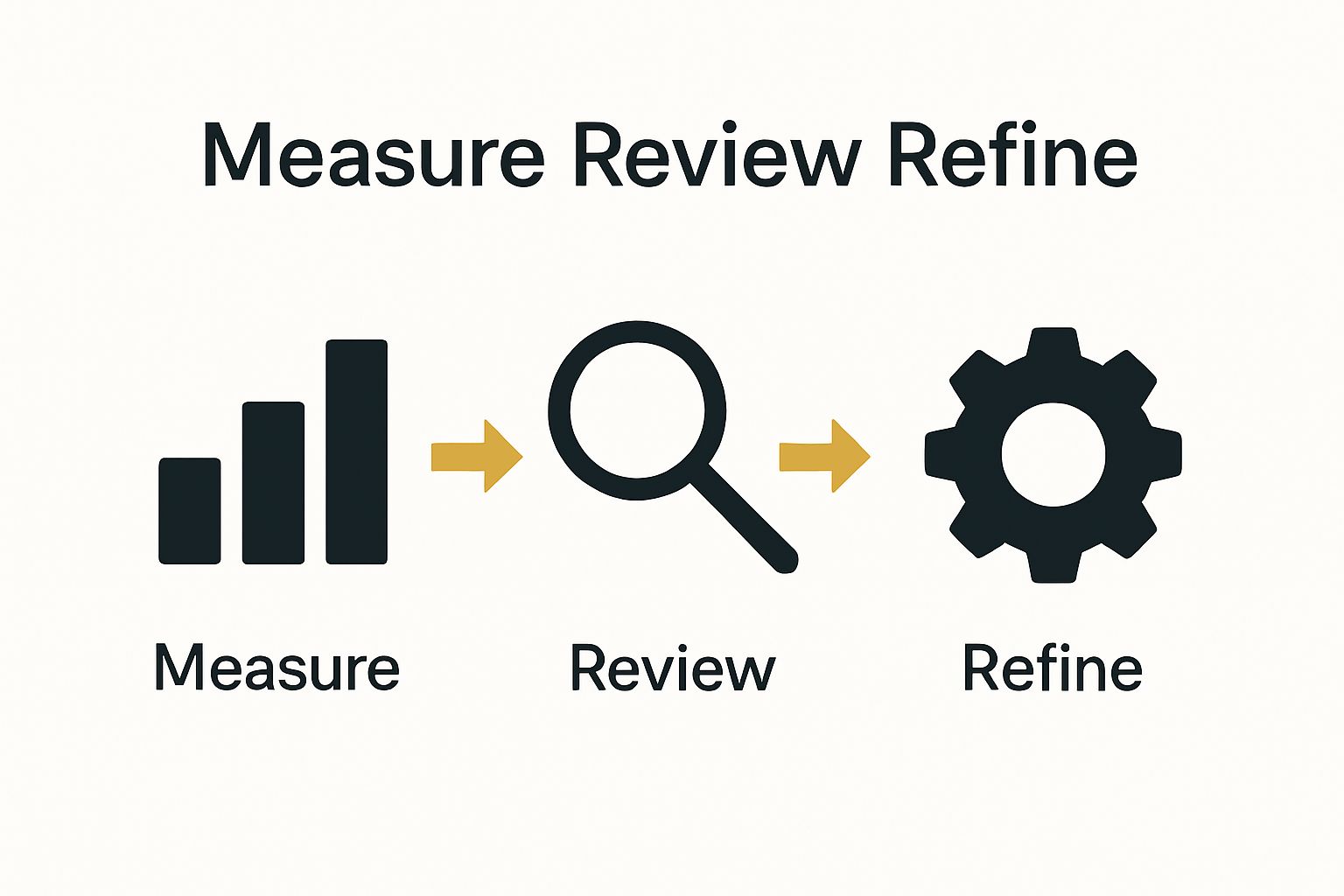
Utilising digital marketing performance tracking requires a systematic approach to evaluating key metrics. Focus on indicators such as website traffic, engagement rates, conversion percentages, and time spent on page. Google Analytics and Search Console provide robust tools for understanding how your content resonates with local audiences. Pay close attention to which topics generate the most interest, which keywords drive organic search traffic, and which pieces of content lead to direct business inquiries.
Content strategy refinement techniques emphasise the importance of regular performance reviews. Implement a quarterly content audit where you critically assess each piece of content against your original goals. Look for patterns in successful articles that demonstrate strong audience connection. Are certain formats more engaging? Do specific topics generate more interaction? Use these insights to iteratively improve your content approach, gradually developing a more targeted and effective local marketing strategy.
Warning: Do not become fixated on vanity metrics. True content performance is measured by genuine audience engagement and tangible business outcomes.
Take Control of Your Local Content Strategy Today
Mastering local content creation is essential for turning your business goals into reality. This article highlights key challenges such as defining precise local audience profiles, selecting targeted keywords, and producing authentic content that truly engages your community. You understand the frustration of generic marketing that misses local relevance and the urgency to stand out in your service area with a clear, measurable strategy.
Four Stripes specialises in helping New Zealand’s small service-based businesses overcome these exact hurdles through our proven local SEO and website design solutions. By combining expert keyword research, tailored content creation, and the innovative First Page First Call system, we deliver fast, transparent results that increase your online visibility and attract genuine local leads.
Ready to transform your content into a powerful business asset that drives inbound enquiries within 90 days Visit Four Stripes contact page to start your customised strategy with a trusted partner who knows how to elevate tradies and local professionals in competitive markets. Don’t wait for another missed opportunity when targeted growth is just one call away.
Frequently Asked Questions
How do I define my local content goals?
Begin by identifying your ideal customer and the specific outcomes you want from your content strategy. Create a worksheet detailing your target audience’s characteristics and align these with your content objectives to ensure effective messaging.
What steps should I take for researching relevant keywords?
Start by using local marketing strategies to identify search terms that your potential customers use. Focus on long-tail keywords that combine location-specific terms with service descriptions to capture the right local audience.
How can I plan compelling topics for my local content?
Immerse yourself in your local community to identify the unique challenges your audience faces. Track local conversations and questions to develop topic ideas that resonate deeply and show your expertise in addressing specific regional needs.
What tips should I follow for creating high-quality content?
Ensure your content is both optimised for search engines and genuinely valuable to your audience. Use clear headings, maintain a conversational tone, and include local elements, such as case studies or testimonials, to enhance the relevance and connection with your local customers.
How do I measure the performance of my content?
Focus on key metrics like website traffic, engagement rates, and conversion percentages. Conduct quarterly content audits to assess performance against your original goals, allowing you to refine your content strategy for continuous improvement.
What metrics should I prioritise when refining my content strategy?
Prioritise metrics such as organic search traffic, time spent on page, and the number of business inquiries generated. Use these insights to identify successful topics and formats, helping you iteratively improve your local content creation process.
Recommended
- Role of Content Marketing: Complete Guide for NZ Businesses | Website Design & Google Ads That Generate Leads
- 7 Essential Digital Marketing Tips 2025 for Local Biz | Website Design & Google Ads That Generate Leads
- How to Create Digital Strategy for Local Business Success | Website Design & Google Ads That Generate Leads
- 7 Local Marketing Ideas for Service Businesses to Grow Fast | Website Design & Google Ads That Generate Leads
- How to Create Business Banners for Effective Promotion –
- 10 idées de vidéos pour entreprises locales