

British businesses often overlook small but crucial details that can make or break their local search rankings. With more than 80 percent of consumers relying on online information before making a purchase, maintaining an accurate digital presence has never been more important. This step by step guide shows how to audit and improve your local SEO, giving your brand a consistent and trustworthy profile that stands out in today’s crowded market.
Table of Contents
- Step 1: Audit Digital Presence And Gather Local Assets
- Step 2: Optimise Google Business Profile For Local Searches
- Step 3: Enhance Website For Local Keywords And Locations
- Step 4: Build Quality Local Citations And Backlinks
- Step 5: Request And Respond To Customer Reviews
- Step 6: Verify Rankings And Track Local Seo Results
Quick Summary
| Key Insight | Explanation |
|---|---|
| 1. Audit Your Digital Presence | Create a comprehensive inventory of online assets and ensure consistency across all platforms. This builds credibility and boosts local search visibility. |
| 2. Optimise Google Business Profile | Ensure your Google Business Profile has accurate information and high-quality images. Regular updates and responding to reviews enhance customer engagement and search rankings. |
| 3. Enhance Website for Local Keywords | Integrate location-specific keywords naturally into your website content to attract more local customers. Create dedicated pages for different areas you serve. |
| 4. Build Quality Citations and Backlinks | List your business on reputable directories and cultivate connections with local organisations for backlinks. Consistent information across platforms helps search engines trust your business. |
| 5. Actively Manage Customer Reviews | Request feedback from customers and respond professionally to all reviews. This builds trust and improves local search rankings by showcasing your commitment to customer service. |
Step 1: Audit Digital Presence and Gather Local Assets
Auditing your digital presence helps map out your current online landscape and identify opportunities for local search optimisation. This step involves systematically collecting and reviewing all digital resources your business currently owns or utilises.
Start by compiling a comprehensive inventory of your existing online assets according to Business.govt.nz. This includes your website, social media profiles, Google Business Profile, online directory listings, and any other digital channels where your business appears. Examine each platform critically looking for consistency in business name, contact information, address, and branding.
Specifically focus on verifying key details like your exact business name, physical address, phone number, website URL, and business description. Inconsistent or outdated information across platforms can confuse potential customers and negatively impact your local search rankings. Cross reference these details against your current business registration and ensure every online mention matches precisely.
The goal is creating a unified digital footprint that signals credibility to both search engines and potential customers. Look for any outdated listings, incorrect information, or platforms where you have not yet established a presence. A thorough audit reveals quick wins for improving your local search visibility and ensures your business presents a professional online image.
Step 2: Optimise Google Business Profile for Local Searches
Optimising your Google Business Profile is critical for improving local search visibility and attracting nearby customers. This strategic process involves creating a comprehensive and engaging profile that accurately represents your business and helps potential clients find you easily.
According to NZIE, the key to a successful Google Business Profile is ensuring complete and accurate business information. Start by verifying your business name, address, phone number, and operating hours are precisely correct. Choose the most relevant business categories that truly reflect your services, as this helps Google understand and recommend your business to the right local searchers.
Prioritise visual content by uploading high quality, professional images that showcase your business, team, and work. Include a clear profile picture, compelling cover photo, and multiple images that demonstrate your services or products. Regular updates with recent photos and posts signal an active, engaged business to both Google and potential customers. When selecting images, ensure they are crisp, well lit, and represent your brand authentically.
Consistent profile management is crucial. Respond promptly to customer reviews, both positive and negative, demonstrating your commitment to customer satisfaction. Encourage satisfied clients to leave genuine reviews and use the Google Business Profile posts feature to highlight special offers, recent work, or important business updates. This ongoing engagement not only improves your local search rankings but also builds trust with potential customers who are researching local service providers.
Step 3: Enhance Website for Local Keywords and Locations
Enhancing your website for local keywords and locations is a strategic approach to improving your local search visibility and attracting nearby customers. This process involves carefully integrating location specific content and search terms that potential customers might use when seeking services in your area.
Start by conducting thorough keyword research focused on your specific local region. Identify the precise terms and phrases local customers use when searching for services like yours. Incorporate these keywords naturally into your website content including page titles, headings, meta descriptions, and body text. For instance, instead of using generic terms like “plumbing services”, use location specific phrases such as “Wellington residential plumbing services” or “emergency plumber in Newlands”.
Create dedicated location pages if you serve multiple areas. Each page should include unique local content that speaks directly to customers in that specific region. Include local landmarks, neighbourhood references, and region specific information that demonstrates your genuine connection to the community. Our local SEO guide for service businesses recommends embedding Google Maps, including local contact information, and showcasing region specific testimonials to further enhance local search relevance.
Consistency is key in local keyword optimisation. Ensure your business name, address, and phone number are identical across your website, Google Business Profile, and other online platforms. This signals authenticity to search engines and helps improve your local search rankings. Regular content updates featuring local events, community involvement, or region specific services will further strengthen your local search presence and demonstrate your commitment to the local market.
Step 4: Build Quality Local Citations and Backlinks
Building quality local citations and backlinks is a critical strategy for improving your local search rankings and establishing your business as a trusted local authority. This process involves strategically placing your business information across reputable online platforms and developing meaningful connections with other local websites.
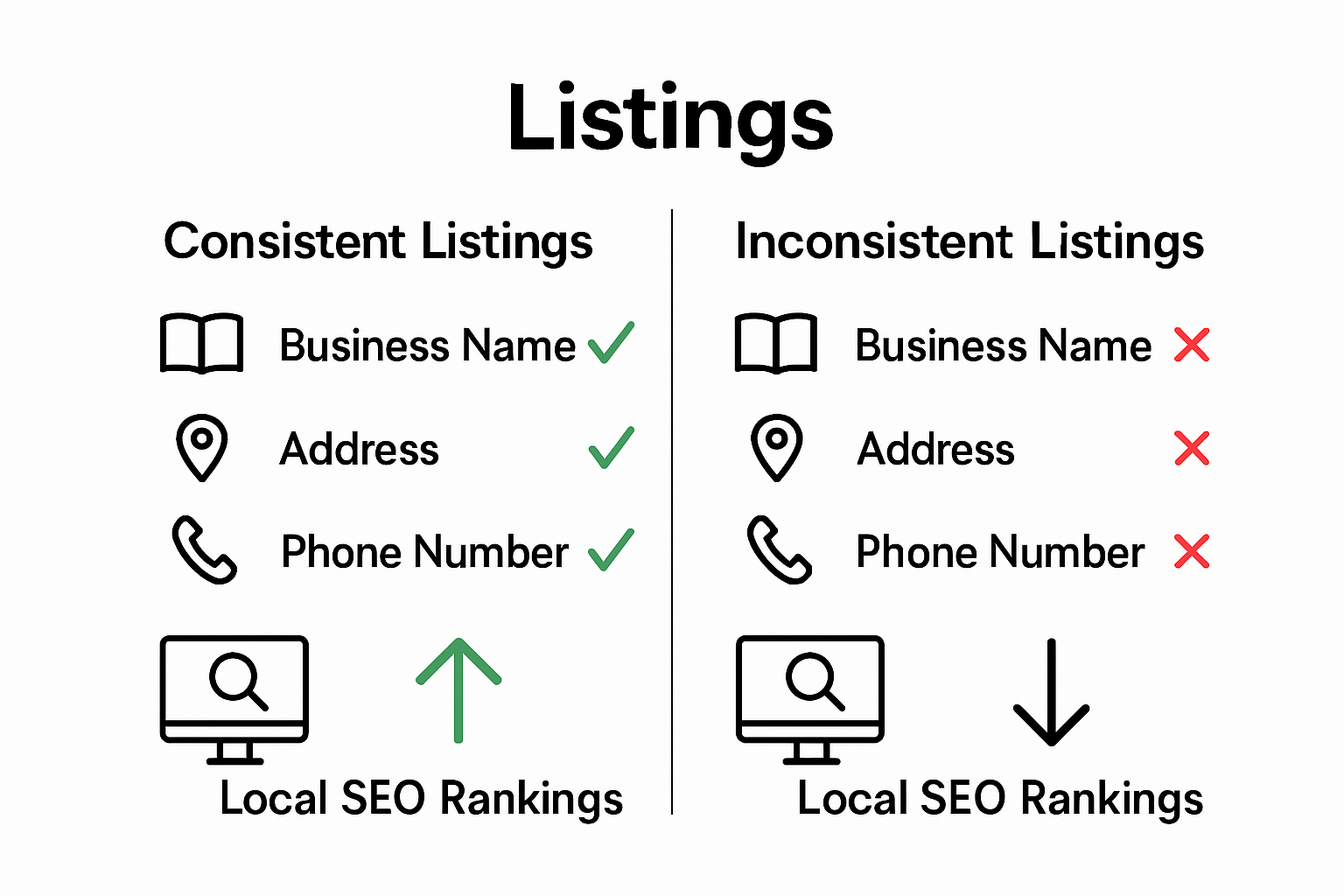
According to Alliance NZ, the key to effective local citations is ensuring consistent business information across multiple directories. Start by listing your business on prominent local directories, industry specific platforms, and chamber of commerce websites. Ensure your business name, address, and phone number remain identical across all platforms to signal credibility to search engines.
As recommended by Social Media NZ, focus on building reciprocal relationships with local businesses and organisations. Seek opportunities for genuine backlinks by participating in local business networks, sponsoring community events, or collaborating on content with complementary local businesses. These authentic connections not only improve your search rankings but also demonstrate your commitment to the local community.
Remember that quality trumps quantity when building citations and backlinks. Prioritise reputable, relevant websites over spammy or low quality links. Regularly audit your existing citations to ensure accuracy and remove any outdated or incorrect listings.
 By maintaining a strategic and consistent approach to local link building, you will gradually improve your local search visibility and attract more potential customers from your immediate geographic area.
Step 5: Request and Respond to Customer Reviews
Managing customer reviews is a powerful strategy for improving your local search rankings and building trust with potential clients. This critical step involves actively encouraging satisfied customers to share their experiences and professionally addressing all feedback.
According to Alliance NZ, the cornerstone of effective review management is proactively seeking feedback from satisfied customers. Create a streamlined process for requesting reviews immediately after completing a service or project. This might involve sending a follow up email with direct links to your Google Business Profile review section, providing a quick and easy way for customers to share their experiences.
As recommended by NZIE, responding to reviews is equally important. For positive reviews, express genuine appreciation and highlight specific aspects of the service they enjoyed. For negative reviews, respond promptly and professionally. Acknowledge the customer’s concerns, offer to resolve the issue offline, and demonstrate your commitment to customer satisfaction. Each response should be unique, avoiding generic templates that might appear insincere.
Remember that reviews are a continuous conversation with your customers. Set up notifications to ensure timely responses and treat every review as an opportunity to showcase your business’s values and dedication to customer service. By consistently gathering and professionally managing reviews, you will not only improve your local search rankings but also build a strong reputation that attracts new customers through authentic social proof.
Step 6: Verify Rankings and Track Local SEO Results
Verifying and tracking local SEO results is crucial for understanding the effectiveness of your digital marketing efforts and making data driven improvements to your online strategy. This final step helps you measure your progress, identify areas of opportunity, and continuously refine your local search performance.
According to Brewers Guild NZ, the first step in tracking your local SEO results is developing a comprehensive checklist for reviewing your online presence. Begin by monitoring your Google Business Profile rankings for key local search terms related to your business. Use tools like Google Search Console and Google Analytics to track your website traffic, search impressions, click through rates, and keyword performance specific to your local area.
As recommended by Marketing NZ, maintaining consistent monitoring of your online profile is essential. Set up monthly or quarterly reviews to assess your local search performance, examining metrics such as search visibility, customer interactions, and review ratings. Pay close attention to the keywords potential customers use to find businesses like yours, and adjust your strategy accordingly. Learn more in our guide on improving Google rankings for local businesses to understand how to interpret these insights effectively.
Remember that local SEO is an ongoing process. Treat your tracking and verification as a continuous improvement cycle. Celebrate small wins, learn from areas that need improvement, and remain adaptable. By consistently measuring and responding to your local search performance, you will gradually build a stronger online presence that attracts more local customers and establishes your business as a trusted local authority.
Elevate Your Local SEO Strategy with Proven Digital Marketing Expertise
If you found this step-by-step guide insightful but feel overwhelmed by the complexity of auditing your digital presence or optimising your Google Business Profile, you are not alone. Many New Zealand service businesses struggle with creating a consistent and credible online footprint that attracts genuine local customers. Common challenges include confusing inconsistent listings, difficulty managing reviews, and integrating local keywords effectively to boost search rankings.
Four Stripes specialises in turning those challenges into clear results. Our tailored SEO and Google Business Profile solutions are designed specifically for tradies, contractors, and local professionals who want to secure that coveted first-page ranking and begin generating inbound calls within 90 days. We combine expert digital marketing strategies and transparent reporting to keep you confident and informed every step of the way.
Take control of your local search presence today and transform your online visibility into real leads. Explore how our Digital Marketing services can fast-track your growth or reach out directly via our contact page for a personalised consultation tailored to your business goals.
Frequently Asked Questions
How can I audit my digital presence for local SEO?
To audit your digital presence, compile an inventory of your online assets, including your website and social media profiles. Check that your business name, address, phone number, and branding are consistent across all platforms. This process helps identify areas for improvement in local search optimisation.
What should I include when optimising my Google Business Profile?
When optimising your Google Business Profile, ensure your business name, address, phone number, and operating hours are accurate. Prioritise uploading high-quality images and engaging content that reflects your services. Update your profile regularly to signal activity to search engines and potential customers.
How can I enhance my website for local keywords?
Enhance your website by integrating location-specific keywords into your content, including page titles and meta descriptions. Conduct keyword research to identify phrases customers use when searching for your services locally, and create dedicated location pages if you serve multiple areas. This method improves your visibility in local search results.
What are quality local citations and how do I build them?
Quality local citations are mentions of your business name, address, and phone number on reputable online directories. Build citations by listing your business on local directories and collaborating with other local organisations for backlinks. Ensure consistency of information across all platforms to strengthen your local search authority.
How can I manage customer reviews to improve my local SEO?
To manage customer reviews, actively encourage satisfied clients to leave feedback and ensure you respond to all reviews promptly and professionally. A streamlined process for requesting reviews after service completion can enhance your collection rate. Each response should be personalised, showcasing your commitment to customer satisfaction.
How do I track my local SEO results effectively?
Track your local SEO results by monitoring your Google Business Profile rankings and website analytics regularly. Set up a consistent review process to assess metrics such as customer interactions and search visibility. Adjust your strategies based on these findings to continuously improve your local search performance.
Recommended
- What Is Local SEO? Complete Guide for NZ Businesses | Website Design & Google Ads That Generate Leads
- Complete Guide to Why Local SEO Matters in NZ | Website Design & Google Ads That Generate Leads
- Complete Guide to Local SEO for Service Businesses | Website Design & Google Ads That Generate Leads
- SEO Ranking Factors: Everything You Need to Know | Website Design & Google Ads That Generate Leads