
In simple terms, Google Ads agencies are specialist teams who manage paid advertising campaigns on Google. They take care of everything from digging into keywords and writing ads to managing your budget and tracking results, all with the goal of getting you a solid return on investment.
Why Your NZ Business Needs the Right Agency Partner

For Kiwi tradies and local service businesses, diving into Google Ads can feel like putting money on the line at the casino. It’s a world away from just boosting a Facebook post; it’s a complex machine where your budget can vanish in a flash if you don’t know the rules of the game.
This is why teaming up with specialist Google Ads agencies isn’t just another cost—it's a strategic move. The right partner turns your ad spend from a risky expense into a reliable engine for qualified leads and real growth. When every dollar has to work for you, that’s crucial.
Navigating the Local NZ Market
The New Zealand market has its own quirks. In busy centres like Auckland or Christchurch, the competition for the best keywords is fierce, which can send your ad costs through the roof if you don’t have a sharp strategy. A good agency knows how to avoid that budget bleed.
An expert partner gets this done by:
- Pinpointing Local Intent: They get hyper-local, targeting specific suburbs or regions to make sure your ads are only seen by potential customers in your actual service area.
- Optimising for Calls: For a tradie, a phone call beats a website click every time. A pro agency will set up proper call tracking to prove the ads are making your phone ring.
- Managing Negative Keywords: This is huge. They stop you from wasting money on irrelevant searches, like someone looking for "DIY plumbing videos" when you’re a professional plumber wanting job leads.
It also helps to understand why Google Ads often outperforms social media for service-based businesses, as this insight is key to spending your marketing budget wisely.
At the end of the day, a great agency does more than just run your ads. They become part of your team. They take the time to learn your business, understand what a 'good lead' actually is for you, and work their tails off to get you results.
Without that expertise on your side, you’re just gambling—pouring money into clicks that go nowhere. For a better handle on the basics, check out our full guide on what Google Ads is and how it works for NZ businesses.
How to Vet Potential Google Ads Agencies
Before you even think about booking a sales call, you need a solid process for weeding out the cowboys. A slick website doesn't mean they can get your phone ringing, so doing a bit of homework is your first line of defence.
Start by looking for proof that they get businesses like yours. So many agencies will show off flashy case studies from big retail brands. That's great, but it tells you nothing about their ability to get jobs for a plumber in Tauranga. Hunt for success stories and testimonials from other Kiwi service businesses or tradies. It’s the clearest sign they know how to work in your world.
Check Their Credentials
Next up, look for some official recognition. The big one is the Google Partner badge. Earning this means the agency has met Google’s strict requirements for client growth, ad spend, and has certified people on their team. It’s not a golden ticket to success, but it does show a baseline level of competence and commitment.
You can easily verify an agency’s partner status right on Google’s own directory. Don't just take their word for it—a quick check will filter out anyone stretching the truth.
Spotting the Big Red Flags
While you're digging around, keep your eyes peeled for some classic warning signs. Certain promises are just too good to be true and should have you running for the hills.
Be on the lookout for these common problems:
- Guaranteed Results: This is the biggest red flag. No one can guarantee a #1 ranking or a specific number of leads. Google Ads is a live auction, and anyone who promises a certain outcome is either lying or naive.
- Fluffy Promises: Watch out for vague claims like "we'll skyrocket your sales" with no clear strategy behind it. A good agency will talk about their process and what they'll actually do, not just the magical results.
- Over-the-top Jargon: If their website feels like it was written by a robot to confuse you, they’re probably hiding a lack of real-world strategy. Good partners make things clear, not complicated.
- Zero Transparency: Can you see who is on the team? Do they have a physical address in NZ? Anonymity is never a good look for a business you're about to trust with your money.
The digital advertising space in New Zealand is getting fierce, with some sectors like finance and banking spending over NZD $295 million on ads alone. This shows just how competitive it is out there, making it even more important to hire someone who truly understands the local game. You can read more about these NZ ad spend trends to get a better sense of the investment involved.
The goal here is to build a strong shortlist of agencies that show real, relevant experience and don't make ridiculous claims. You're looking for a partner who will act as a genuine digital marketing strategist for your business, not just a button-pusher. Learn more about what a digital marketing strategist can do to elevate your business. Getting this initial vetting right will save you a world of time, money, and headaches.
Critical Questions to Ask in Your First Meeting
That first call with a potential Google Ads agency isn't just a sales pitch. It’s your chance to cut through the jargon and see if they actually know what they're talking about.
Anyone can promise results. But generic questions get you generic, rehearsed answers. To find a real partner who understands Kiwi service businesses, you need to dig deeper. This is your opportunity to separate the pros from the pretenders and see if they have a genuine strategy or just a copy-paste template they use for everyone.
A good agency will love these questions. It gives them a chance to show you their expertise.
Before you even book a meeting, a quick bit of homework can save you a world of pain. A simple check of their website and reviews will weed out the obvious cowboys.
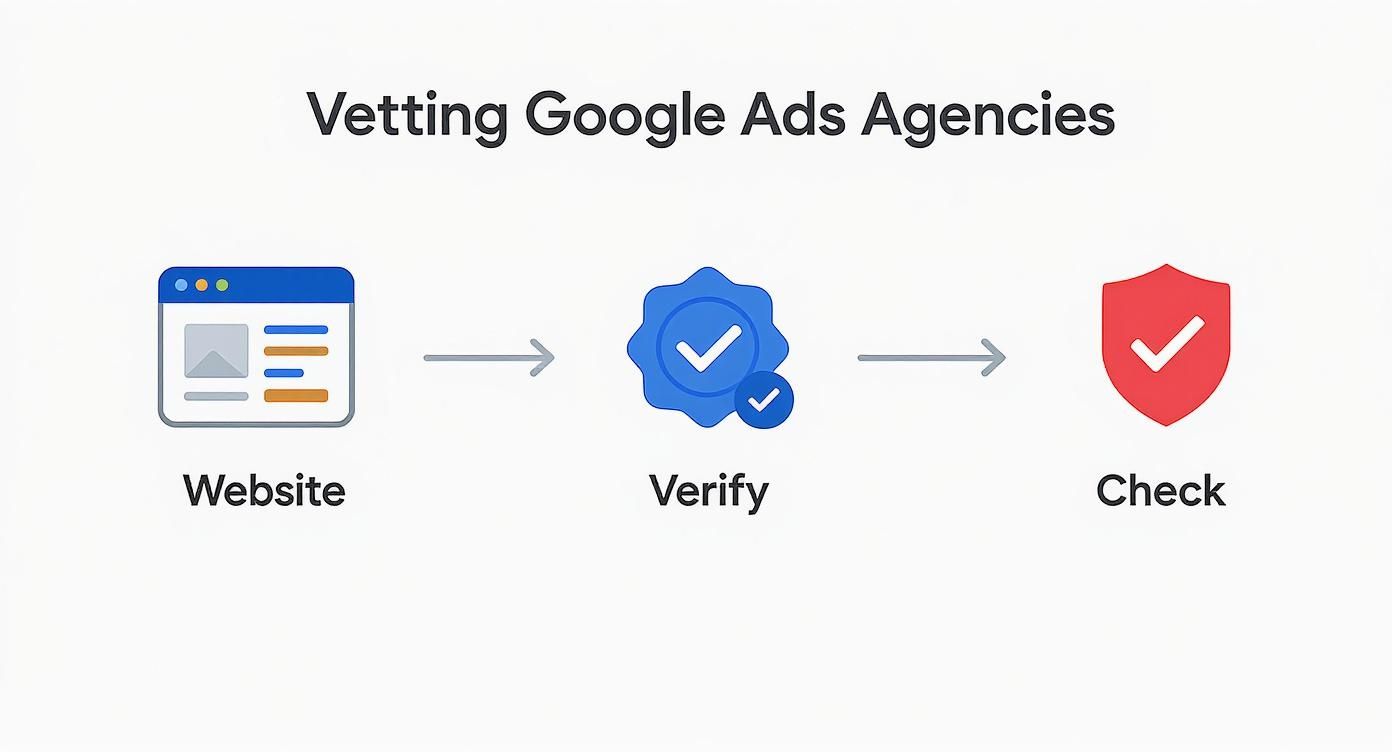
This simple process makes sure you're only spending your valuable time talking to agencies that are actually worth considering.
Questions About Strategy and Process
You need to know how they work. A great agency has a clear, repeatable process for building and managing campaigns that’s all about getting your phone to ring—not just racking up useless clicks.
Here’s how to get them talking specifics:
-
"Walk me through your keyword research process for a plumber in Christchurch." This puts them on the spot with a local, specific example. A good answer will involve finding high-intent keywords like "emergency plumber christchurch" or "hot water cylinder repairs riccarton." They should also immediately talk about building a list of negative keywords (like "jobs," "apprentice," or "training") to stop you from wasting money on irrelevant searches.
-
"How would you structure a campaign for a business like mine?" They should be talking about tight, specific ad groups. For an electrician, that means separate campaigns for "switchboard upgrades," "new home wiring," and "EV charger installation." This ensures the ad someone sees is hyper-relevant to what they just searched for, which is key to getting quality leads.
-
"What’s your process for writing and testing ad copy?" Listen for them to mention A/B testing different headlines and descriptions. They should focus on customer benefits ("24/7 service," "fixed-price quotes") instead of just listing features. A strong call to action like "Get a Free Quote Today" should be a no-brainer for them.
If their answers are vague or full of fluff, that’s a massive red flag. If they can’t explain their own process clearly, they don’t have one you can rely on.
Questions About Tracking and Reporting
For a small business, proving a return on your investment is everything. If you can't measure it, you're just guessing. An agency that isn't obsessed with data and tracking is not worth your time or money.
The only metric that truly matters for a service business is your cost per qualified lead. A good agency should be able to tell you exactly how they track this and, more importantly, how they plan to lower it over time. Clicks and impressions are just noise.
Here’s what you need to ask to see if they’re focused on real results:
-
"How will you set up conversion and call tracking to prove my ROI?" A proper answer goes way beyond just sticking a bit of code on your website. They must mention tracking website form submissions and phone calls that come directly from your ads. Without call tracking, you're flying blind.
-
"What metrics do you include in your reports, and why?" They should lead with business outcomes: conversions, cost per conversion, and conversion rate. If they start rambling on about vanity metrics like impressions or click-through rate (CTR), it’s often because they’re trying to hide poor performance behind big, meaningless numbers.
-
"How do you manage my budget to make sure my money isn’t wasted?" They need to talk about setting daily budgets, monitoring your ad spend like a hawk, and shifting money to the campaigns and keywords that are actually bringing in jobs. A good partner treats your budget like it’s their own.
Getting to Grips with Agency Pricing and Contract Traps
Alright, let's talk about the money. When you start chatting with Google Ads agencies, you’ll quickly see that their pricing is all over the place. Figuring out the different models is the first step to finding a fair deal that actually works for your service business.
You'll mostly come across flat monthly retainers, a percentage of your total ad spend, or maybe a mix of the two. Each has its ups and downs, and what's right for you really depends on your budget and what you’re trying to achieve.
Decoding Common Pricing Models
For most small Kiwi businesses, a flat monthly retainer is the simplest and most transparent way to go. You pay a set fee each month for them to manage your campaigns, no matter how much you're spending on the ads themselves. This makes budgeting a breeze and means your agency is focused on getting you results efficiently, not just pushing you to spend more.
The other common one is a percentage of ad spend, usually somewhere between 10-20%. This can work for massive companies with huge budgets, but for smaller outfits, it can create a dodgy incentive. The agency only makes more money if you spend more, which isn't always the smartest way to get you the best return on your investment.
The most crucial thing here is clarity. It doesn't matter which model they use; you need a crystal-clear breakdown of what you're paying for. That means the management fee, the ad spend that goes straight to Google, and any one-off setup costs. No surprises.
How to Dodge Nasty Contract Pitfalls
A contract should protect both you and the agency, but some are loaded with clauses designed to trap you. Knowing what to look for is your best defence.
One of the biggest red flags is a long, fixed-term contract. An agency that’s confident they can get you results shouldn’t need to lock you into a 12-month deal from the get-go. Look for agencies offering monthly rolling agreements or a short trial period (say, three months) to prove they know their stuff.
Another absolute deal-breaker is account ownership. You must, without a doubt, ensure that you own your Google Ads account, not the agency. If they build everything in an account they control, you lose all that precious data and campaign history if you ever decide to part ways. This is non-negotiable.
Here are a few other common traps to watch out for:
- Vague Scope of Work: The contract needs to spell out exactly what's included. Does it cover writing new ads, building landing pages, or monthly catch-up calls? If it’s not in writing, you can bet it's not included.
- Hidden Fees: Ask them straight up about any setup costs, charges for creating ad images, or fees for call tracking software. A good partner will be upfront about every single cost.
To get your head around the fine print, it helps to do a bit of reading on understanding Service Level Agreements (SLAs). This knowledge will help you make sure the terms are stacked in your favour.
With more businesses jumping on Google Ads, the competition is fierce, and the average cost-per-click keeps creeping up. This puts a real squeeze on small businesses with tight budgets. It's exactly why so many Kiwi tradies and pros now rely on a good agency to stretch their ad spend further. A smart agency can fight back against rising costs by using data and automation to get the most out of every dollar you spend. You can discover more insights about these NZ digital ad trends if you want to dig deeper.
How to Set Your New Agency Up for Success

Alright, you’ve picked your agency and signed on the dotted line. Job done? Not even close. Signing the contract is the starting line, not the finish. The real work starts now, and how you kick things off in the first few weeks will make or break your results down the track.
A great agency relationship is a two-way street. They bring the Google Ads expertise, but you bring the invaluable, on-the-ground knowledge of your business. To get the best results, you need to be an active participant, especially during onboarding.
Don't hold back. The more you tell them upfront, the faster they can start sending you the kind of leads that actually turn into paying jobs. This is your chance to arm them with everything they need to win for you.
Your Role in the Onboarding Process
The best Google Ads agencies will have a proper onboarding process designed to suck every last bit of useful info out of your head. It’s your job to lean into this and give them the full picture, warts and all.
Think beyond the basics. They know you're a plumber in Auckland. What they don't know is what a genuinely good lead looks like for your plumbing business.
- Define Your Dream Customer: Get specific. Are you chasing big-money bathroom renos in Remuera, or are you the go-to for emergency burst pipes across the North Shore? Details matter.
- Share Your Most Profitable Jobs: Be honest about which services make you the most money. This lets them focus your ad spend where it will deliver the biggest bang for your buck.
- Explain How You Sell: Walk them through what happens when a call or email comes in. Who answers it? How quickly? This helps them understand the whole journey from click to cash.
Your agency isn't a mind reader. Be crystal clear about what you consider a 'tyre-kicker' versus a 'dream client'. This detailed feedback is the secret sauce for refining campaigns and slashing your cost per lead over time.
Setting Realistic Expectations and Clear KPIs
It's tempting to expect the phone to start ringing off the hook the day your ads go live. But Google Ads needs time to learn and gather data. You’ve got to be realistic about the first 90 days—it's crucial for a healthy, long-term partnership.
The first month is all about setup, research, and getting that initial data flowing. By month three, you should be seeing clear, positive trends and a steady stream of good leads. This window gives the agency the time they need to test, learn, and optimise based on what’s actually happening in the real world.
To know if it’s working, you need to agree on Key Performance Indicators (KPIs) that actually matter to a service business. Forget the fluffy stuff.
Focus on these metrics and nothing else:
- Cost Per Qualified Lead: The big one. How much are you paying for a legitimate phone call or form submission from someone who actually wants your service?
- Conversion Rate: What percentage of people who click your ad end up getting in touch? This tells you how well your ads and landing page are doing their job.
- Number of Qualified Leads: The total volume of real enquiries you're getting.
Google Ads is a massive deal for Kiwi businesses, and the good news is, it works well here. In New Zealand, the average click-through rate is a solid 8.64%, with local conversion rates sitting around 8.93%. This proves that when campaigns are set up right, Kiwis respond.
By focusing on clear communication and the right data from day one, you build a partnership that drives real growth for your business. And to make sure you're always one step ahead, check out our guide on Google Ads best practices for 2025 to keep your strategy sharp.
Finding a True Partner, Not Just Another Supplier
Choosing a Google Ads agency isn't just about ticking a box or hiring someone to press a few buttons. It’s about finding a genuine partner who’s as invested in your business's growth as you are.
By now, you should be able to see through the sales pitch. You know how to vet an agency's real-world experience with other Kiwi tradies and you’re armed with the tough questions that separate the talkers from the doers. You can spot the dodgy contract clauses from a mile off and know that being an engaged, communicative client is your half of the bargain for success.
This whole guide is about putting you back in the driver's seat. You’re no longer guessing in the dark or hoping for the best. You now have a proper framework to size up potential agencies and make a decision that leads to real, tangible results.
This is about taking control of your marketing. Armed with this knowledge, you can confidently sift through the many skilled Google Ads agencies out there and find one that will actually make your phone ring with the right kind of customers.
The end goal isn’t just a successful campaign; it’s a lasting partnership that turns your ad spend into your most reliable source of profitable work.
Your Questions Answered
Even after doing your homework, you'll probably still have a few questions buzzing around. Here are some of the most common ones we get from Kiwi business owners trying to get their heads around hiring a Google Ads agency.
How Much Should a Google Ads Agency Cost in NZ?
This is a big one, and the honest answer is: it varies. In New Zealand, you’ll find agencies offering flat monthly retainers anywhere from $500-$1000 for a smaller business. Others charge a percentage of your ad spend, which usually sits between 10-20%.
The price tag isn’t the whole story, though. You need to get crystal clear on what that fee actually includes. Does it cover detailed reporting, regular strategy calls, or building new landing pages? Always weigh up the cost against the agency’s track record and exactly what you're getting for your money.
How Long Until I See Real Results from Google Ads?
While you'll see data like clicks and impressions almost instantly, the results that actually matter—like a steady stream of good leads—take a bit of time.
Think of the first month as the setup and learning phase. Your agency will be gathering data, seeing what works, and tweaking the campaigns. You should start seeing a clear, positive trend in qualified leads coming through within the first 90 days.
Be extremely cautious of any agency promising you page-one rankings overnight or a flood of jobs in the first week. Real, sustainable results are built on patience and smart, data-driven decisions, not hype.
Do I Need a Massive Budget for Google Ads to Actually Work?
Not at all, but it does need to be realistic. A good agency can make a smaller budget work surprisingly hard. The trick is getting super specific.
By tightly targeting certain suburbs and focusing only on high-intent keywords, an expert can stretch every dollar. For a local tradie wanting to own their suburb, even a budget of $30-$50 per day can bring in valuable jobs when it’s managed properly. It’s all about efficiency, not just how much cash you throw at it.
Ready to stop gambling on your ad spend and start getting a reliable flow of qualified leads? The team at Four Stripes specialises in turning clicks into calls for NZ service businesses like yours. Find out how our client-first approach can grow your business.